17,000 kilometers from Spain, Australian sheep never rest. Australia exports 325 million kilos of wool annually, supplying 88% of the global market. These are animals genetically selected to produce more: more skin folds, more wool, higher yield. A deliberate design that turns their bodies into production tools.
But this design has consequences. The artificial folds trap moisture and attract the Lucilia cuprina blowfly, which lays eggs in the wool, leading to severe skin infections. The industry's response wasn't to find a solution that protected the animals. It was to find one that protected the wool.
That solution has a name: mulesing. Or, as it's known in animal protection circles, blood wool.
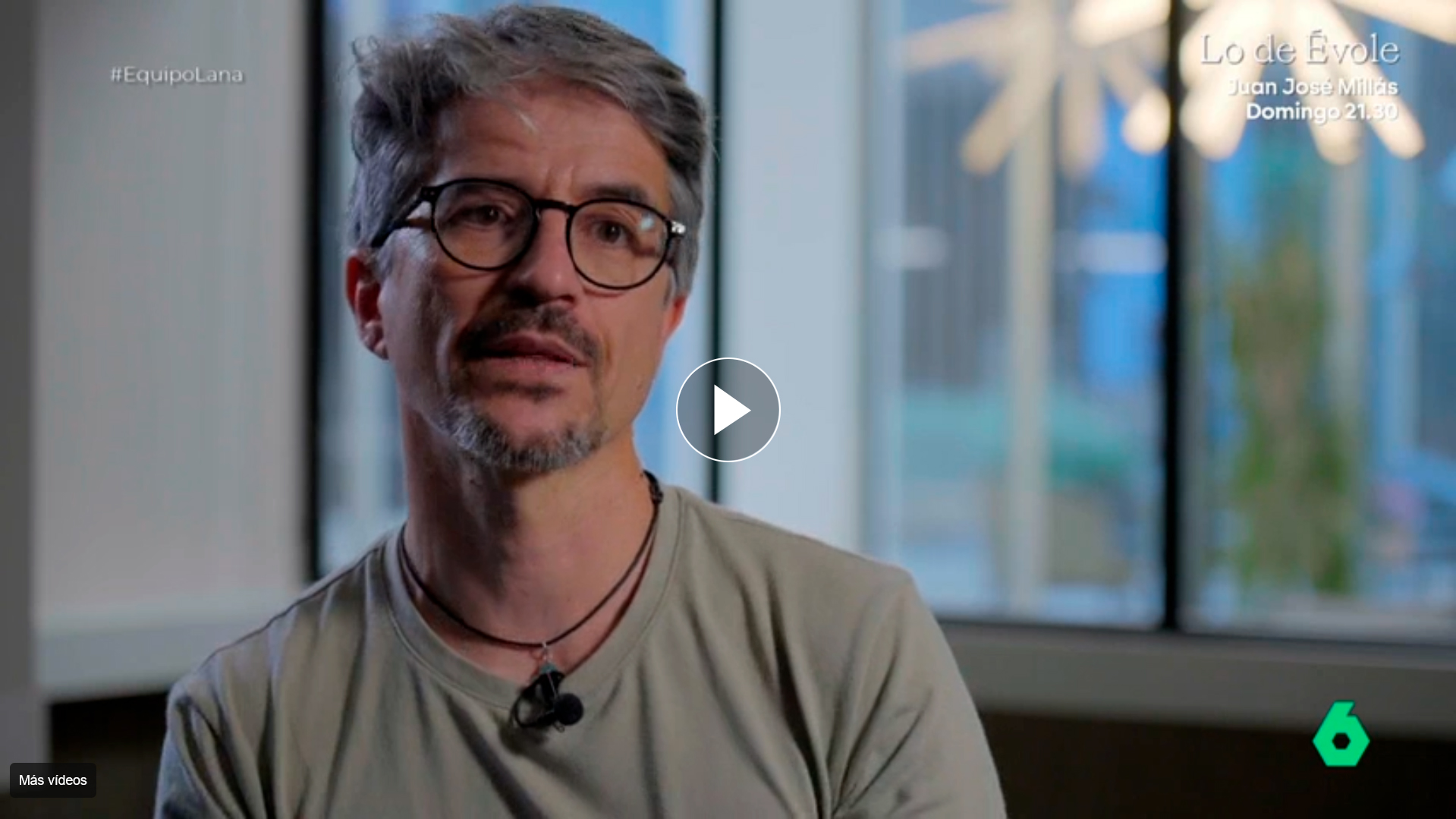
"We can see how the animals have their tails cut or the anal area sheared perfectly without any type of anesthesia," explains Jaime Posada, coordinator for AnimaNaturalis in Madrid, who participated in the La Sexta program. "There's a fly that nests within the wool and causes wounds inside these folds. To prevent this, they shear the area around the tail and anus and inflict wounds so that the fly, instead of going for the wool, is attracted to those areas. It ends up causing necrosis and quite serious diseases," he adds.
The result: thousands of sheep subjected to mutilation without pain relief so that the fiber reaches factories intact. And from the factories, to the stores. And from the stores, into our closets.
Why This Problem Concerns Us All
Mulesing is not a marginal or clandestine practice. It's an industry standard. Given that 88% of the wool sold in Spain comes from Australia, it's reasonable to assume that the vast majority of wool garments sold in our country have undergone this process.
The practice is banned in some European countries. Germany has explicitly prohibited it. In Spain, there is no such ban, although, according to Posada, it is not used on domestic flocks. The problem is that the market doesn't distinguish. A label that says "merino wool" doesn't tell the consumer whether the animal that produced it was subjected to mutilation.
And there are alternatives. Posada states it unambiguously: "There's medication you can give the sheep to prevent it from being attacked by this fly, but it's more expensive and you have to go sheep by sheep giving this pill." The industry knows about them. And, in the vast majority of cases, it dismisses them for economic reasons.
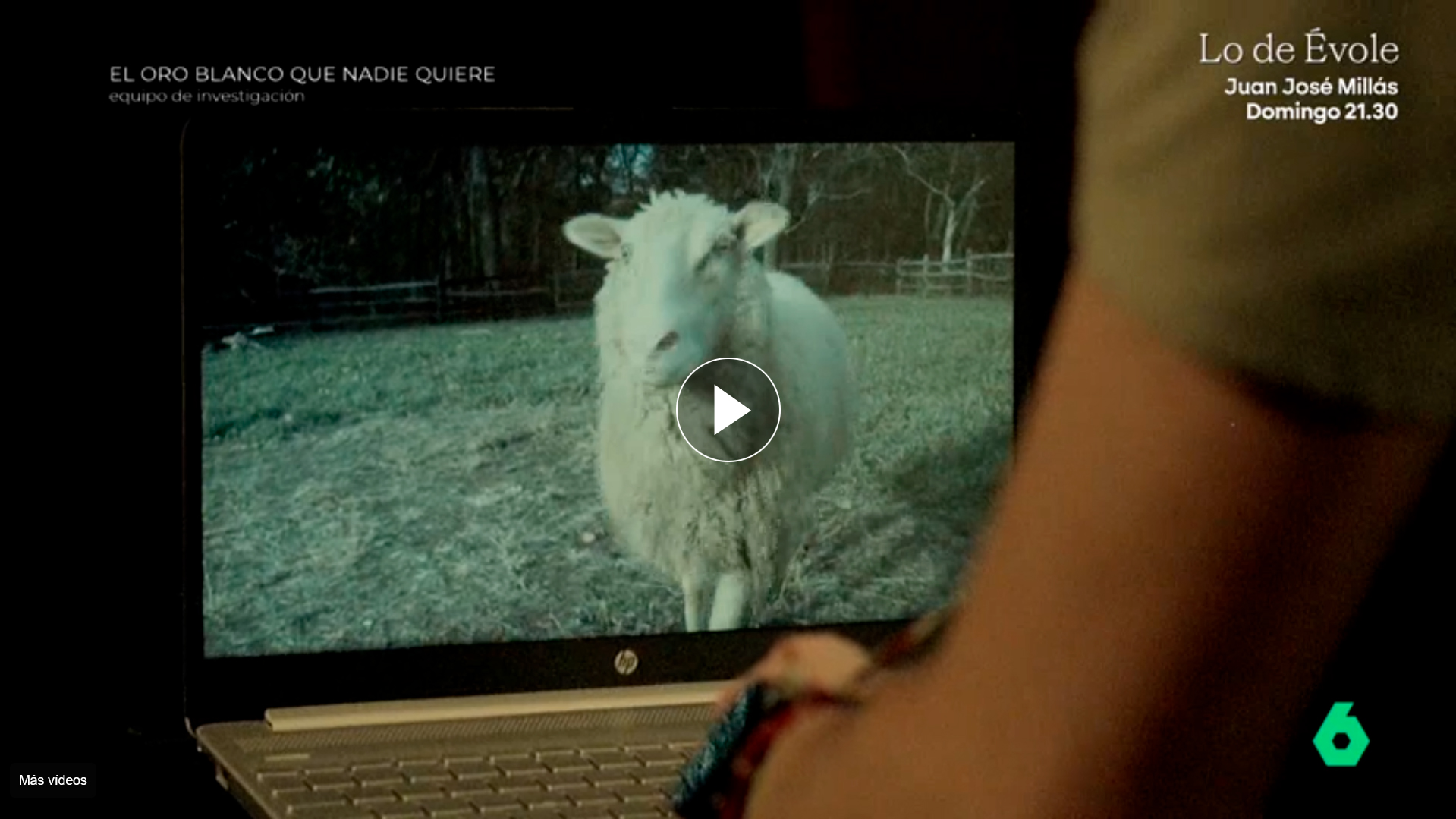
The paradox is that while Australian sheep endure this treatment to sustain a global market, in Spain, wool is worthless. Cristian Jimeno, a sheep farmer, puts it bluntly: each shearing season costs him 15,000 euros. His flock of 7,000 sheep produces about 20,000 kilos of wool that he literally doesn't know what to do with: "It can't be destroyed, it can't be burned, it can't be dumped anywhere. So we don't know what to do with it."
Carlos Esteban, a farmer from Teruel, stores the wool next to the manure: "This is waste. You can't throw it anywhere. It's fireproof; it doesn't burn either." Just this year, Spain has generated more than 20,000 tons of wool with no destination.
Meanwhile, online stores sell "merino wool" garments that, upon arrival, turn out to be polyester. A deception that affects both consumers and sheep farmers, highlighting the total lack of traceability in a multi-billion dollar industry.
For Aïda Gascón, director of AnimaNaturalis in Spain, the problem goes beyond the label: "We are facing a system where animal suffering is invisible by design. The industry doesn't want you to know what's behind each garment. That's why, every time this information reaches millions of people in prime time, something changes."
When Three Million People Learn What They Weren't Supposed To Know
This past March, Equipo de Investigación, the investigative journalism program on La Sexta hosted by Glòria Serra, aired a report on the wool crisis in Spain. The appearance of Jaime Posada meant that, for the first time in a long while, a prime-time program connected the economic crisis of the livestock sector with the suffering of the animals that sustain it.
More than three million people watched that program.
It wasn't an accident. Behind that appearance are months of documentation work, media outreach, and institutional positioning. And behind that work, a network of volunteer local coordinators spread across Spain who, without pay, amplify AnimaNaturalis's voice in their territories: they talk to local journalists, organize actions, train activists, and open doors that would be impossible to open from headquarters.
Gascón acknowledges the value of this invisible work: "Getting on a prime-time program doesn't happen because we knock on a TV station's door one day. It happens because we've spent years building credibility, relationships, and knowledge. Our coordinators are a fundamental part of that process. They are what makes AnimaNaturalis not just an organization, but a community present in every corner of the country."
The campaign against mulesing already has international support. Actor Joaquin Phoenix has publicly joined the condemnation of this practice. Brands like Mango and Zara have pledged to eliminate wool linked to mutilation from their collections within five years. These are commitments that wouldn't exist without sustained pressure from organizations like AnimaNaturalis.
"These communication milestones are not the final goal; they are the leverage," asserts Gascón. "Every time animal suffering reaches the homes of millions of people, a crack opens in its normalization. And through those cracks, the possibility of change enters."
Because Visibility Without Action Isn't Enough
Mulesing exists because it's cheaper than the alternative. And it's cheaper because the demand for wool doesn't require transparency. That can change, and it starts with individual decisions that, combined, turn into market pressure.
Before buying a wool garment, you can demand traceability: where does it come from? What certifications does it have? Labels like ZQ Merino or the Responsible Wool Standard (RWS) imply verified commitments against mulesing. You can also opt for certified, locally sourced natural fibers, or explore plant-based alternatives that don't involve animal exploitation.
And you can do something more: help ensure this information continues to reach millions of people.
AnimaNaturalis is an organization that works 365 days a year. That means having teams available when the media calls, researchers documenting what no one wants to show, and coordinators keeping territorial presence alive without being paid for it. All of this requires stable resources.
What three million people saw that Wednesday night wasn't just a report. It was the result of years of collective work. The next chapter of that story could be yours too.