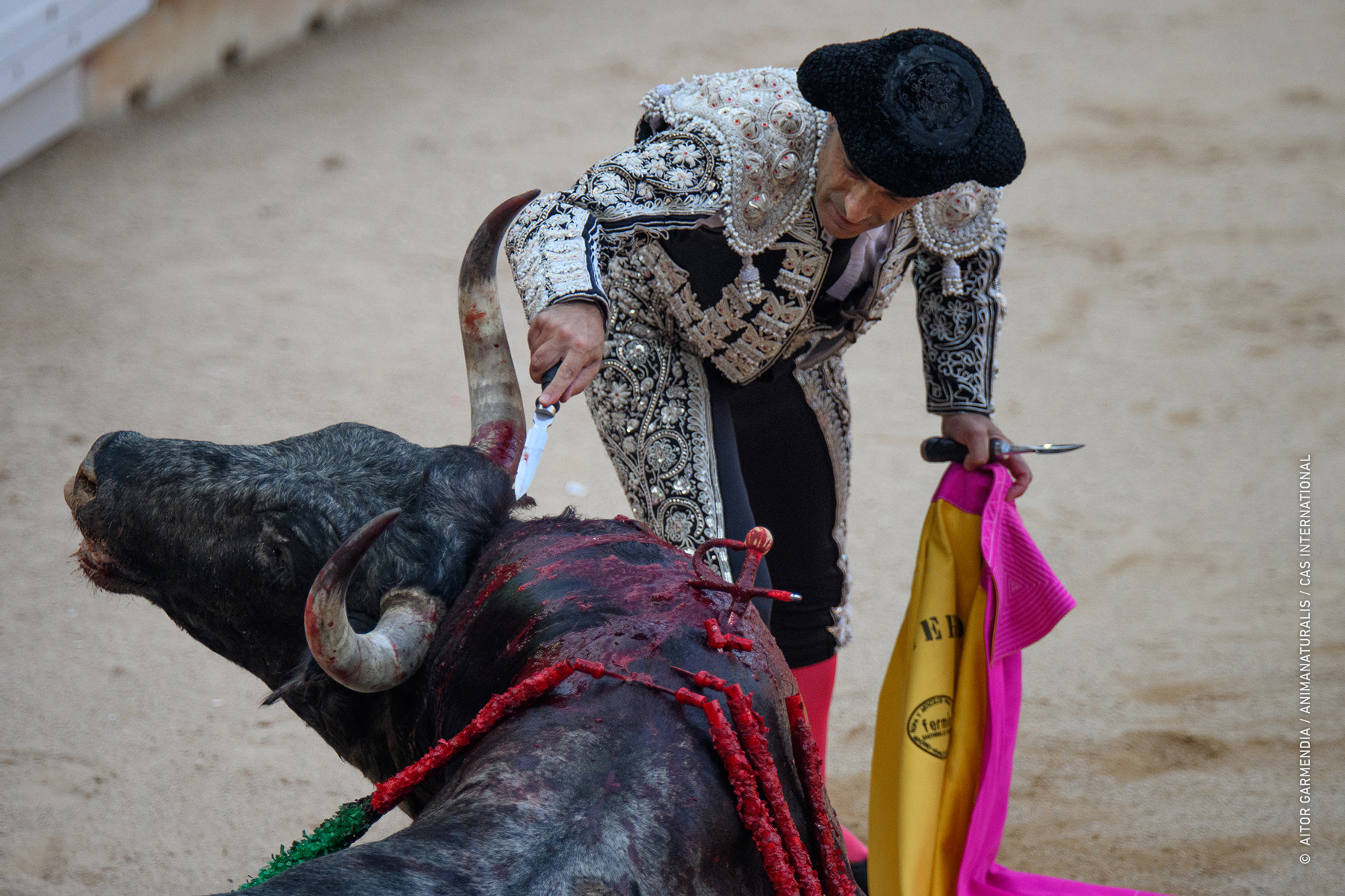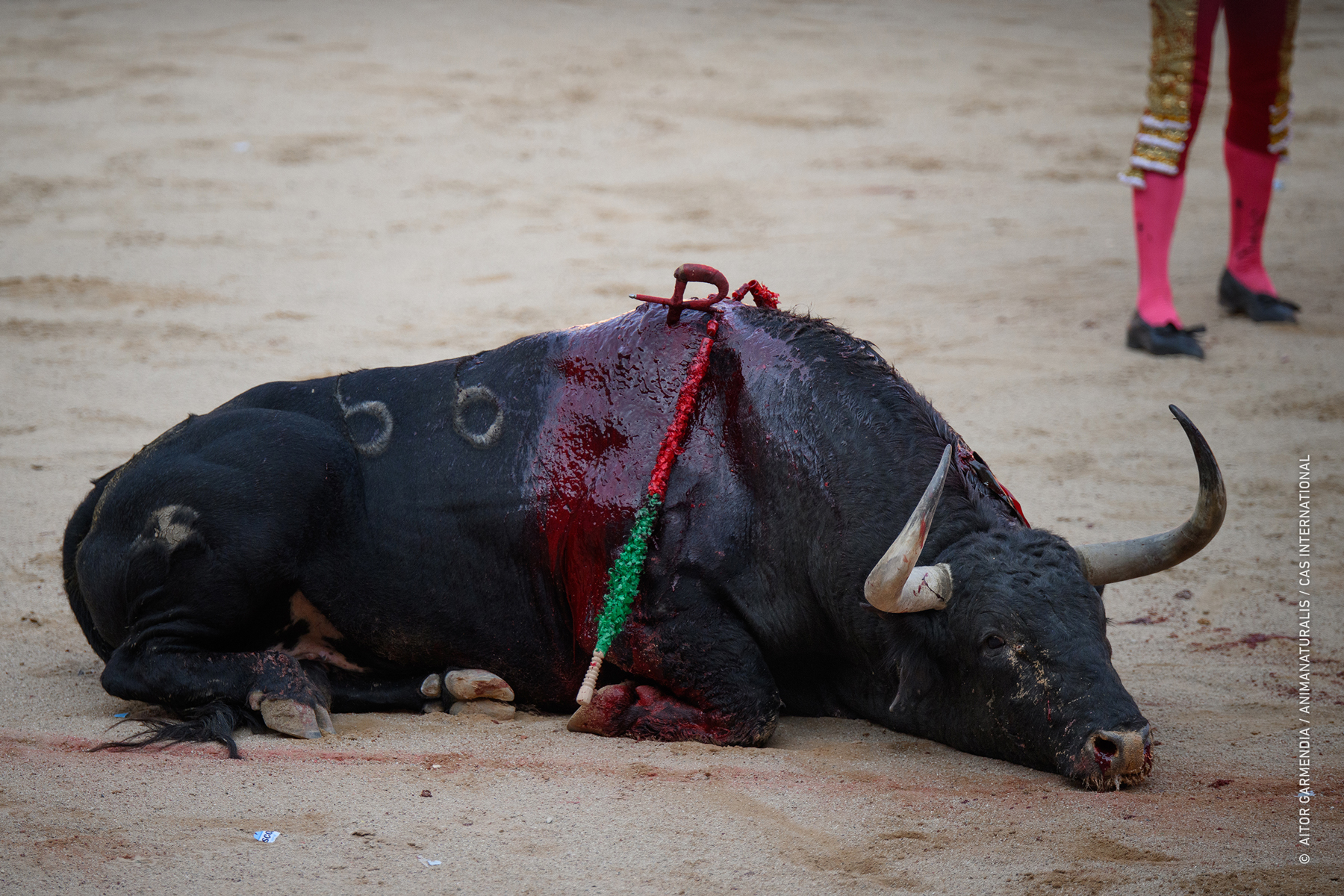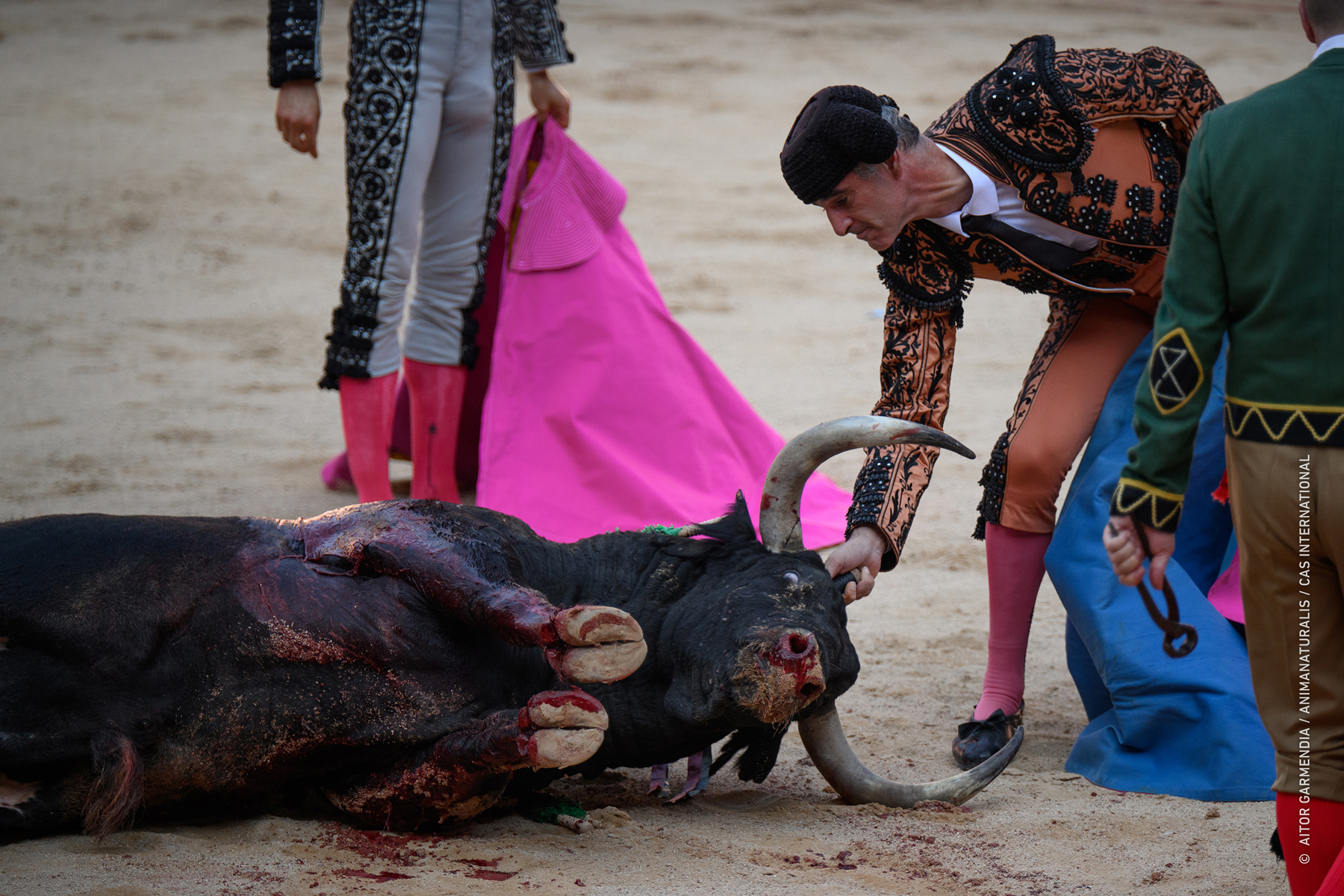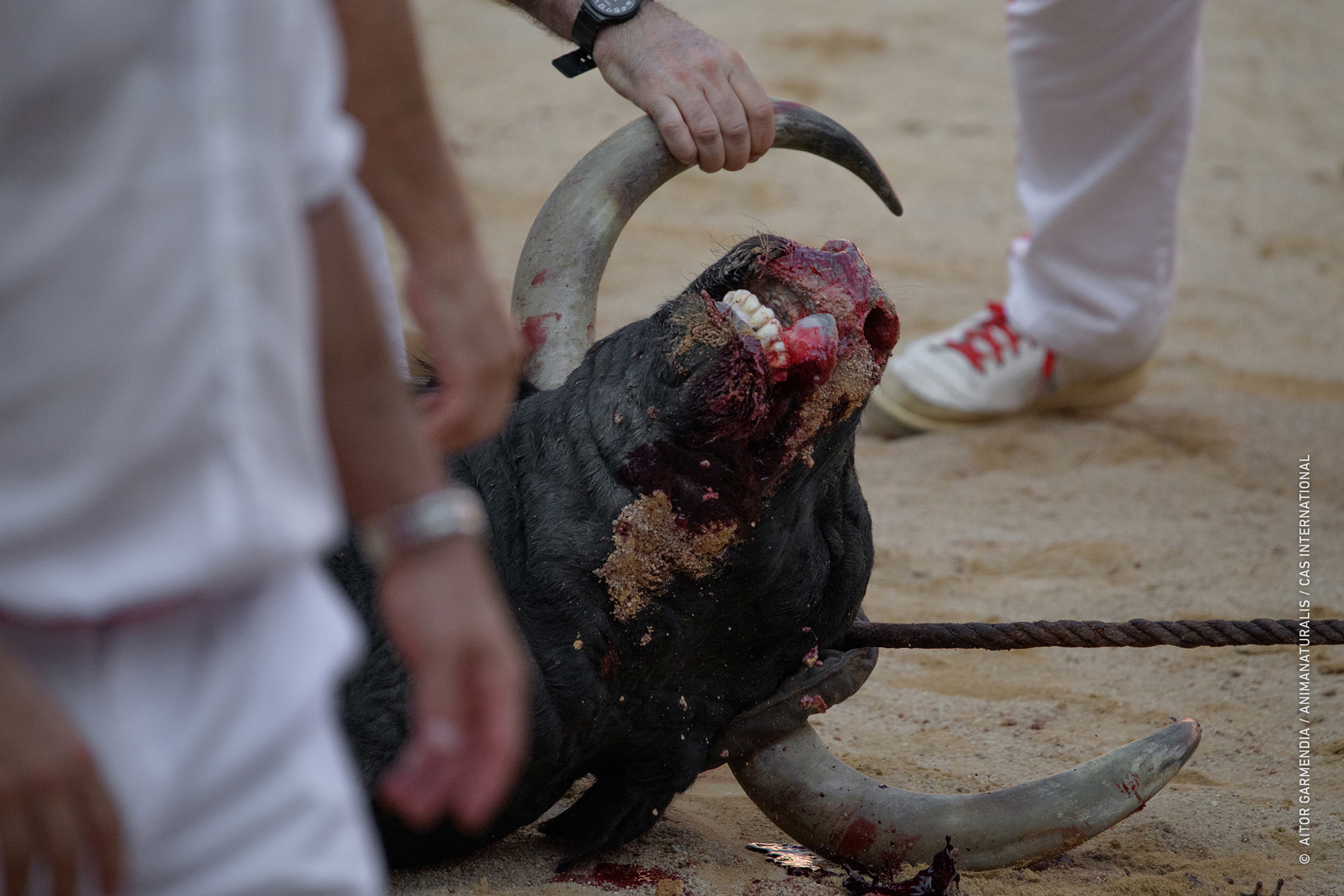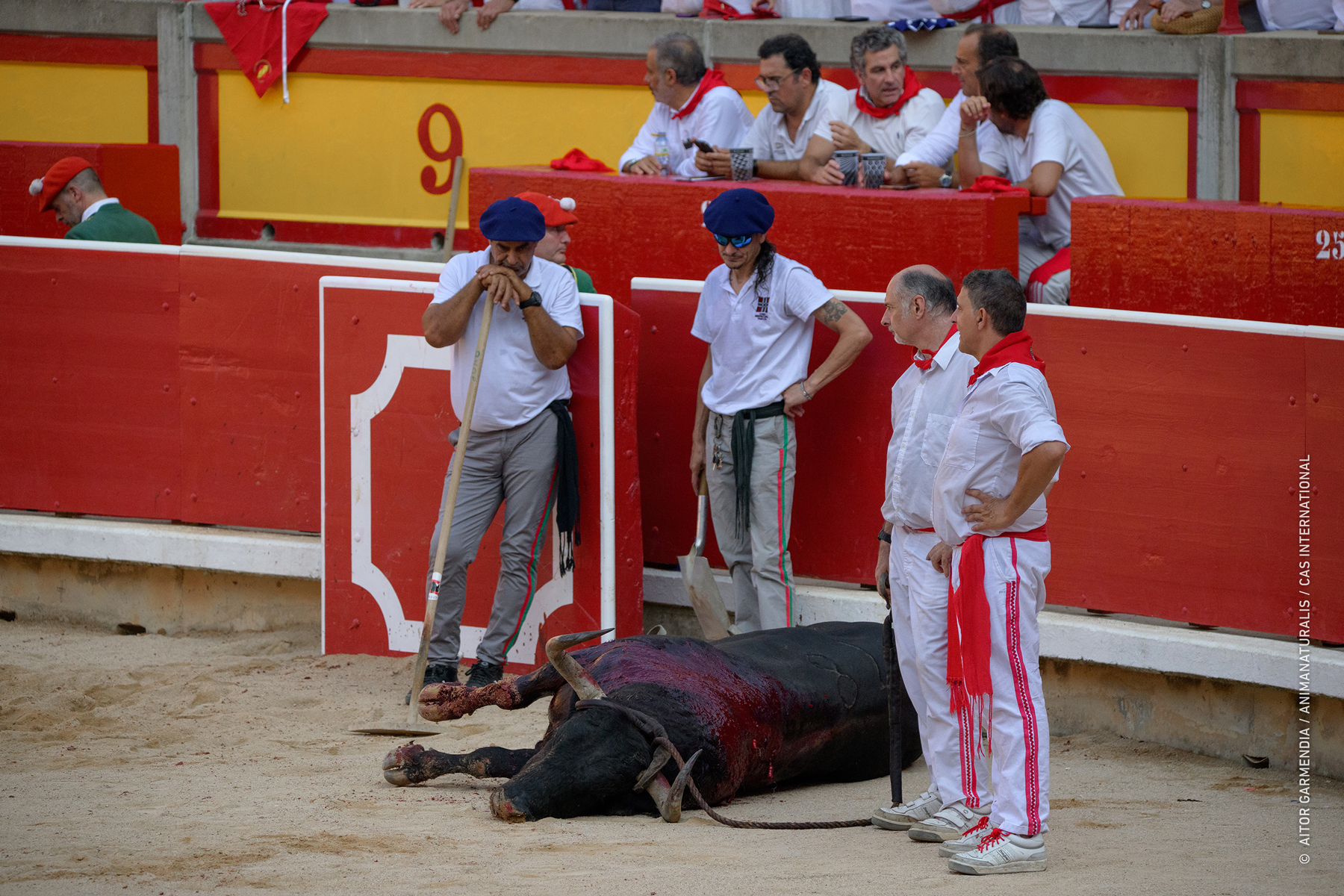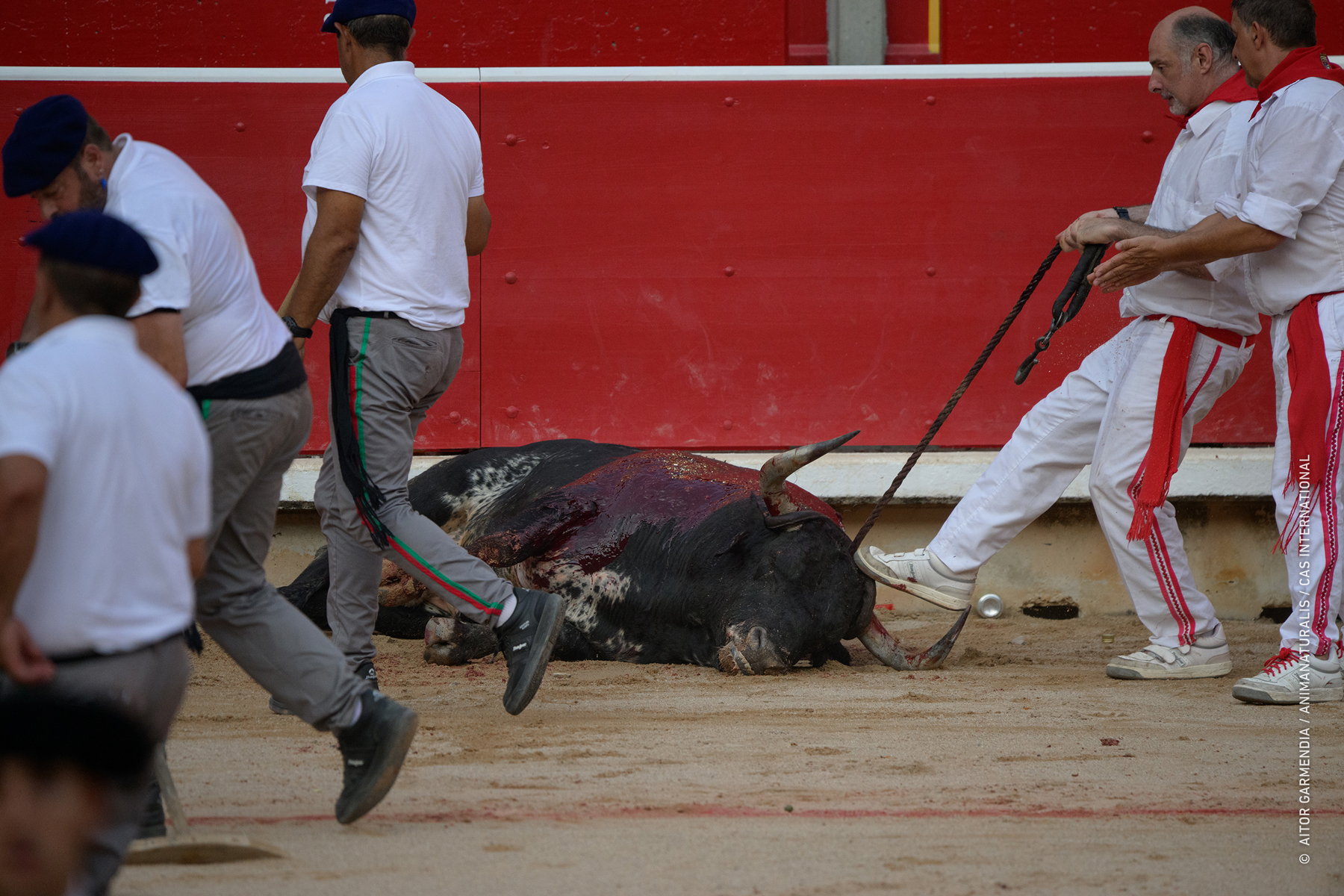
In the Santo Domingo pens, minutes before the bell of the San Cernin church struck eight in the morning on July 8, six bulls from the Herederos de José Cebada Gago ranch waited alongside the steers for the rocket that opens San Fermín's second running of the bulls. None of those six animals — Manijero, Branador, Cepillito, Filósofo, Pintado, and Palillero — would see another sunrise.
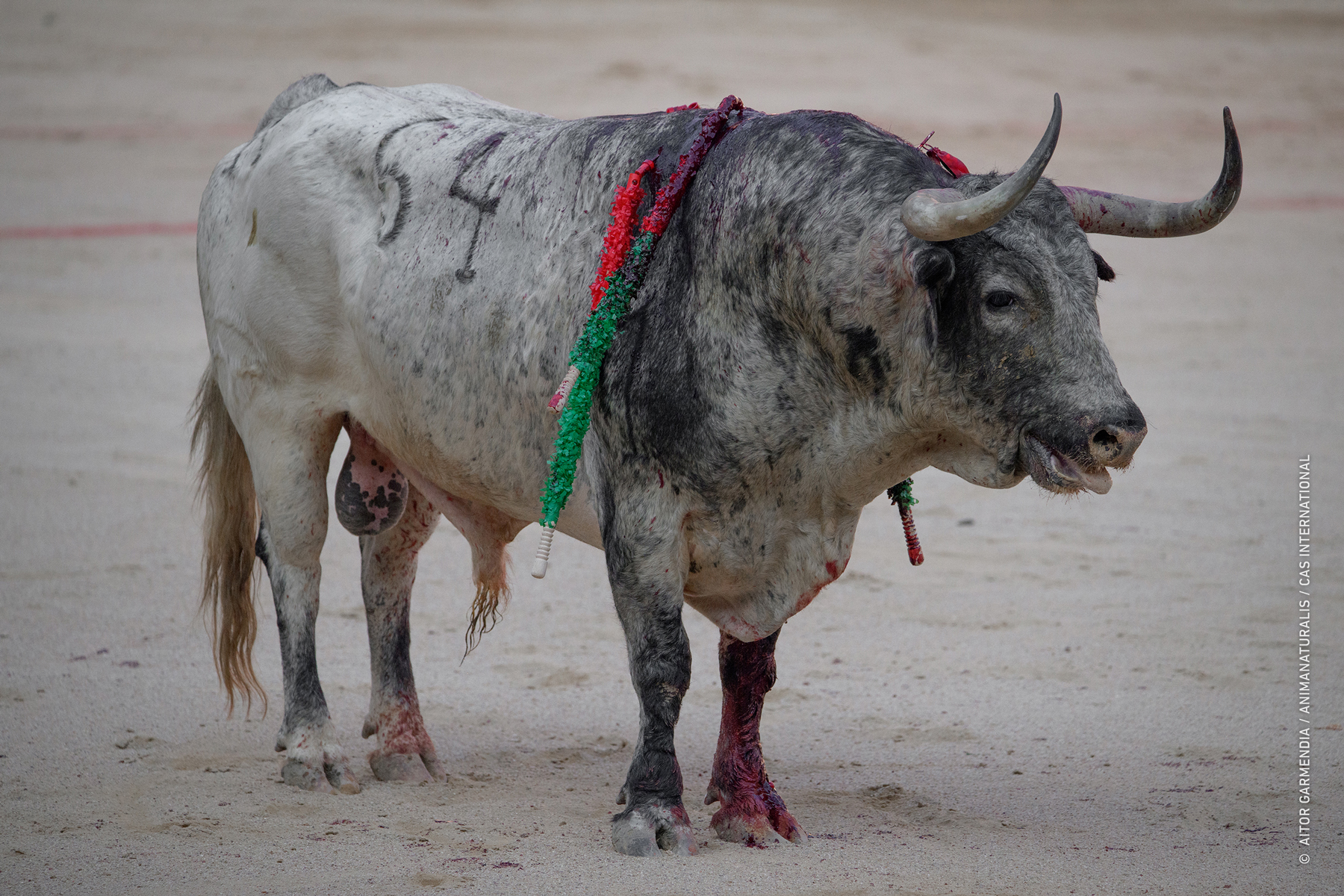
The investigation team witnessed the full cycle that morning and afternoon: the run the city celebrates as a feat of daring, and the death the broadcasts prefer not to show in detail. These bulls deserve to be remembered as individuals, not just as a stampede. Palillero, branded with the number 13; Filósofo, number 64 and light grey; Branador, number 66, black with a white-marked underside; Pintado, number 70, mottled black with white streaking and markings; and Cepillito, number 78, black, ran ahead of the crowd for barely two minutes and twenty seconds. Hours later, five of them were fought and killed by sword in the same ring.
The sixth spot that afternoon wasn't filled by any of the bulls that had run that morning. One of them arrived at the ring's pens in no condition to fight; it may have been an injury, a fall, or a fracture, mishaps that are common after the run. Manijero, one of the reserve bulls the organization always keeps on hand for last-minute substitutions, took his place. He, too, died that afternoon.
Two minutes of running, eight hours to a death sentence
The speed of the run didn't spare human suffering: a 23-year-old runner from Gipuzkoa was gored in the Telefónica stretch, and two other people were treated for a leg bruise and a hemorrhage after a fall, according to medical reports collected by police. With this run, the ranch now counts 64 gorings across the history of the running of the bulls, the highest tally of any ranch taking part in the festival. Not even a serious injury earns a reprieve: a bull that doesn't arrive at the ring fit to fight isn't spared death, its death is simply passed on to another reserve animal that takes its place that same evening.
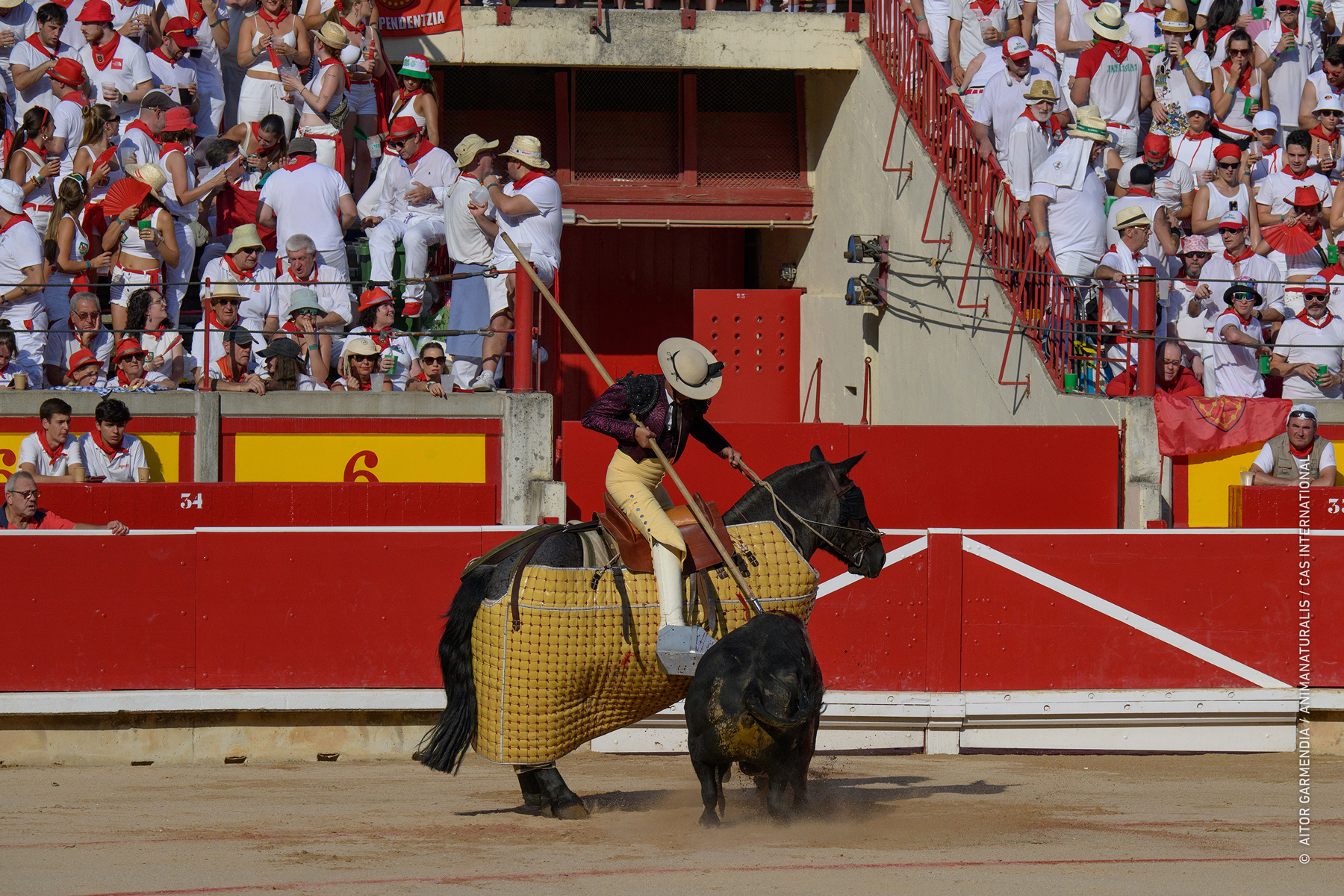
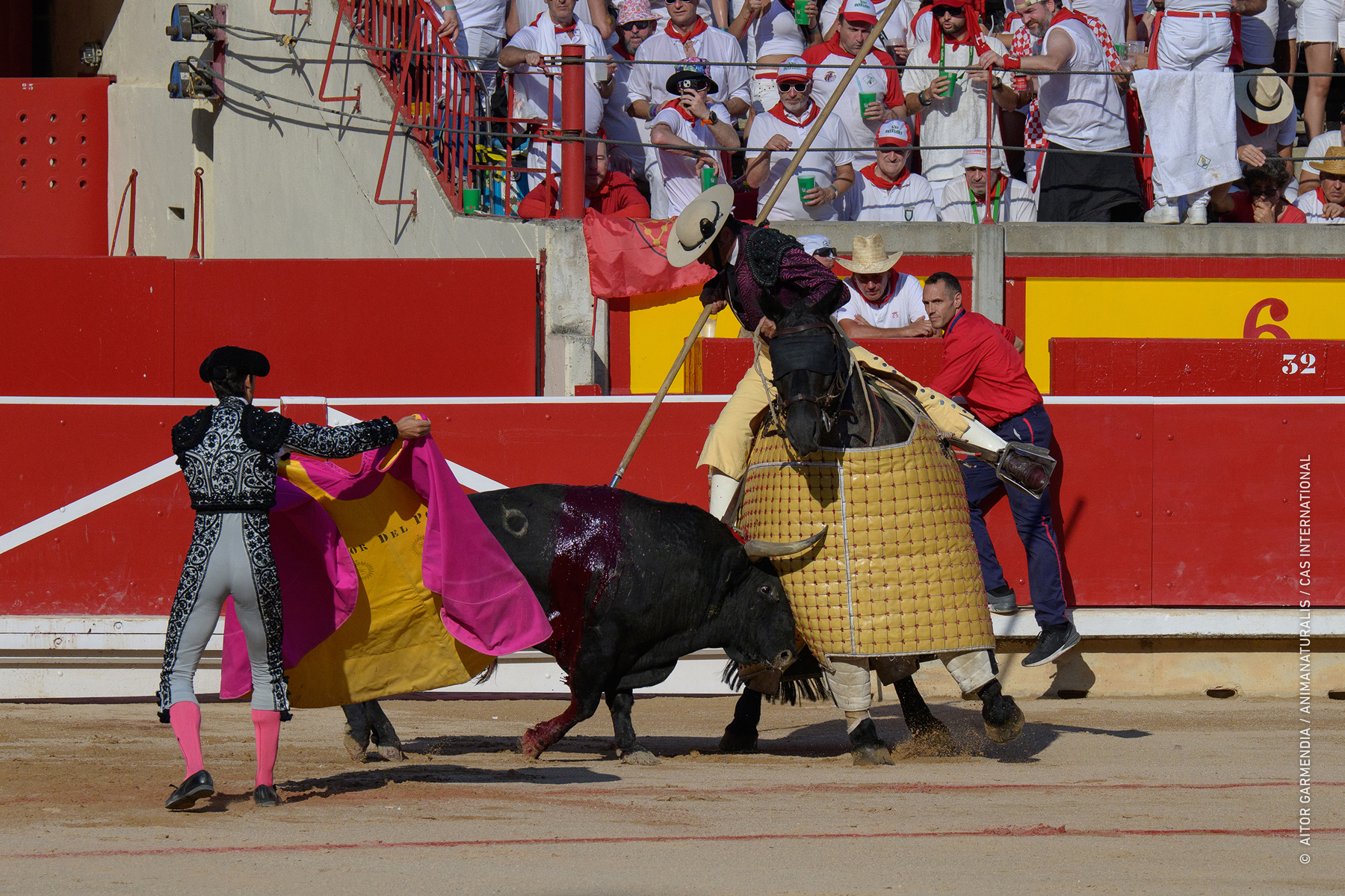
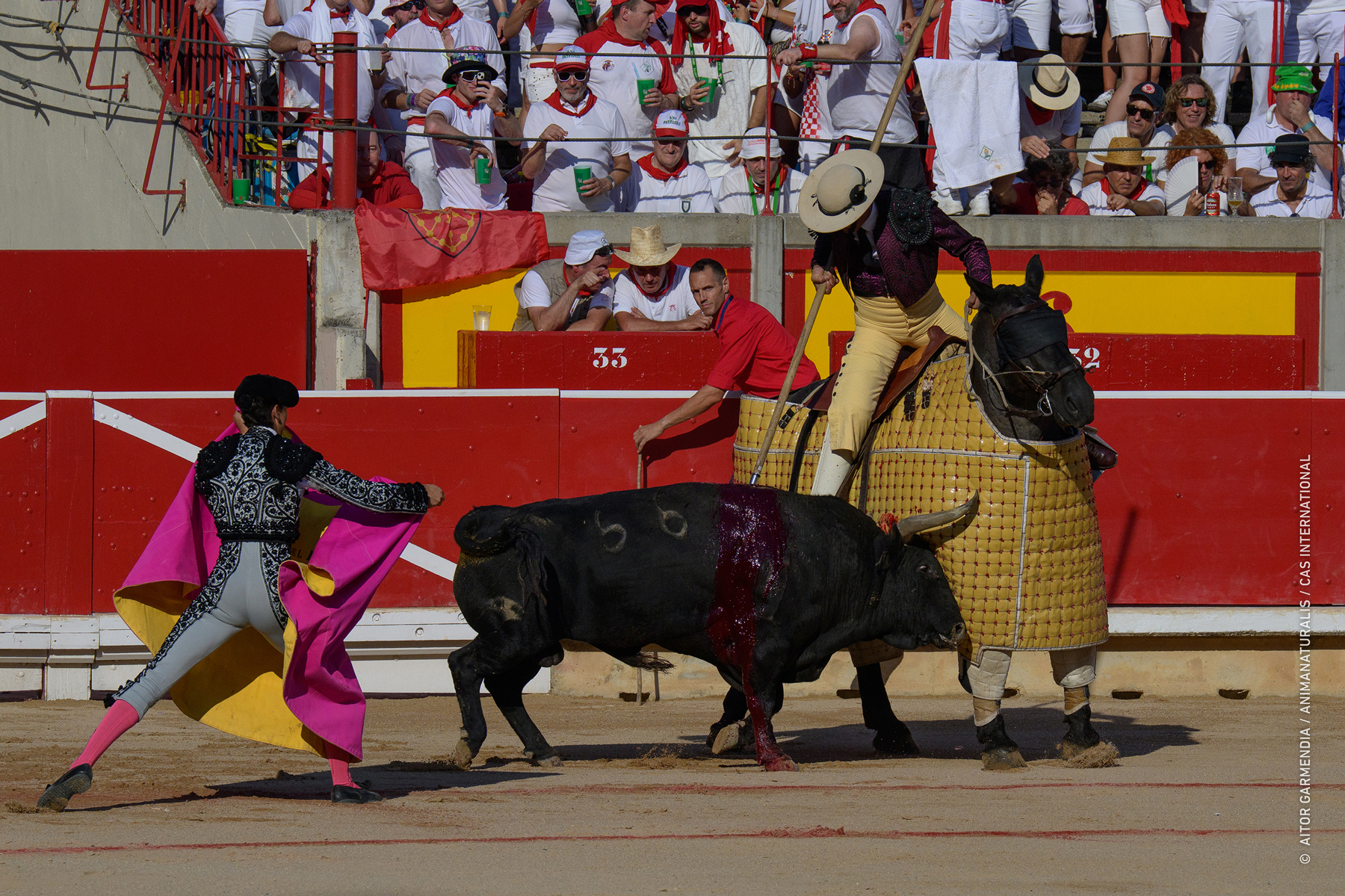
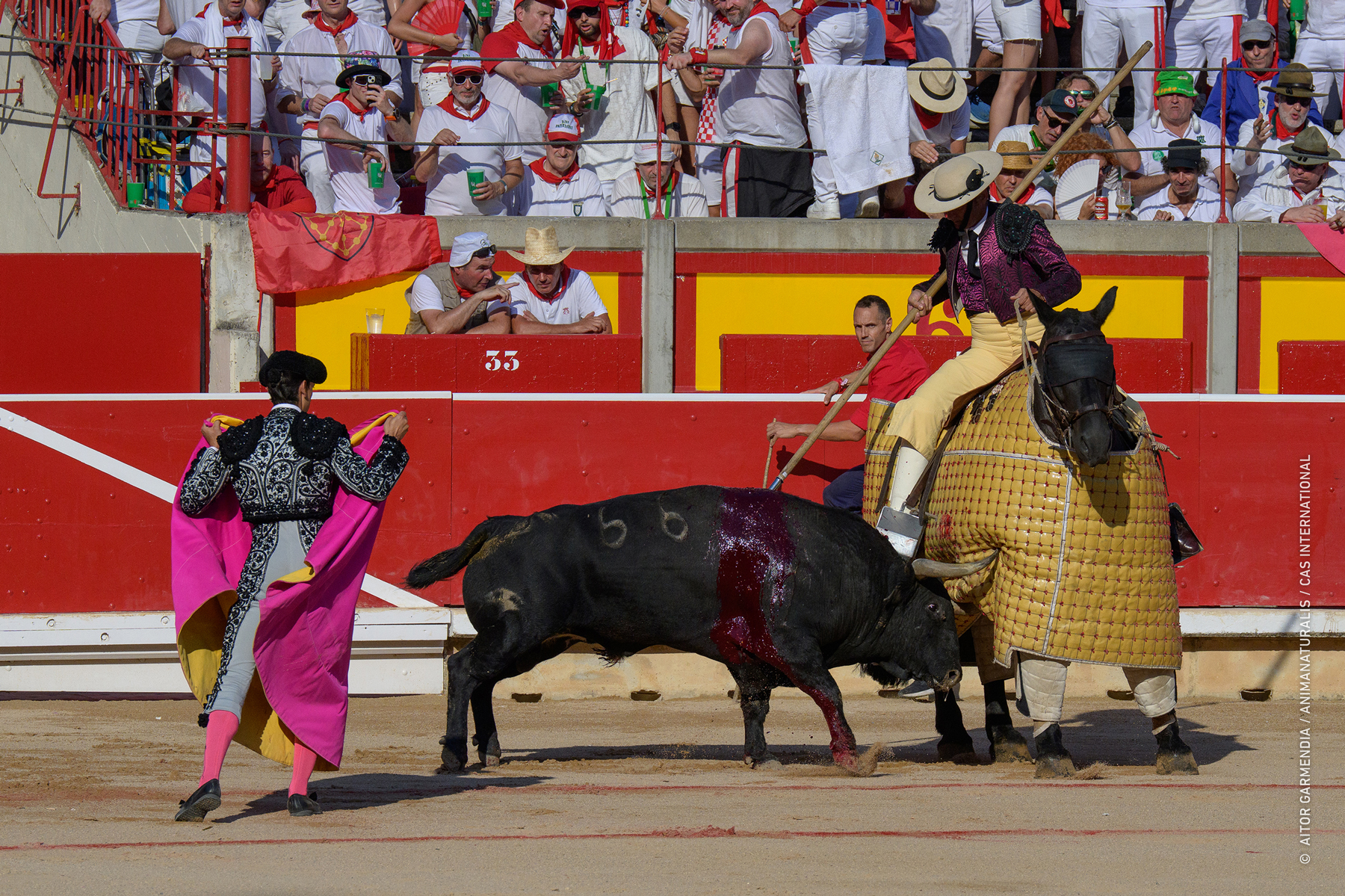
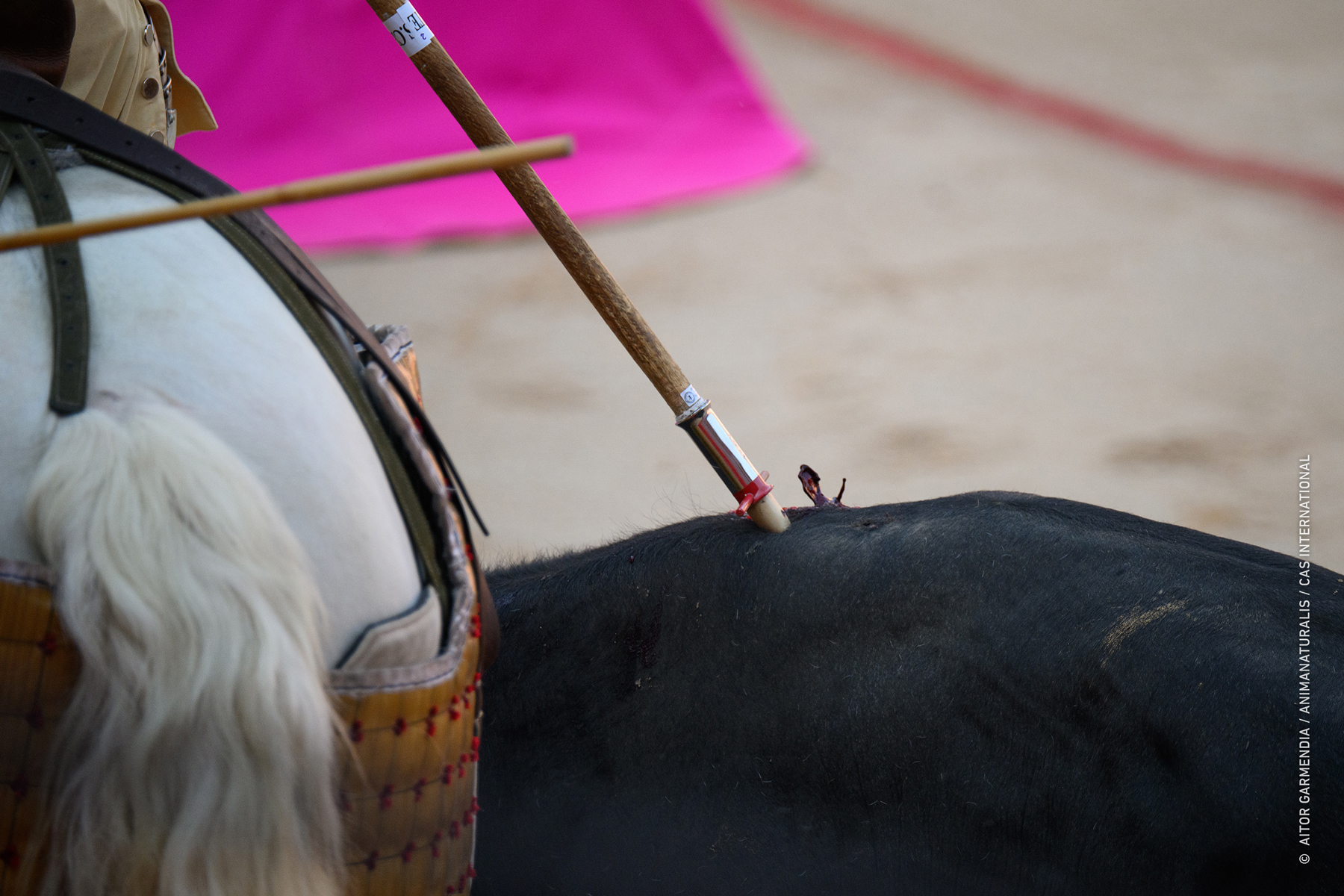
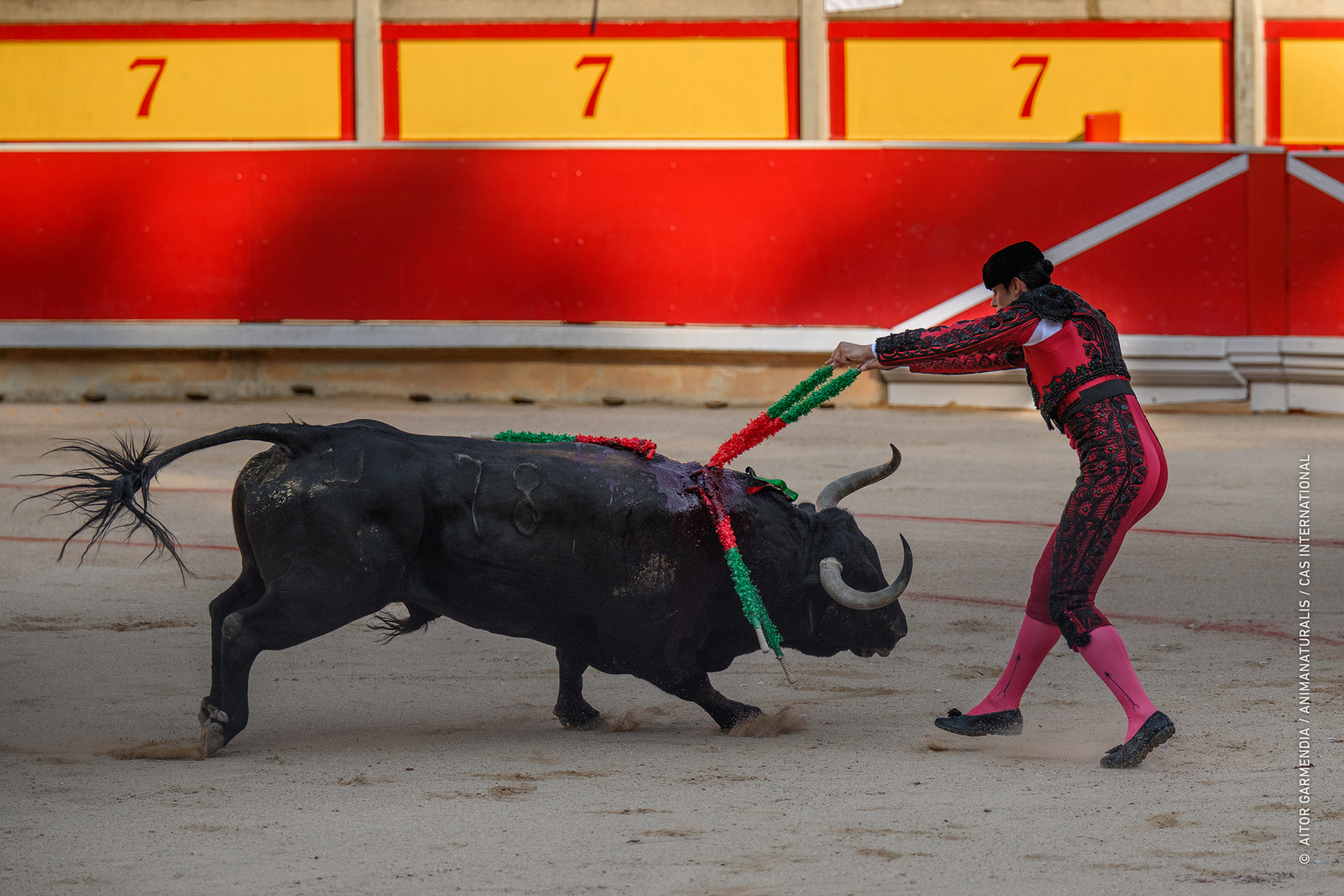
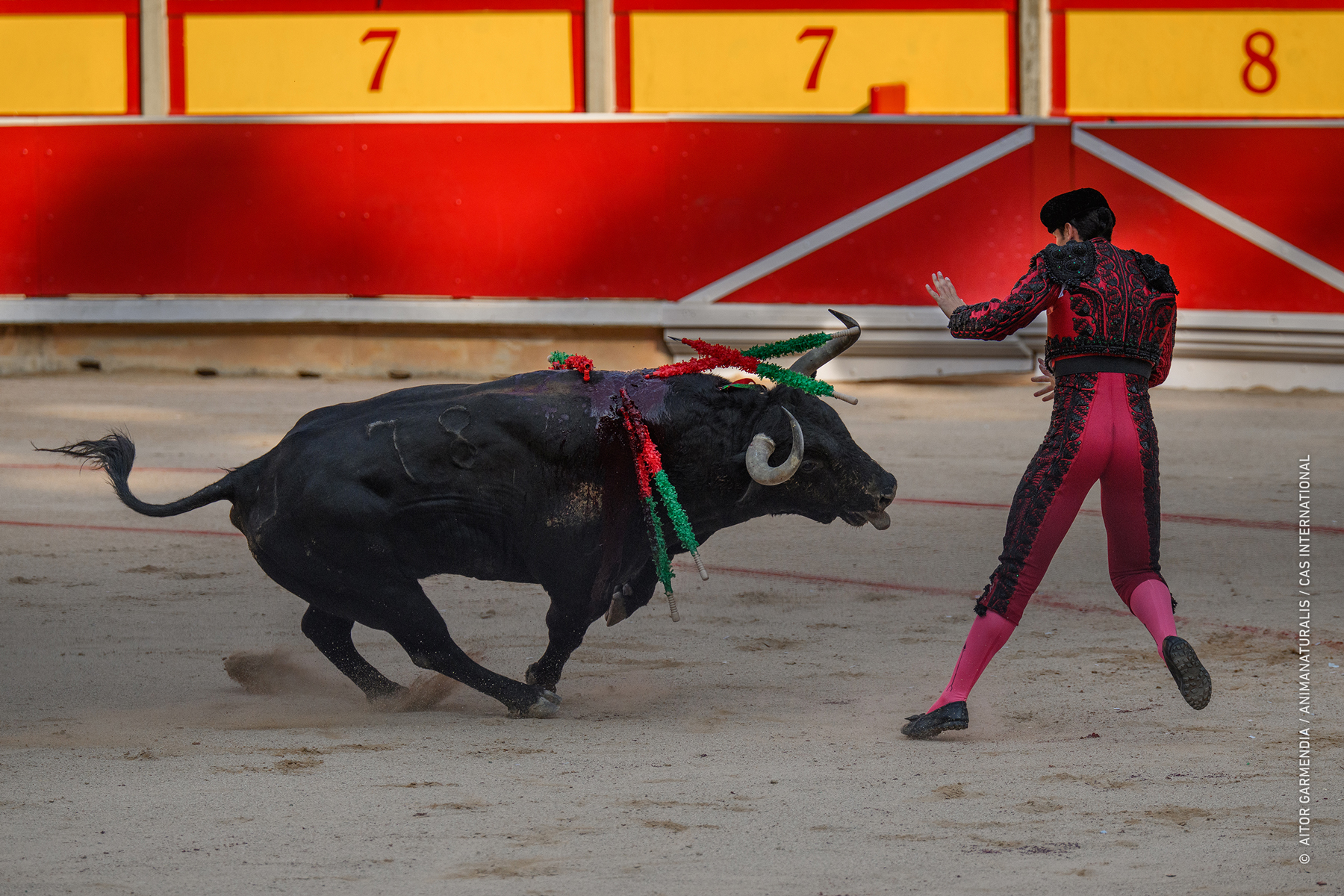
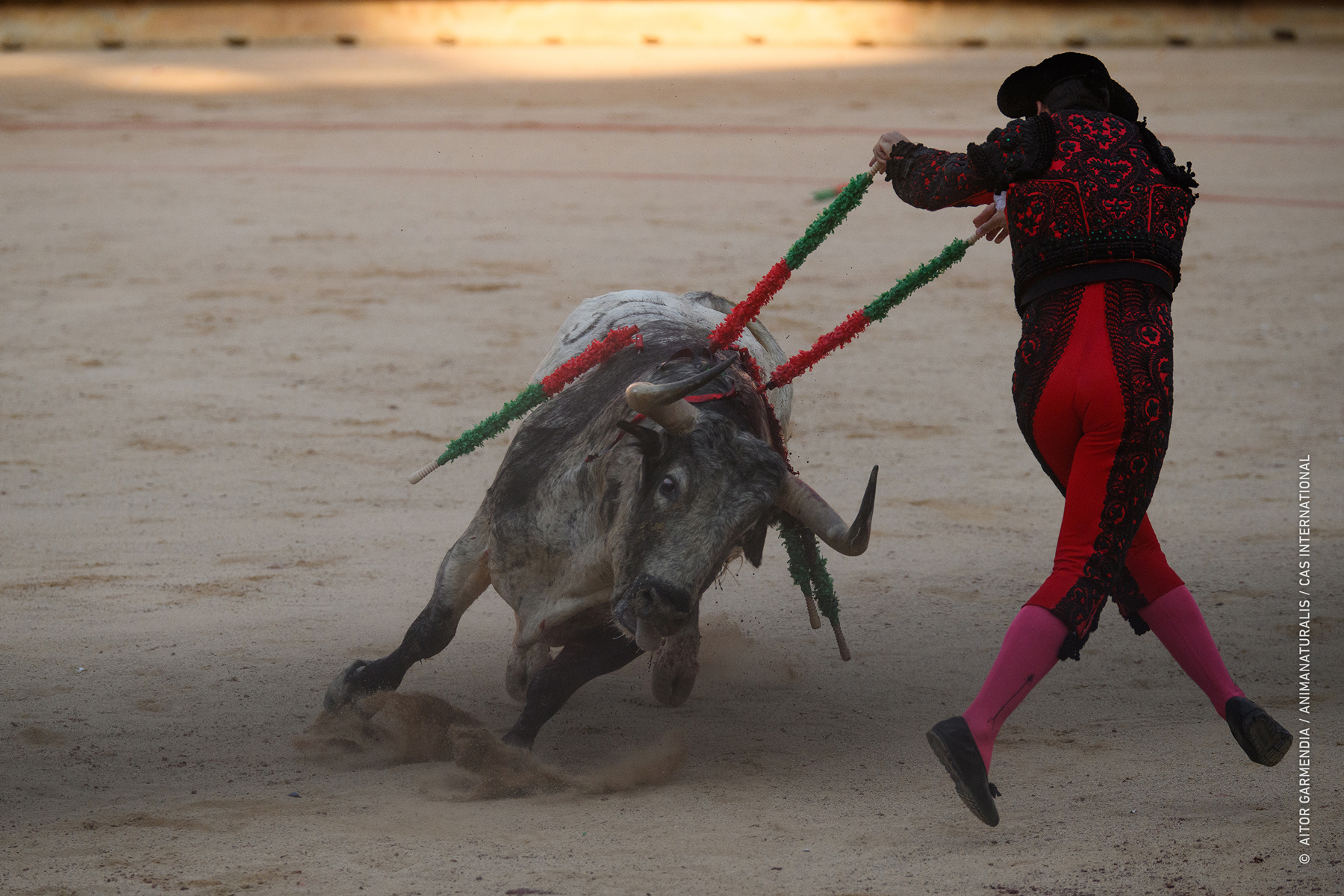
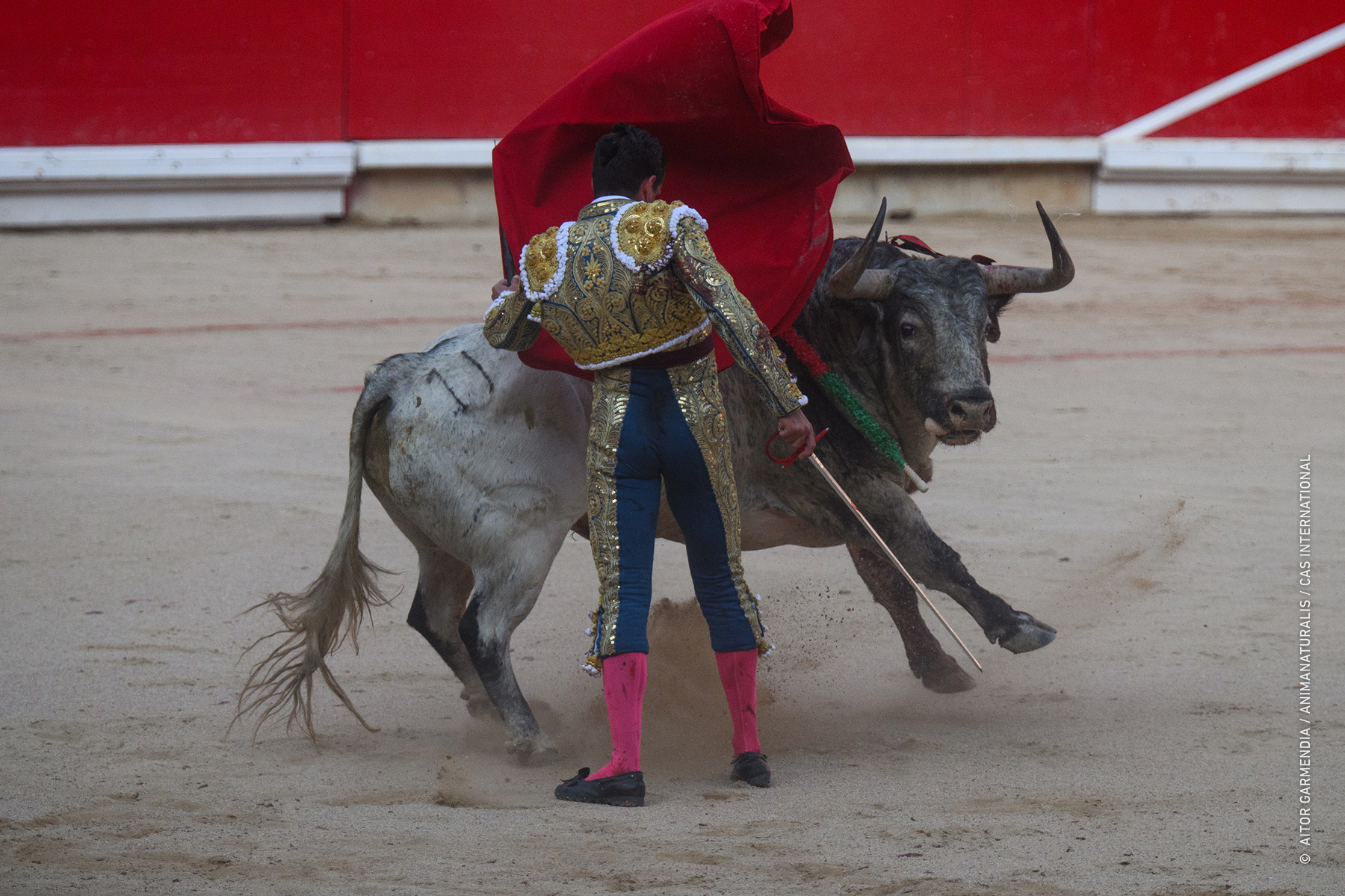
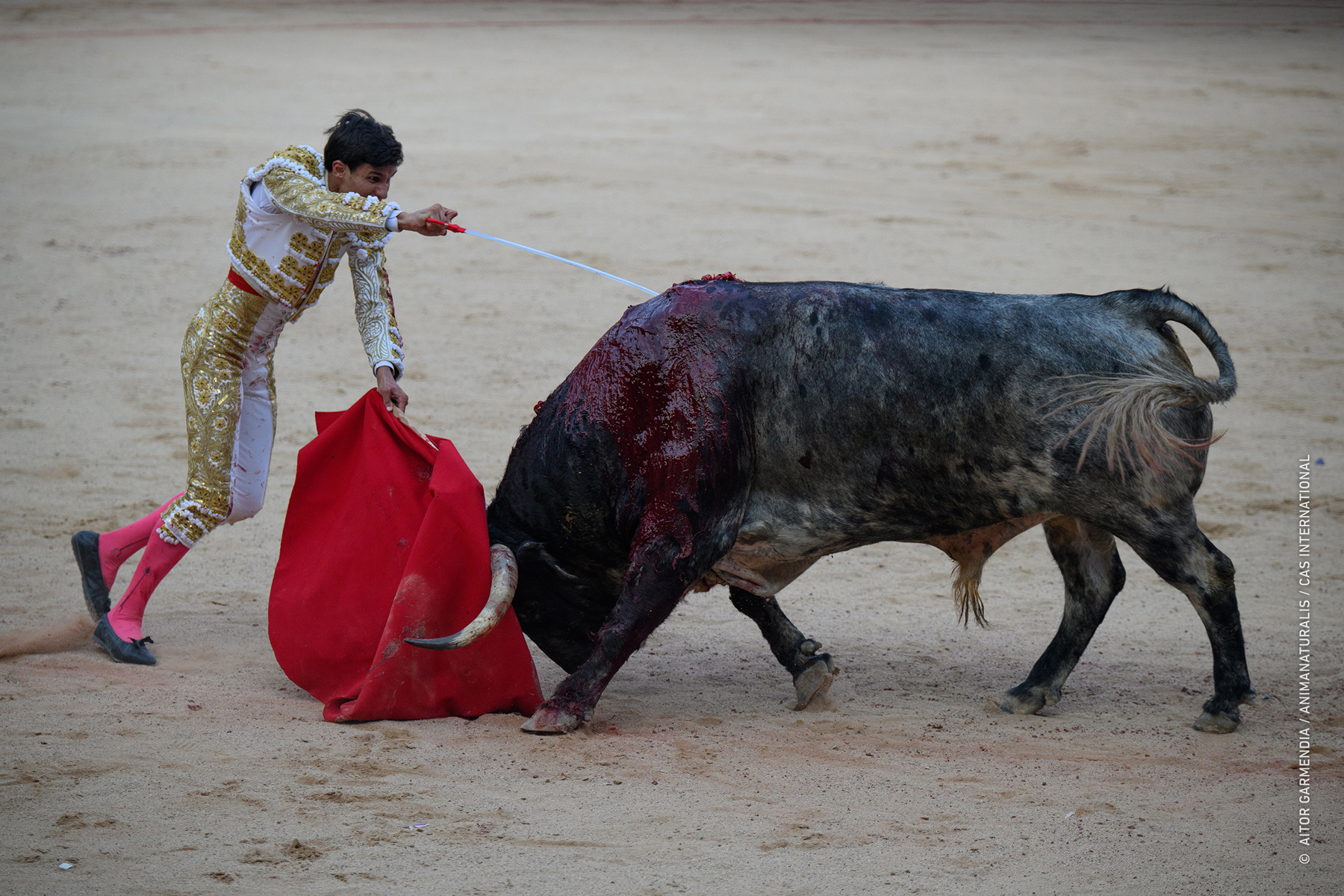
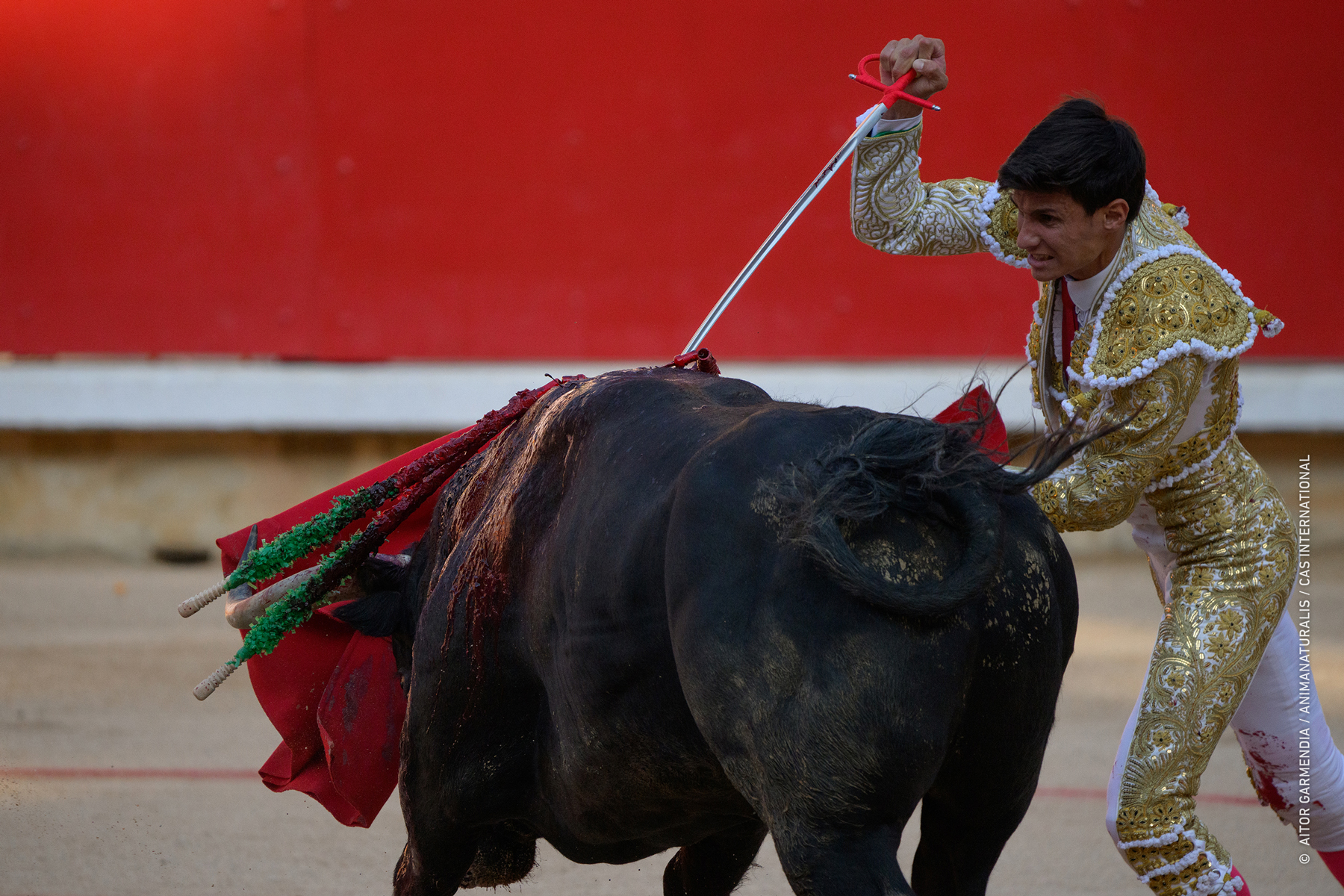
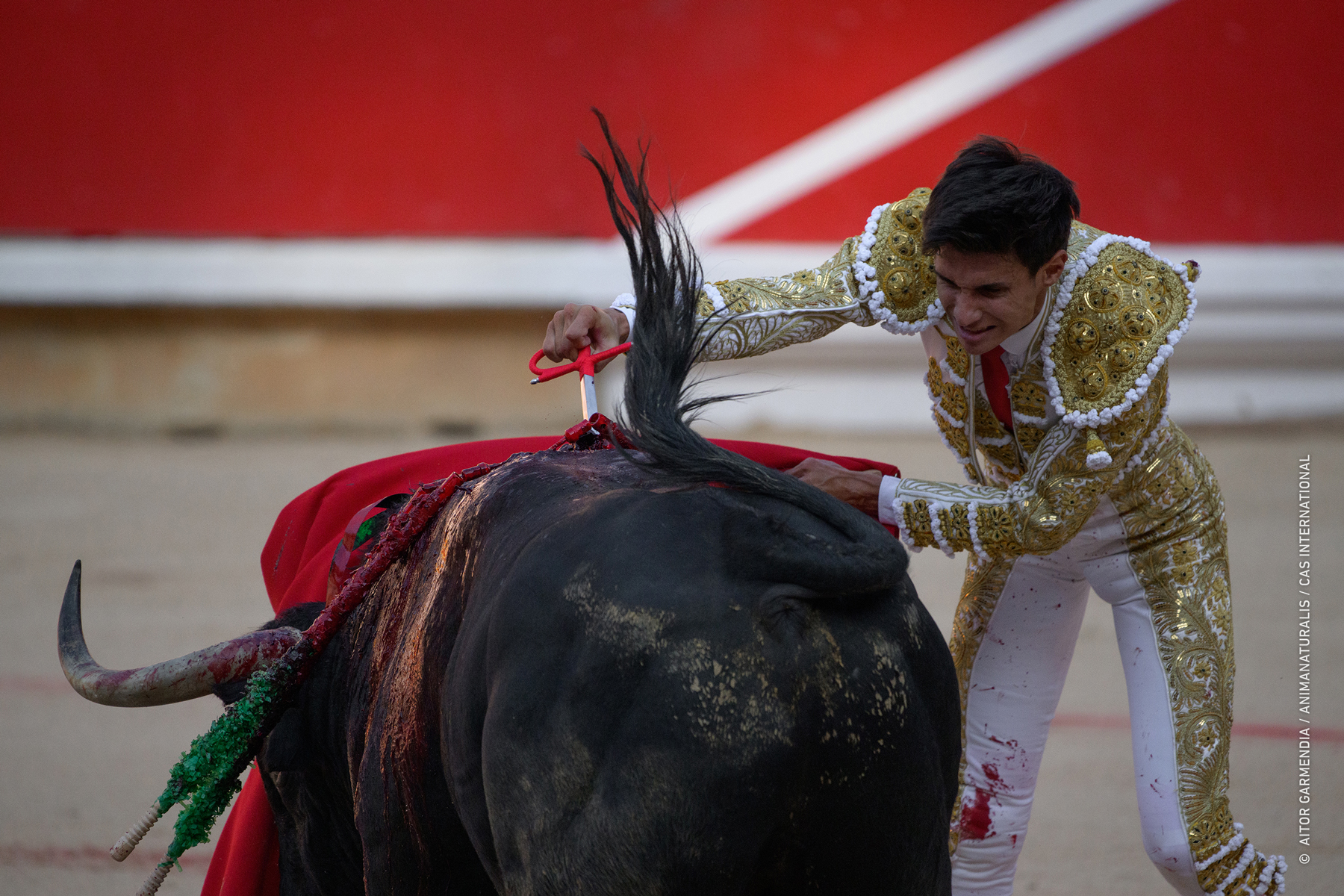
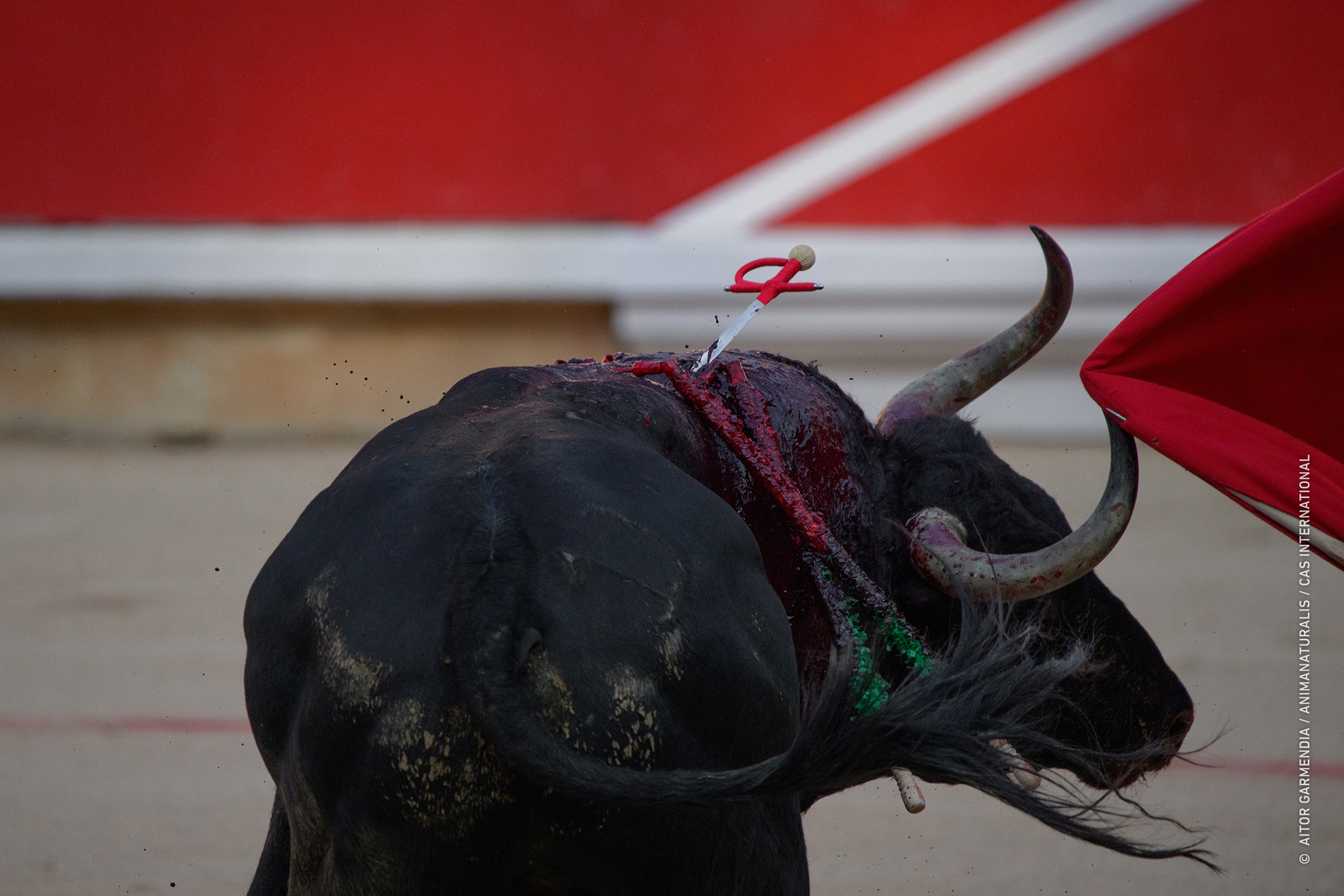
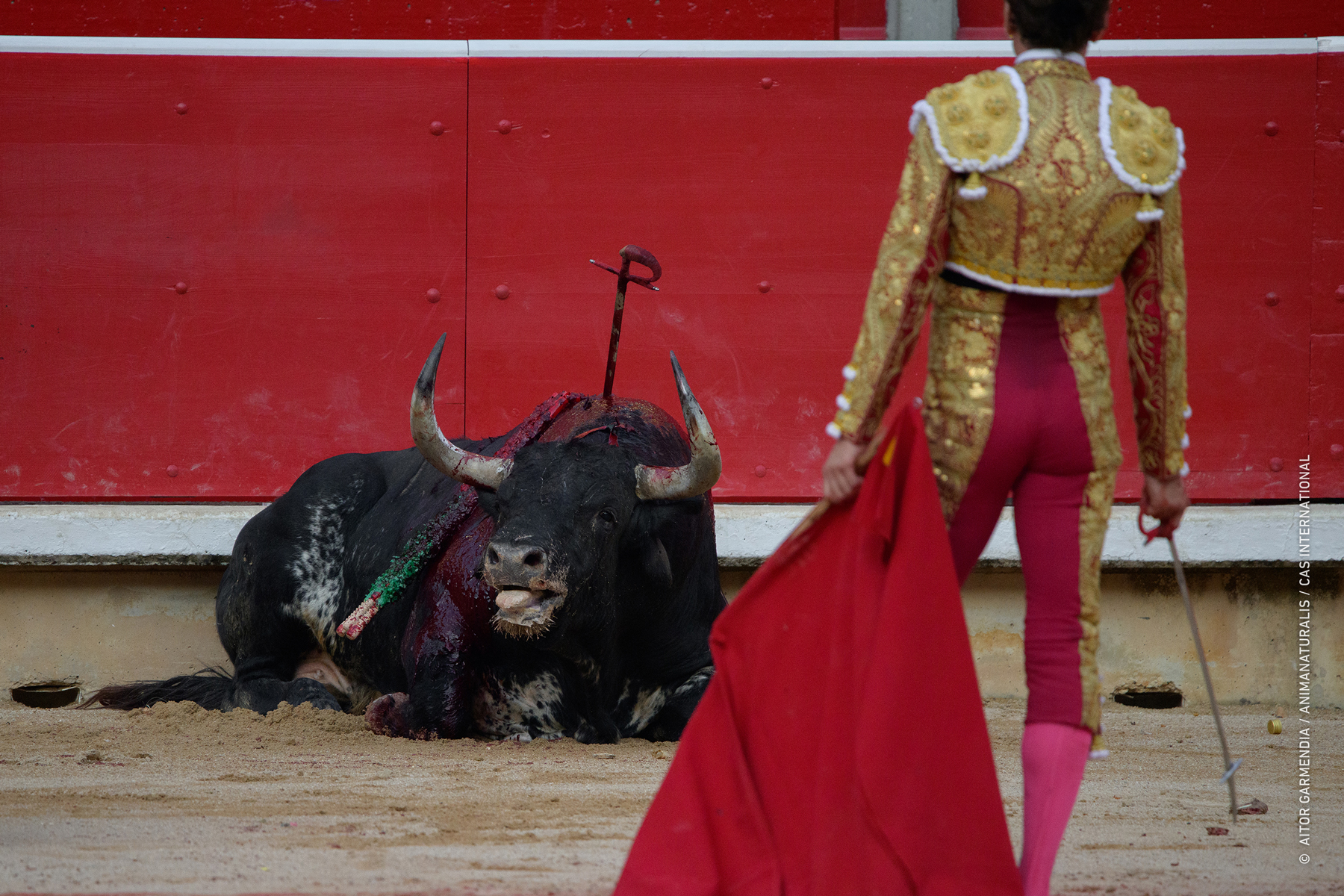
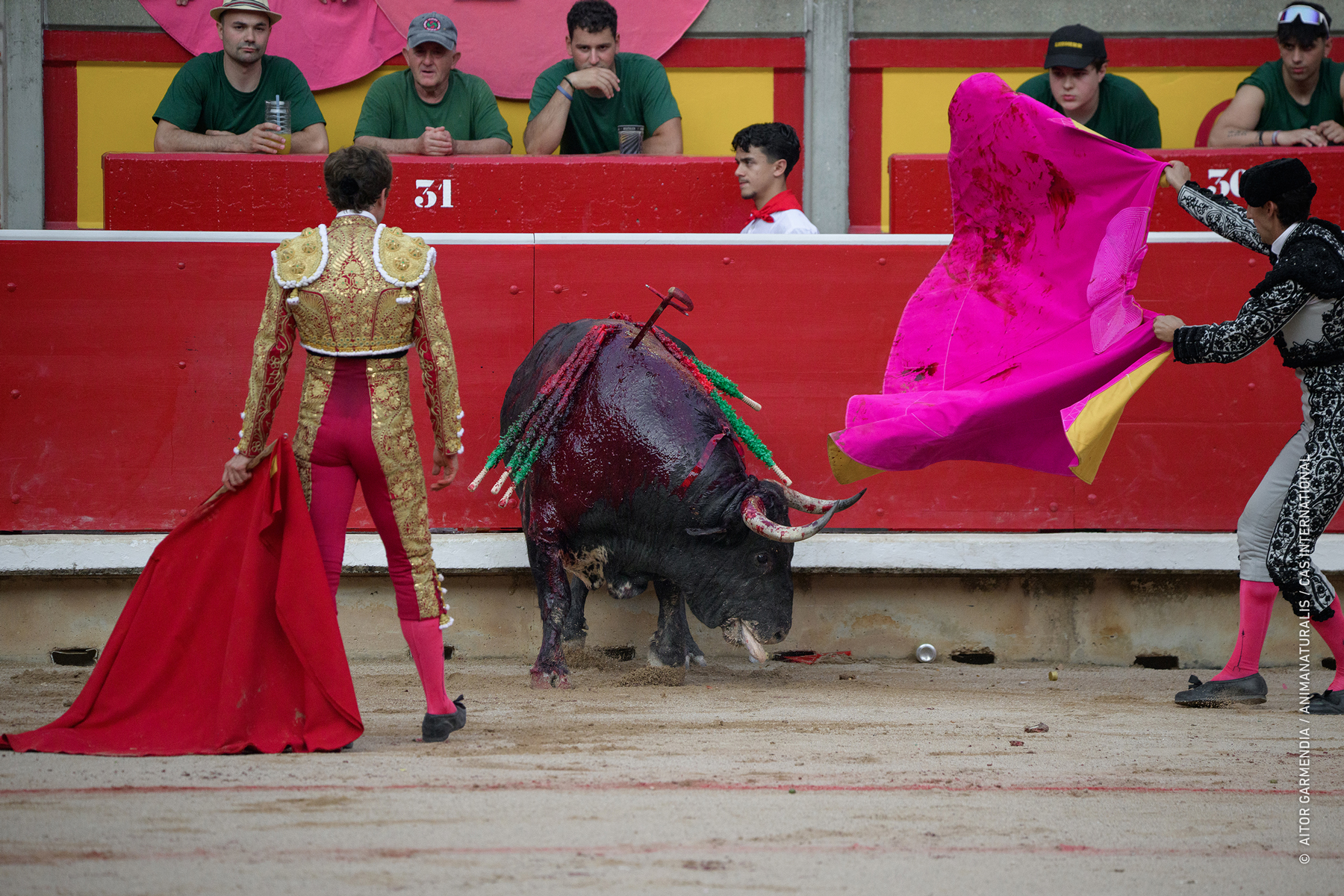
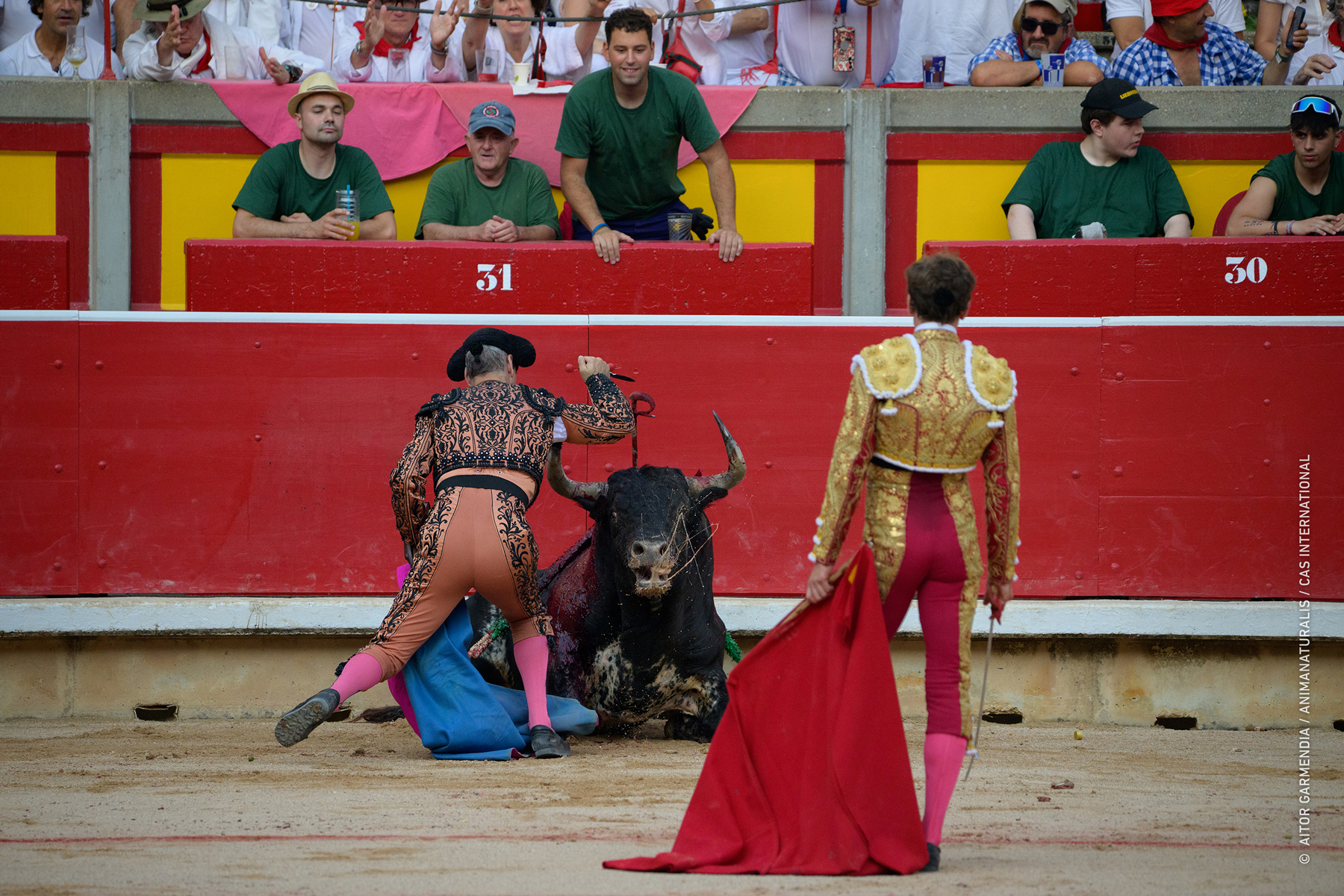
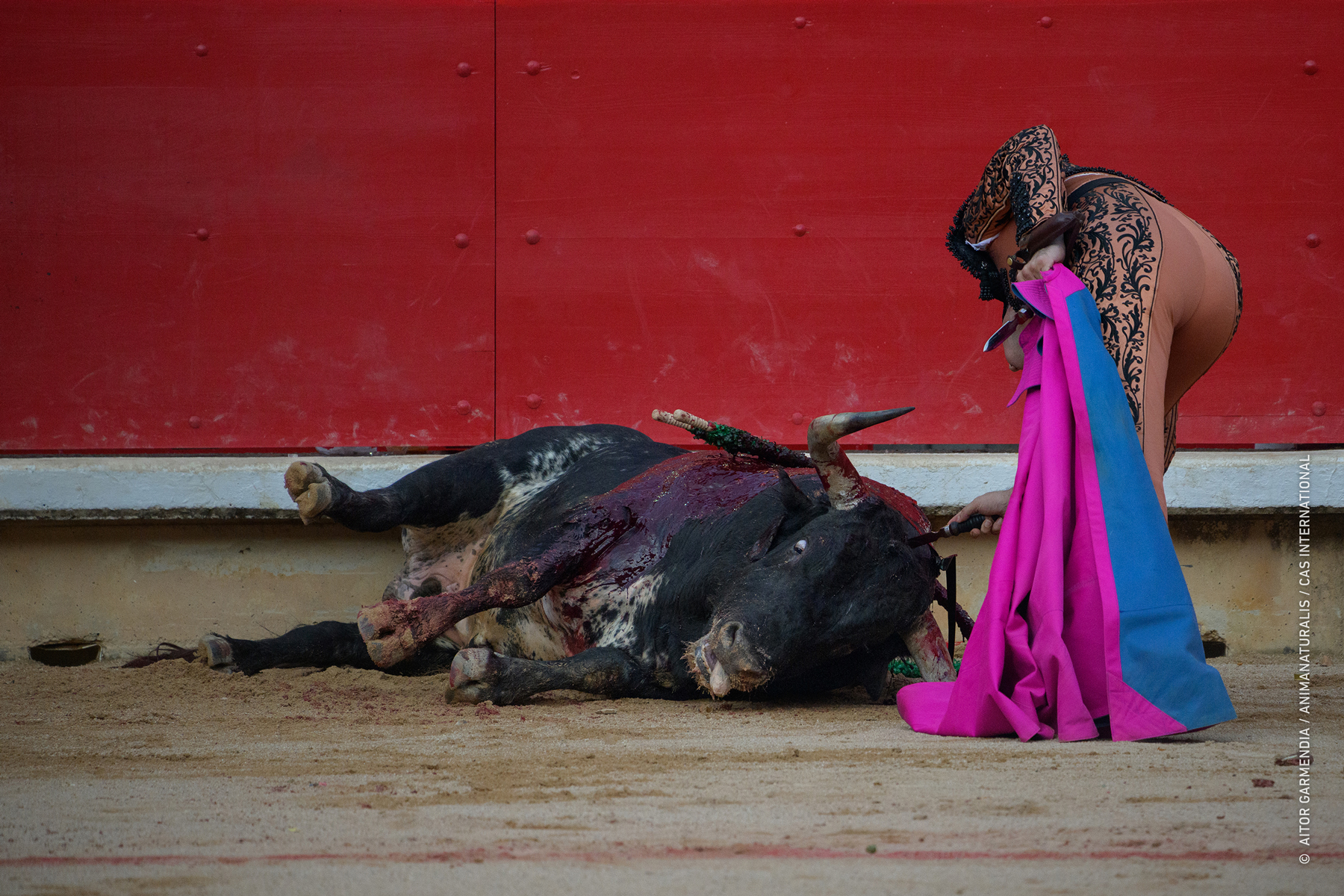
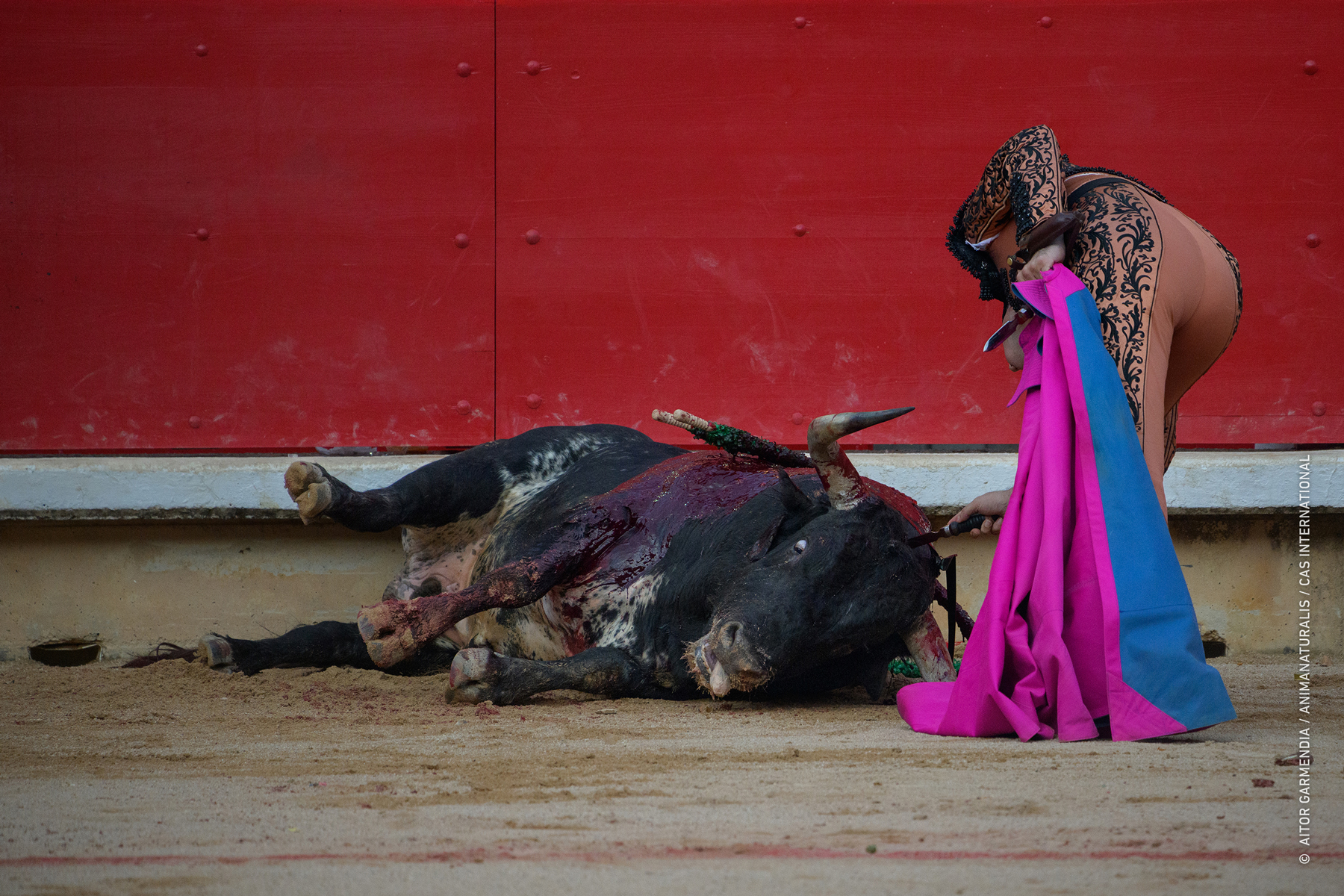
"Every morning we sell the thrill of the race, and hide the afternoon it ends in," says Aïda Gascón, director of AnimaNaturalis in Spain. That same afternoon, in the ring, each of the six bulls faced the same script: the lance that tears into the neck muscle, the barbed sticks driven into the back as the animal, already exhausted, tries to twist free, and the final sword thrust that doesn't always land clean on the first try. There was nothing extraordinary about that death: it was an ordinary bullfight, like all the rest.
What the cameras tend to avoid
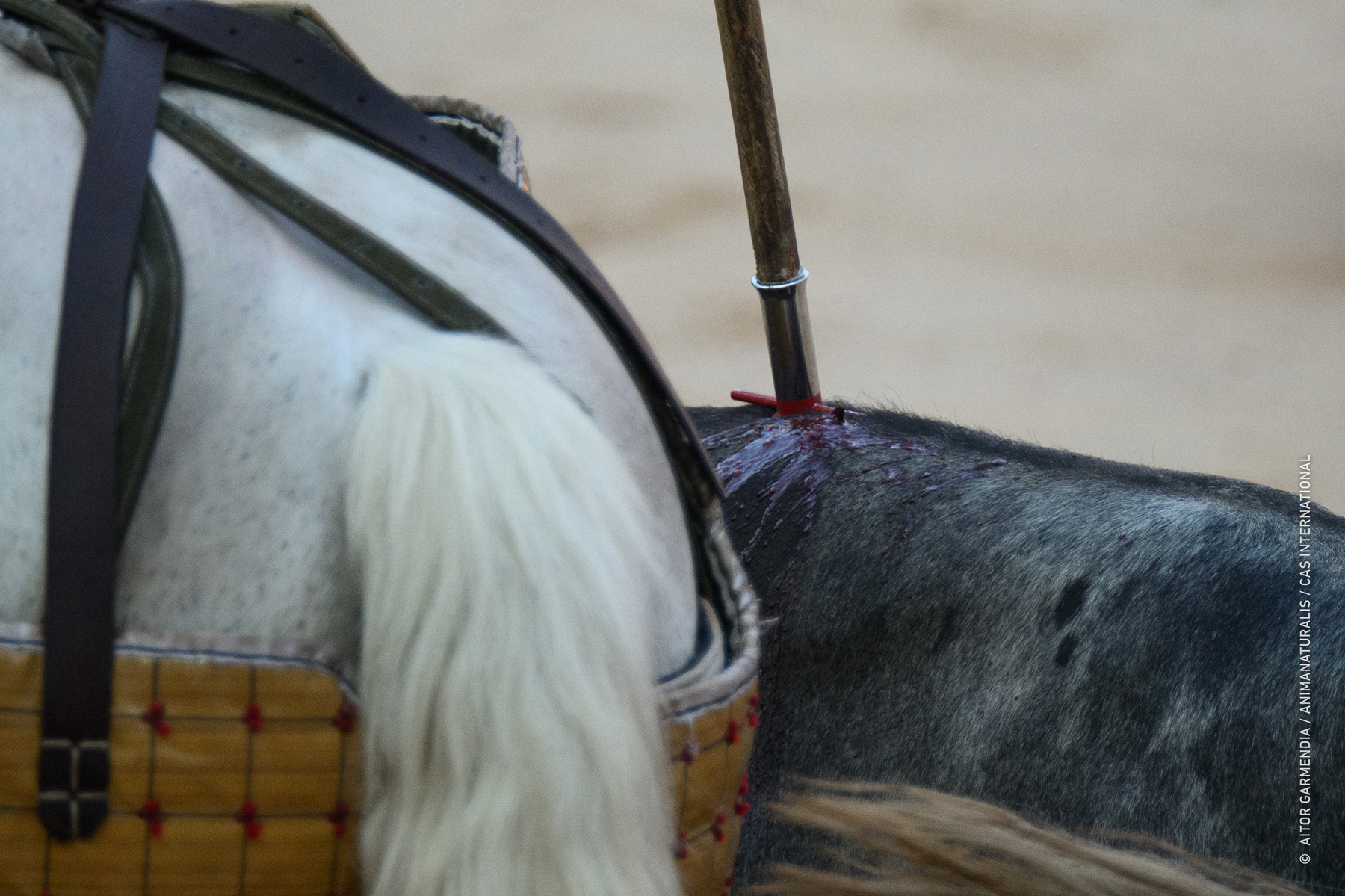
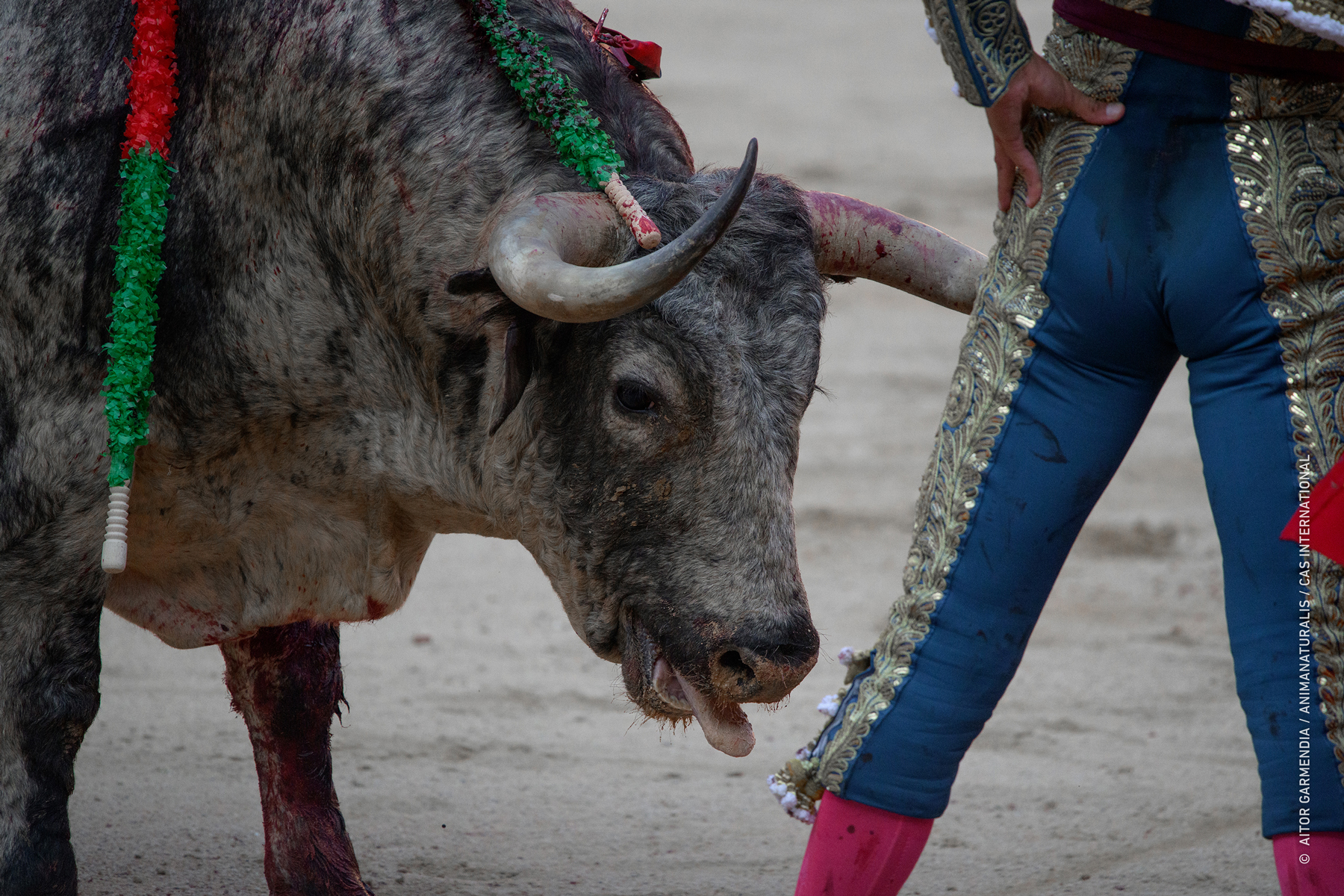
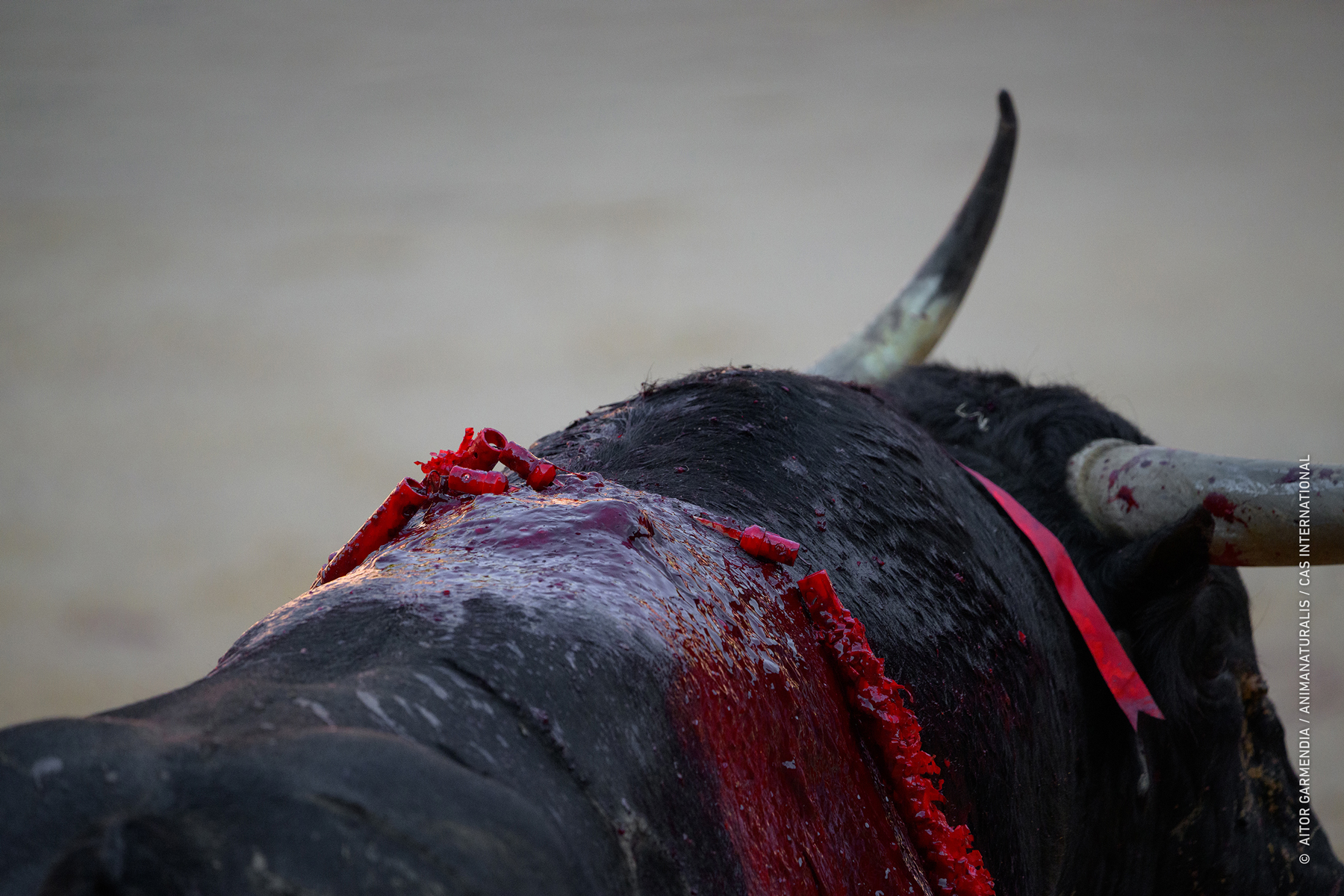
From the stands, the first lance already leaves the animal panting: the horse's padded protection presses against the bull's neck muscle, and the bull charges into the blade again and again, losing with every charge the strength in the neck it will need to hold its head up for the rest of the afternoon. The bleeding starts then, dark and thick, spreading across its back as the animal stays on its feet, forced to keep moving for the show.
During the banderillas stage, two or three more barbed sticks are driven in near the first wound, and the bull, breathing more and more raggedly, gasps for air with its mouth open and tongue out as its steps falter. The final stage isn't always clean either: if the sword doesn't pass cleanly through the lung, a second thrust or a dagger strike to the spinal cord is needed to finish off the animal once it's already down, with nothing left, before the mules drag it out of the ring.
The scene repeats itself eight afternoons each fair, but it connects with fewer and fewer people each year. Only 8% of Spain's population attended a bullfighting event in the past year, according to the Survey of Cultural Habits and Practices published by the Ministry of Culture. Seven out of ten people reject the use of animals in bullfights as unacceptable, according to recent studies.
That gap between the festival and the street also shows up in other polls: 78% of Spaniards don't consider themselves bullfighting fans, according to a Sigma Dos poll for El Mundo, and that rejection grows among women and people under 30. Even so, the "Not My Culture" Popular Legislative Initiative, which gathered more than 715,000 signatures to strip bullfighting of its cultural heritage status, was rejected this past October in Spain's Congress of Deputies.
The mercy house that charges admission
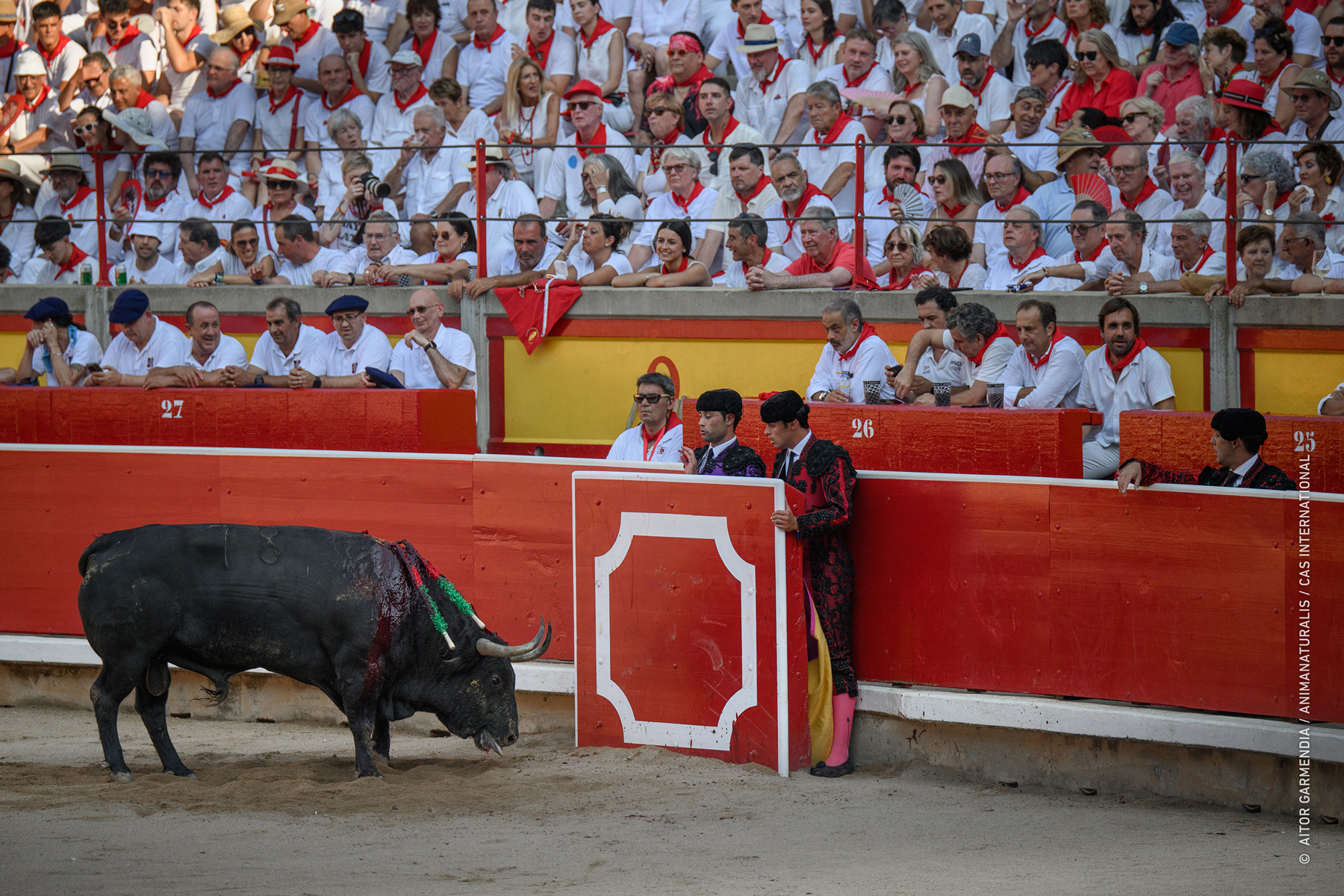
The ring where those six bulls died isn't run by the City Council but by the Casa de Misericordia ("House of Mercy"), a centuries-old charitable institution whose very name evokes compassion. Its profits, generated by a Bull Fair with a budget of close to 4.9 million euros this year, go toward residential care for vulnerable elderly people. Pamplona's mayor, Joseba Asirón, also chairs that same institution's board.
"No business rejected by 78% of society should be sustained with public money or presented as charity," Gascón adds. Adding to the contradiction is the sector's financial backing: according to complaints from veterinary associations such as AVATMA, ranches in the fighting-bull industry — including names tied to the great estates that breed fighting bulls, such as Cebada Gago — benefit from European Common Agricultural Policy subsidies, a fund meant to sustain agricultural activity in rural areas, not the killing of animals in a ring.
The good news is that the alternative isn't hypothetical. Several Spanish towns have already replaced festivities involving animal suffering with popular celebrations that don't include fighting bulls, without losing either the festive spirit or local identity. The 715,000 signatures behind "Not My Culture" show there's a broad social base ready to demand an end to the cultural heritage status that shields bullfighting from any animal welfare regulation.
The European Parliament itself is debating, in parallel, whether fighting bulls should keep receiving EU agricultural funds, and public pressure in that debate is already forcing institutions to publicly justify every euro spent. Every signature, every complaint, and every awareness campaign bring closer the day San Fermín can be celebrated without any animal having to die to sustain it.
Money that can still switch sides
AnimaNaturalis and CAS International are working to redirect that public money and those agricultural subsidies toward animal welfare programs, responsible pet ownership education, and rural development that doesn't depend on an animal dying in a ring. The experience of other Spanish regions, where some city councils have withdrawn subsidies for bullfighting events without the popular festival disappearing, shows the transition is possible with no social cost.
The goal isn't just Pamplona: it's the whole system of subsidies — national, regional, and European — that today shields an activity rejected by the majority of the society that funds it with their taxes. You can help us too by finding out how much public money goes to bullfighting: write to your city council to ask whether it funds bullfighting events, and demand that money be redirected to animal welfare programs. Every individual message, added to thousands of others, is the only way to build real pressure.
Today is the last bullfight of the year in Pamplona, and none of the six bulls that ran this morning will be alive when the sun sets. "Every signature, every euro donated, brings closer the day Pamplona receives the bulls of the running alive, and sends them off alive too," says Gascón. Become a supporter of AnimaNaturalis, or make a one-time donation, to help fund field investigations, legislative campaigns, and the public pressure this change requires. The next run can end differently.