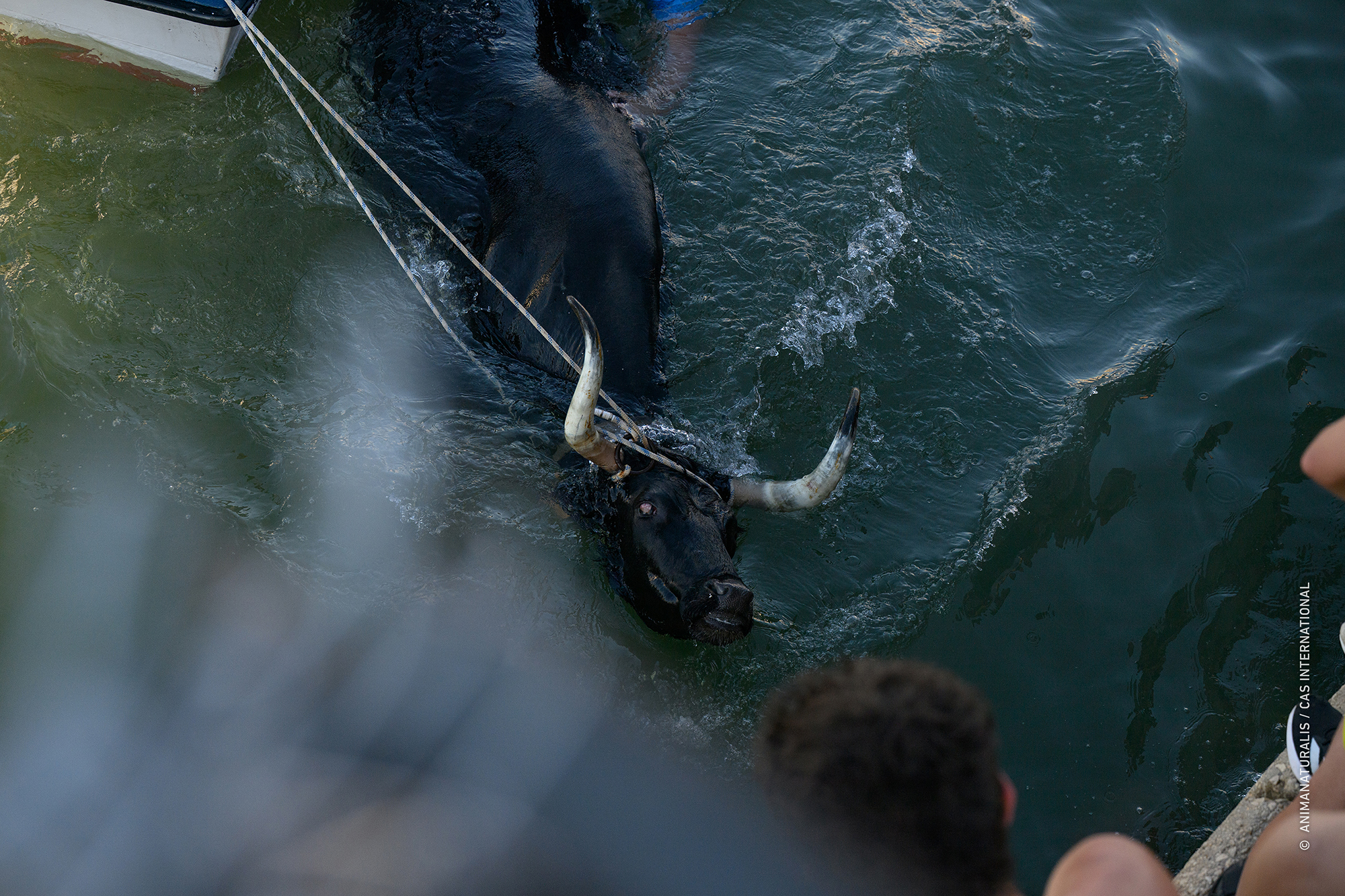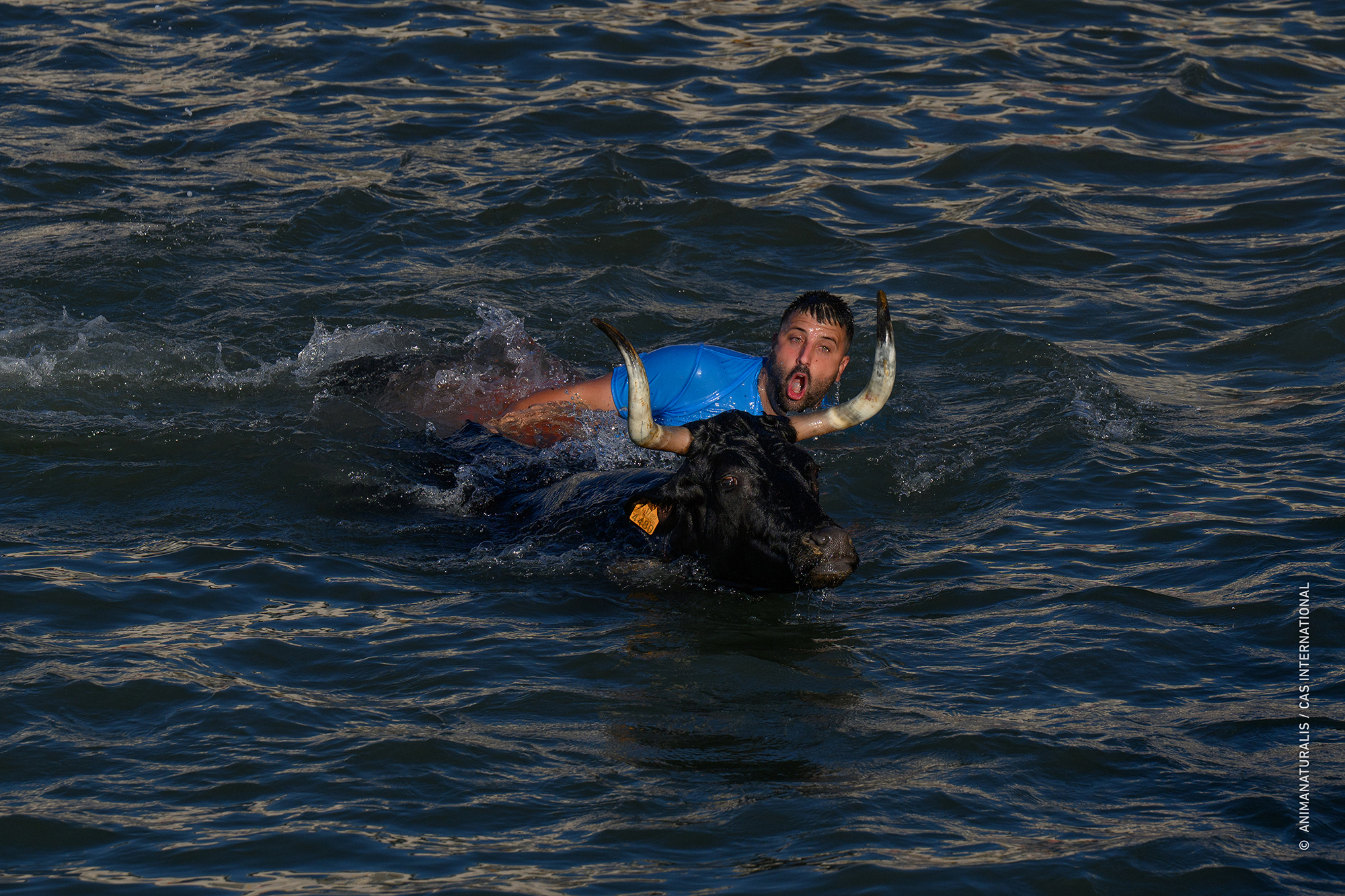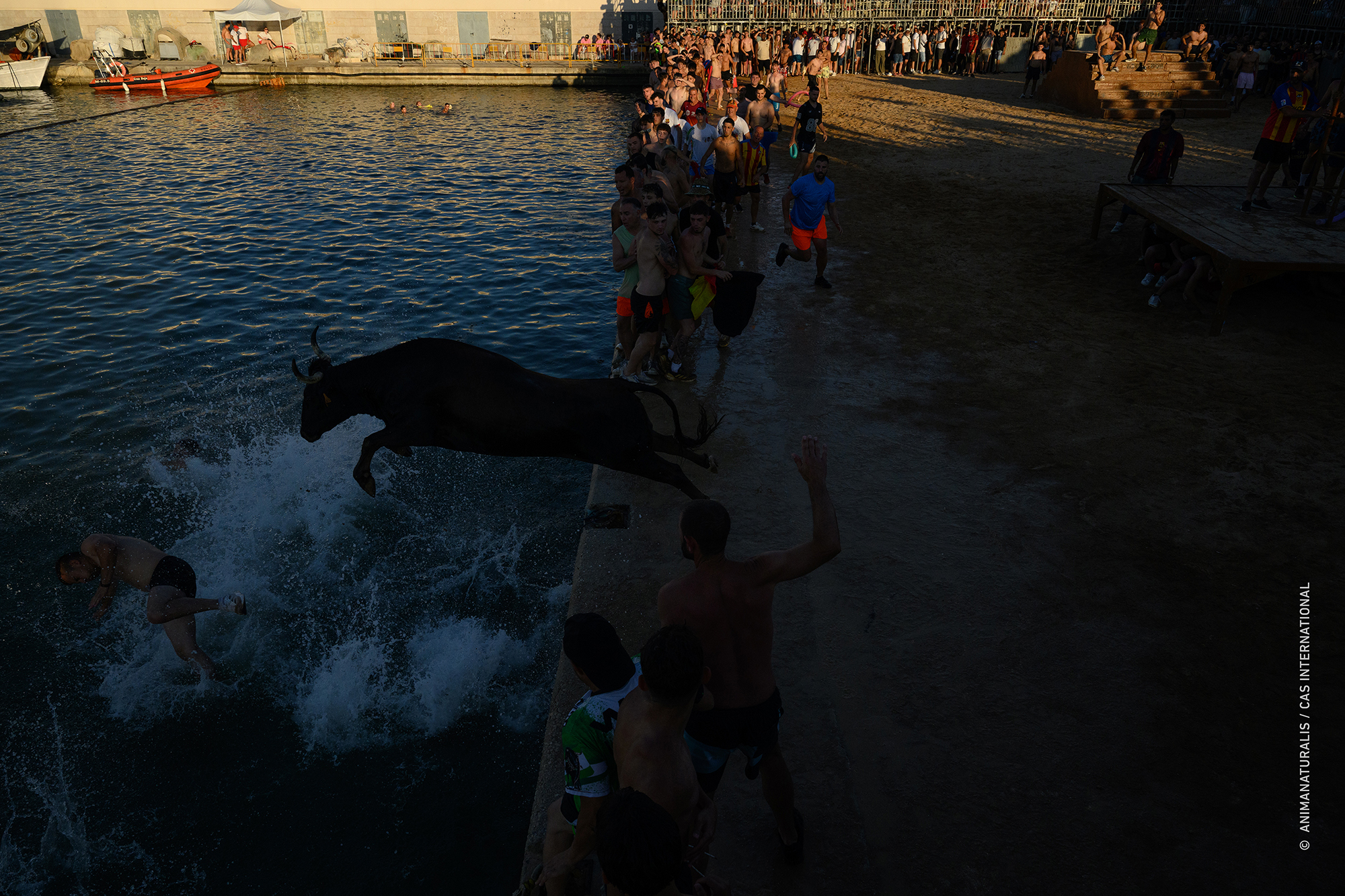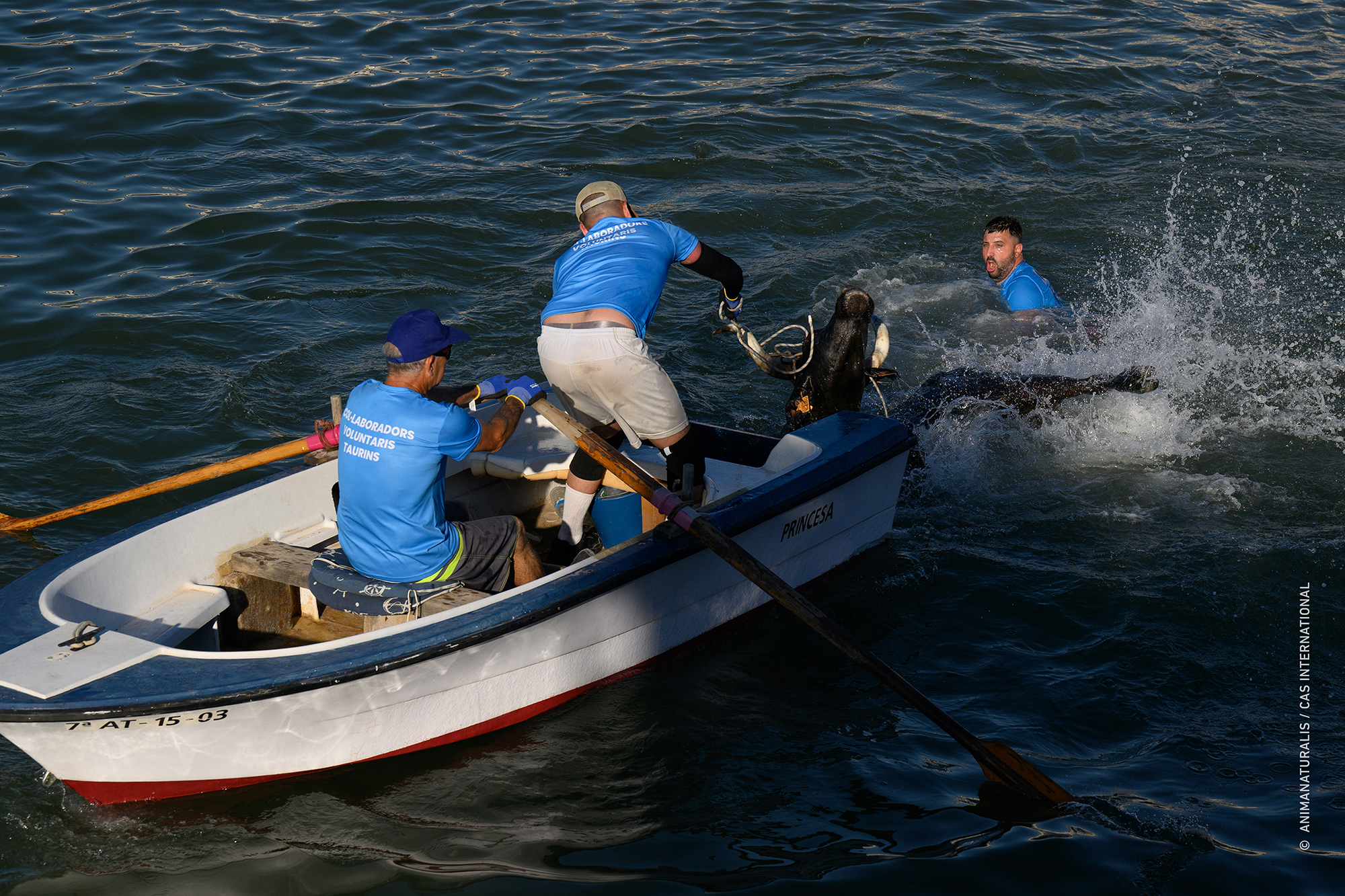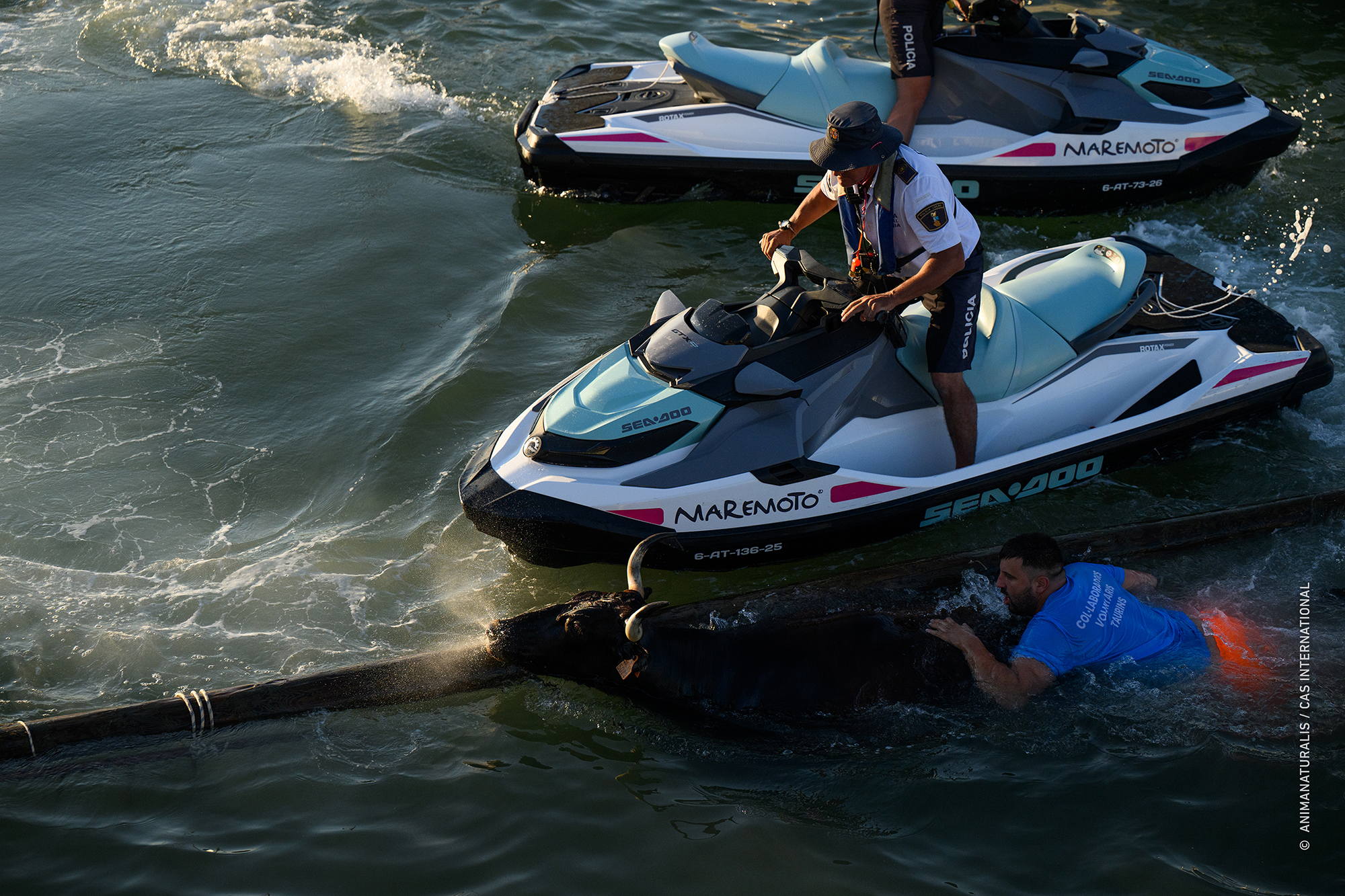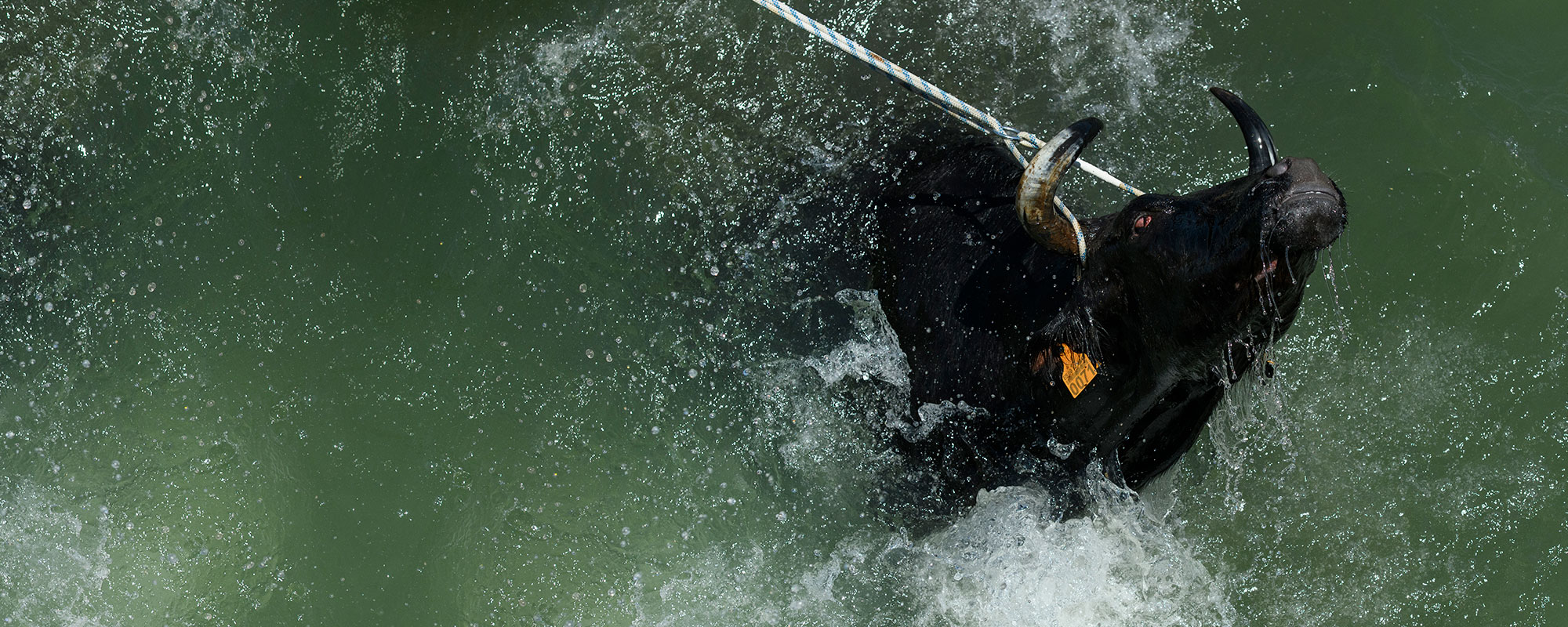
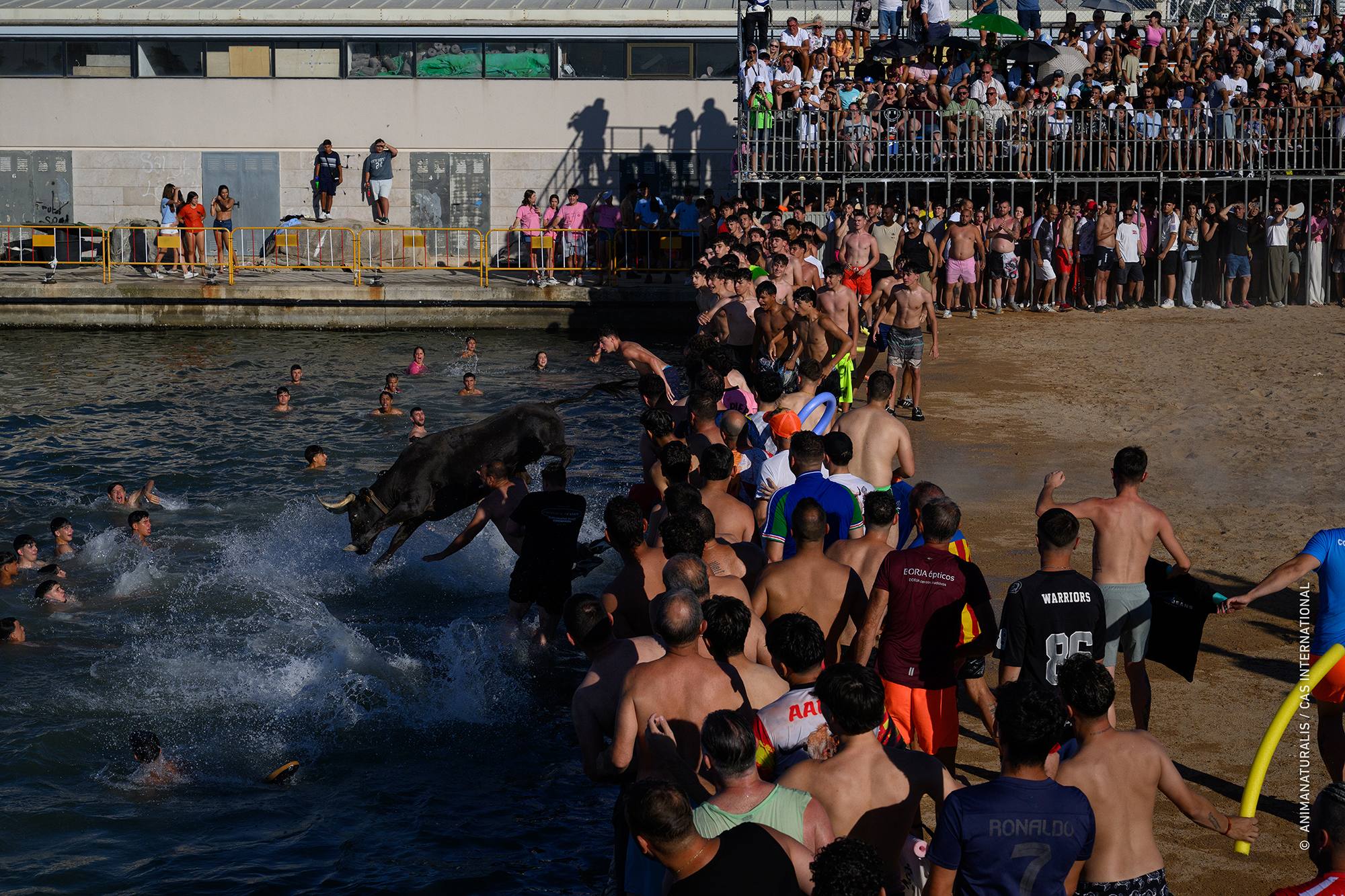
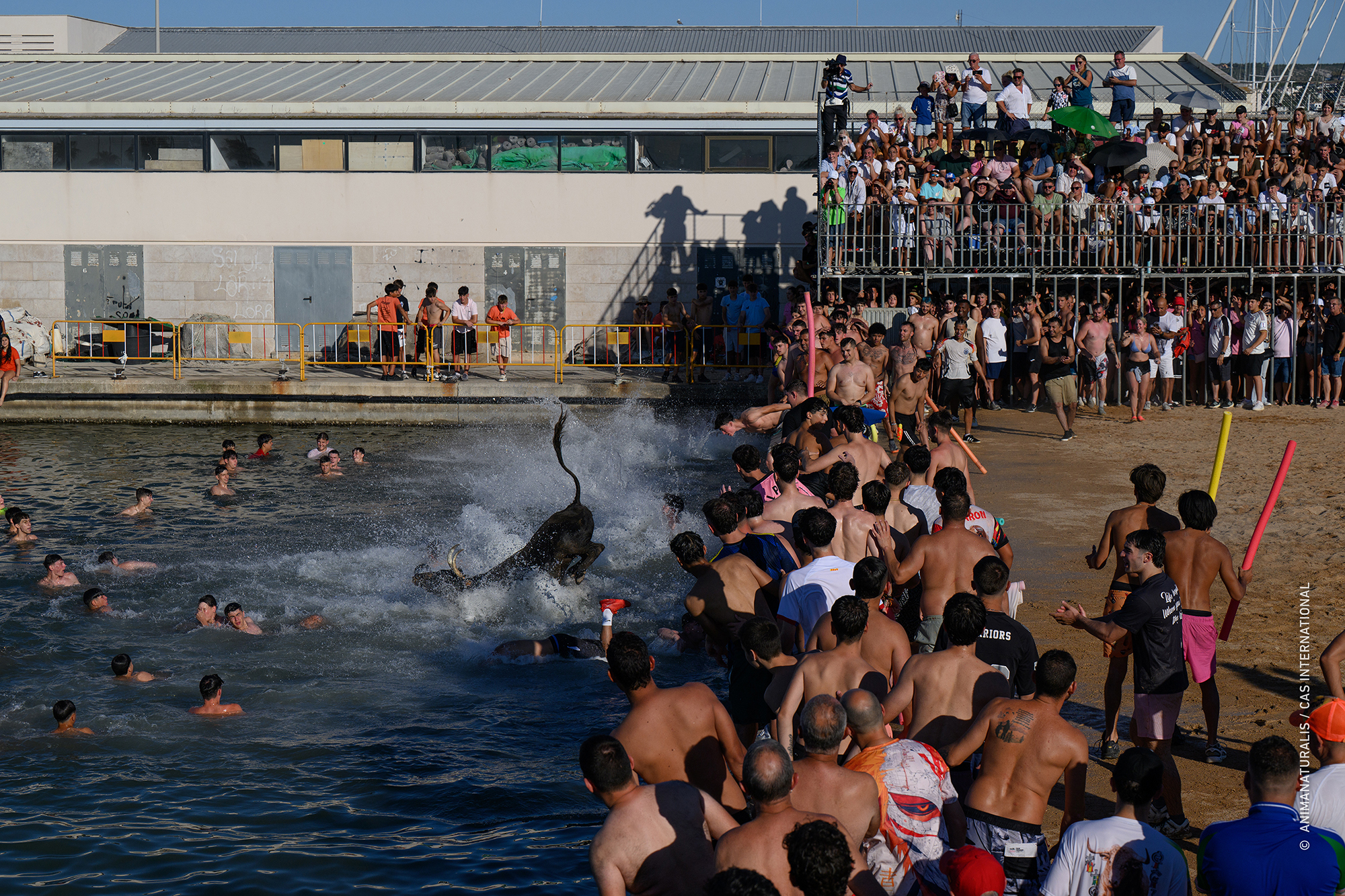
On Saturday 4 July 2026, while ticket booths at Dénia's harbour sold entry for five euros to watch the season's first session, a team of investigators from AnimaNaturalis and CAS International mingled with the crowd, carrying cameras fitted with long-range lenses. Their aim was to document what the Generalitat Valenciana declared, in 1993, a Fiesta of National Tourist Interest. The contradiction is obvious: an official distinction intended to promote tourism shelters, session after session, the harassment of young bulls and cows until they collapse, exhausted, into the sea.
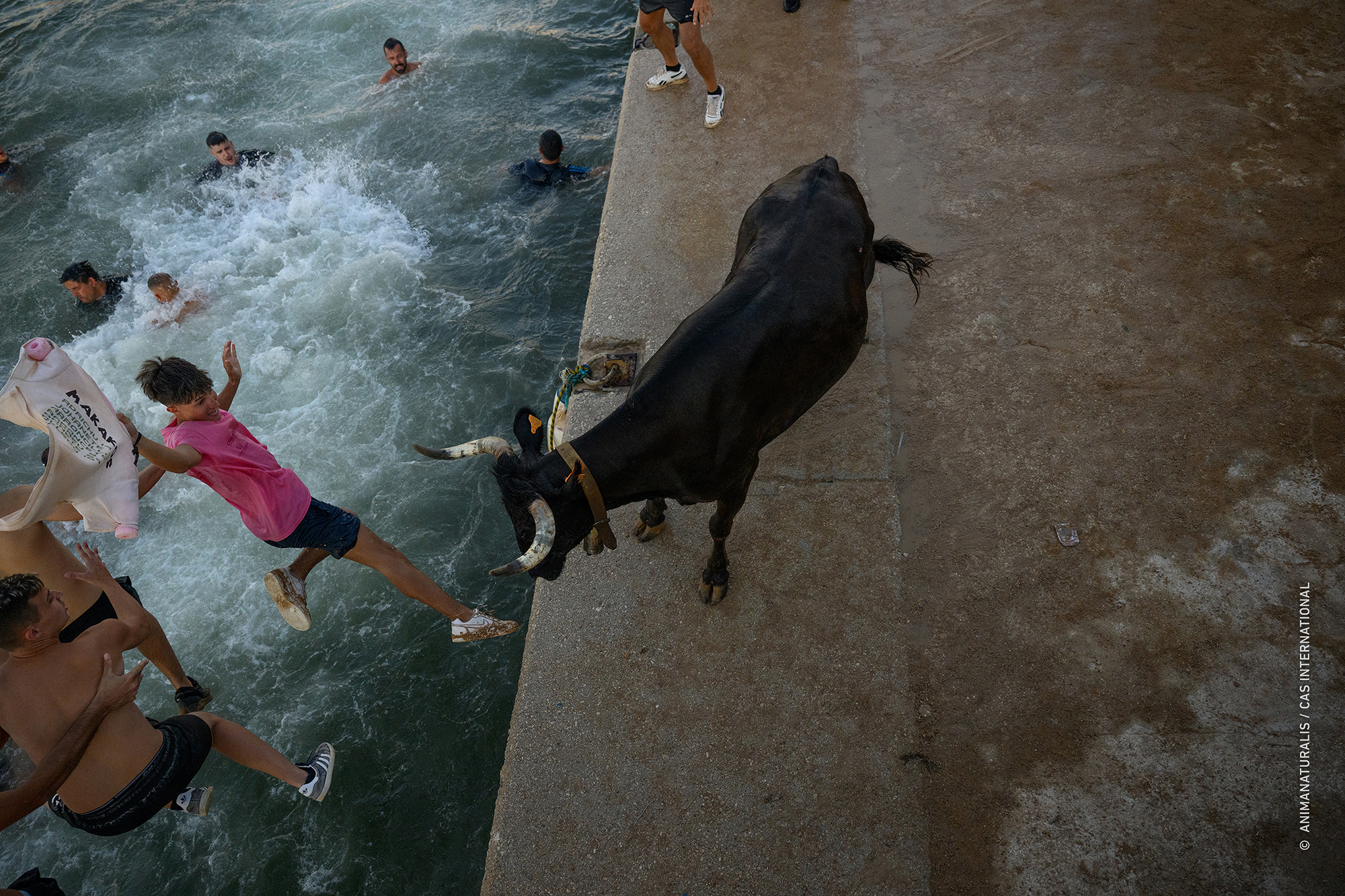
That Saturday, the animals were first driven along Marqués de Campo street towards the harbour pens, in the only street run scheduled for this edition. Hours later, in the semicircular arena set up beside the fish market — whose straight side opens directly onto the water — the session began that would set the tone for the rest of the week: the animal charges, participants run, and anyone who fails to dodge it jumps into the commercial harbour. The same pattern repeated on Sunday 5 July, during the second session of the season, with fresh footage captured by the investigation team.
"Every summer we witness the same scene: what is called a festival is, once filmed without cuts, the prolonged harassment of an animal that has no idea why it is being chased, nor why it ends up swimming in a commercial harbour", states Aïda Gascón, Director of AnimaNaturalis in Spain. "We document this year after year because only by showing what really happens can the narrative of a harmless tradition be challenged", she adds.
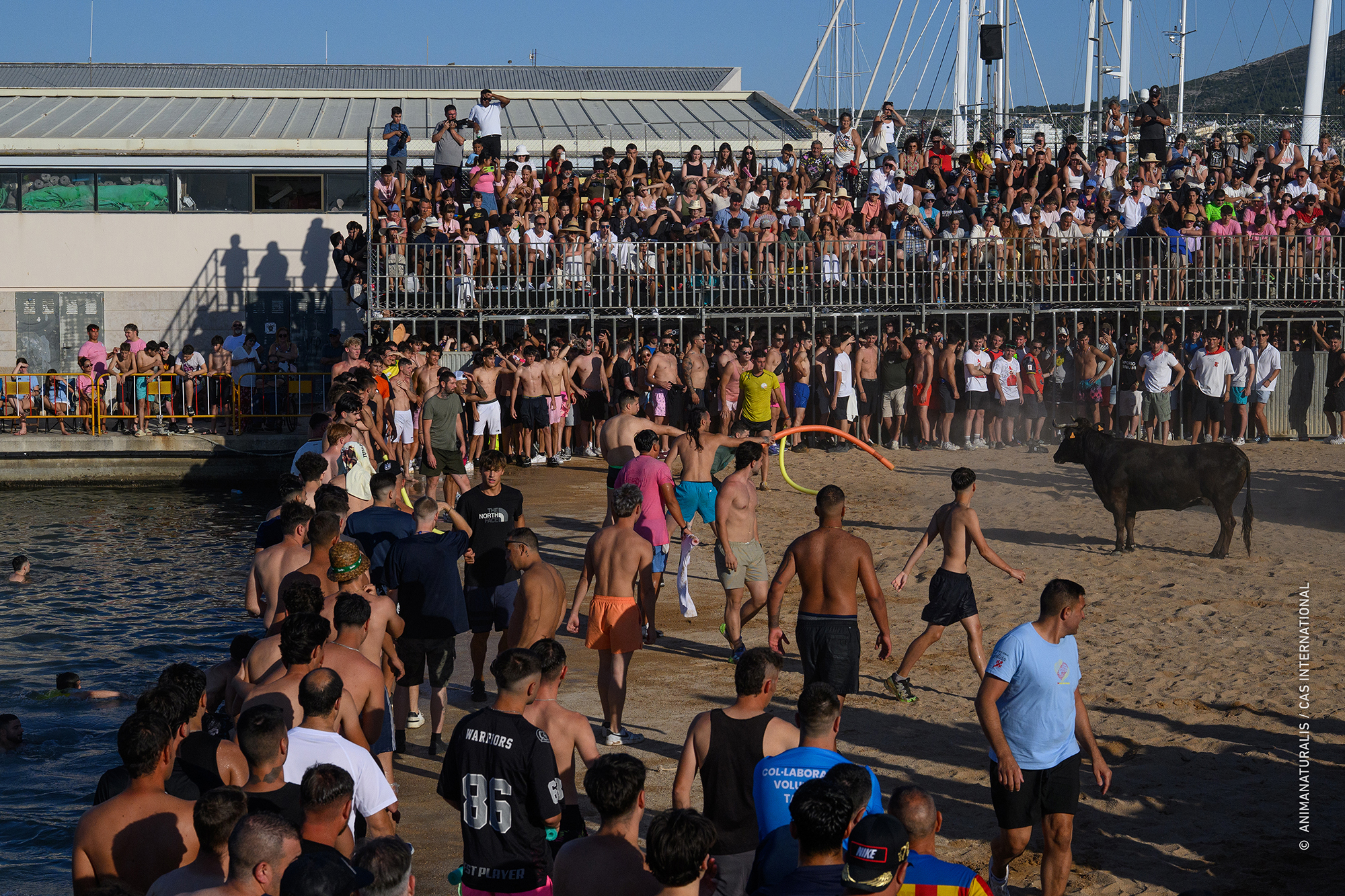
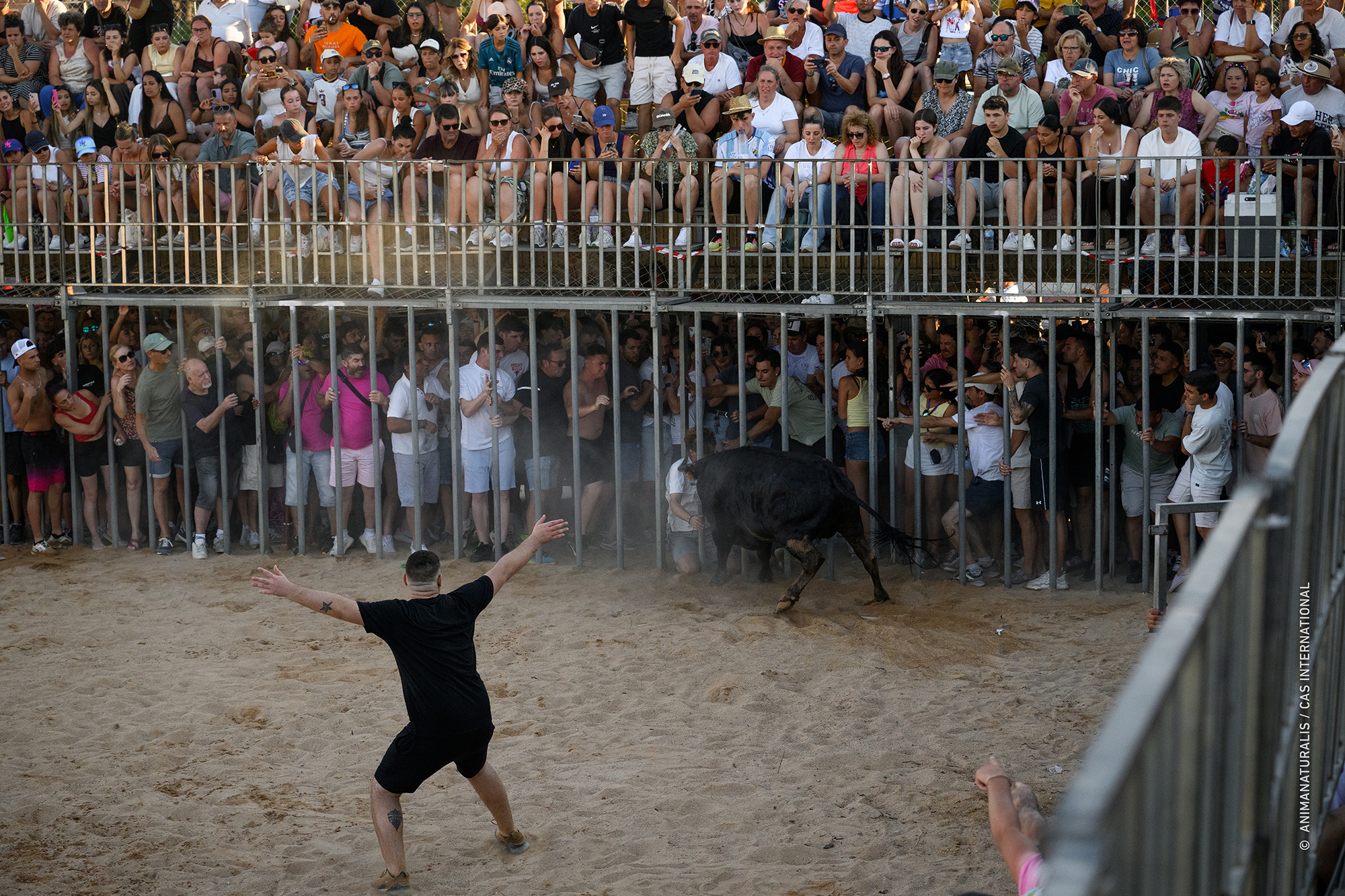
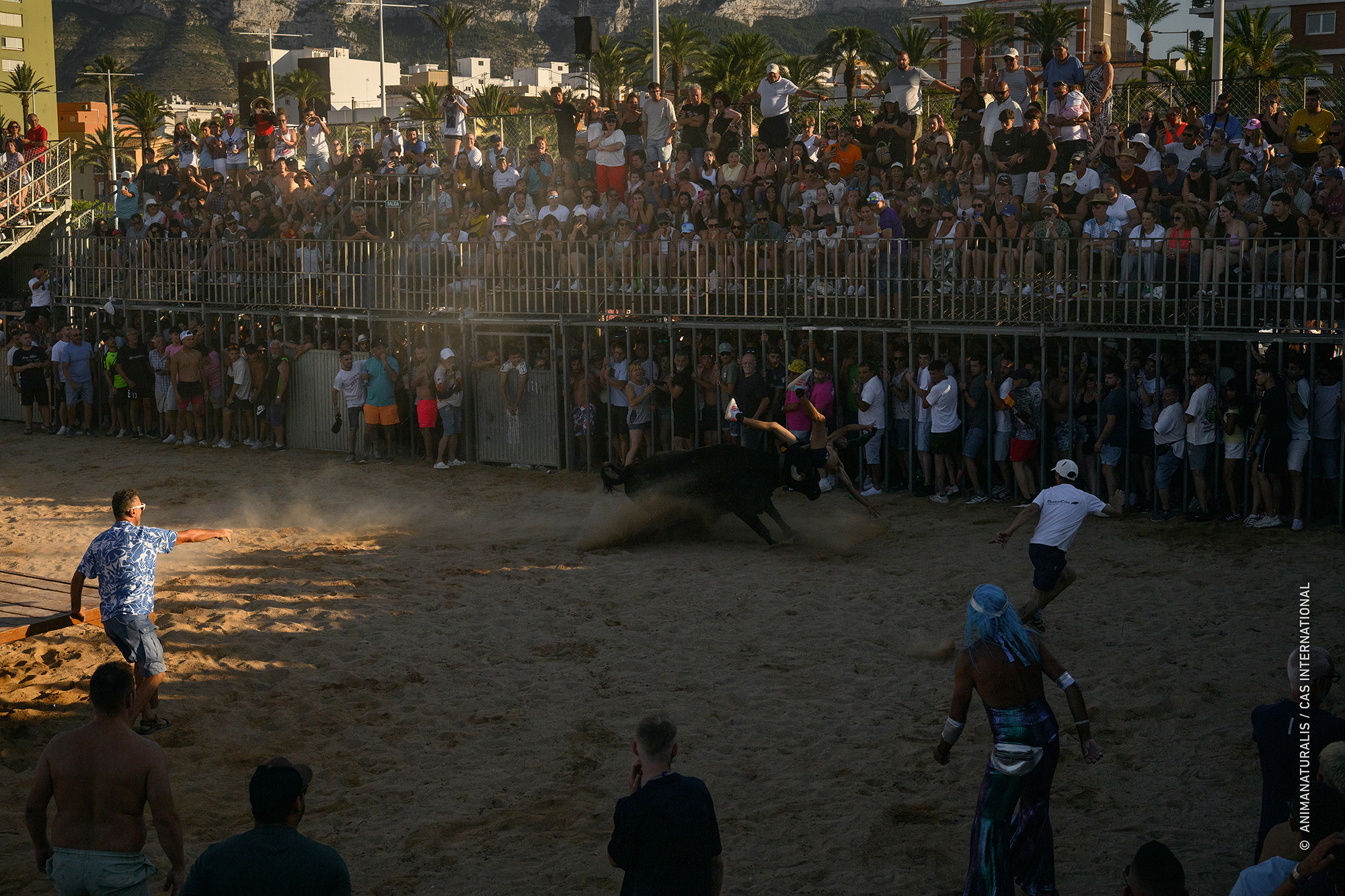
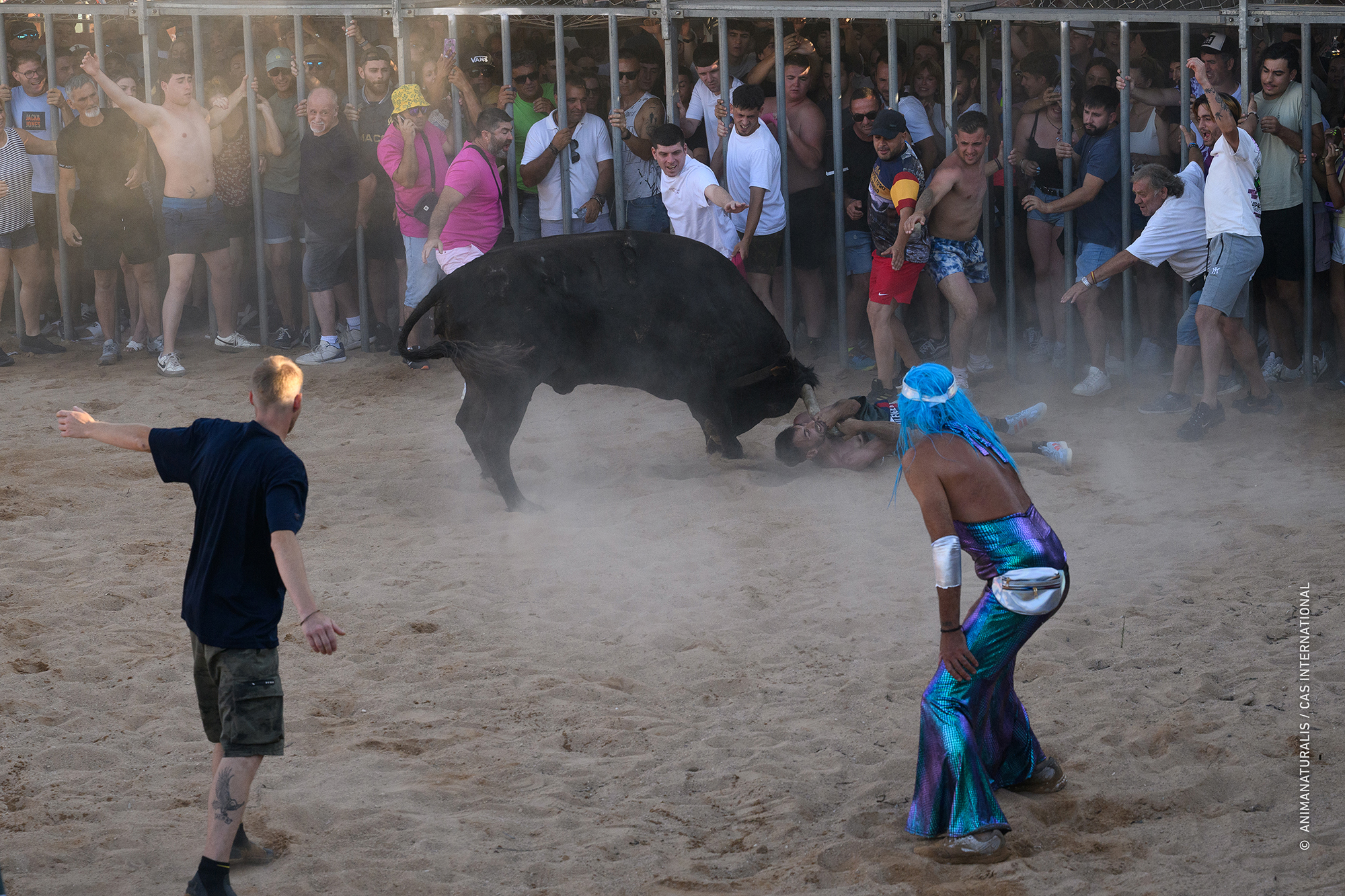
Centuries of history and a long list of victims
The Bous a la Mar rank among the oldest celebrations on Dénia's festive calendar. According to research by historian Roc Chabàs, references to "royal bulls" in the town date back to 1749, and seventeenth-century records document bull runs within the fortified town centre. The sea, however, only became the setting for the festival much later, following construction of the port's modern dock in the second decade of the twentieth century, when bullfighting events formed part of the Sant Pere festivities. Over time, the festival moved into the calendar of the Festa Major in honour of the Santíssima Sang, held every July.
Today, the bous a la mar survive in only a handful of towns: besides Dénia, they are held only in Xàbia and Benicarló. Similar festivities in Les Cases d'Alcanar and l'Ampolla, in Catalonia, stopped being held in 2016, after the Generalitat sanctioned those municipalities following a complaint. Their disappearance shows that ending the practice is possible without the wider patron saint festivities themselves disappearing.
The event carries a tragic history. In 2012, a bull drowned in Dénia's bay. Ten years later, in 2022, after two summers without the festival due to the pandemic, the bous a la mar returned with an alarming toll: according to figures gathered by AnimaNaturalis, seven people were injured in the first session alone, four of whom were hospitalised. On 11 July 2023, another bull drowned in circumstances almost identical to those of 2012, forcing the town council to suspend the rest of that year's programme. The measure was not enough: on 31 August 2024, a bull died by drowning during the bous a la mar in neighbouring Xàbia.
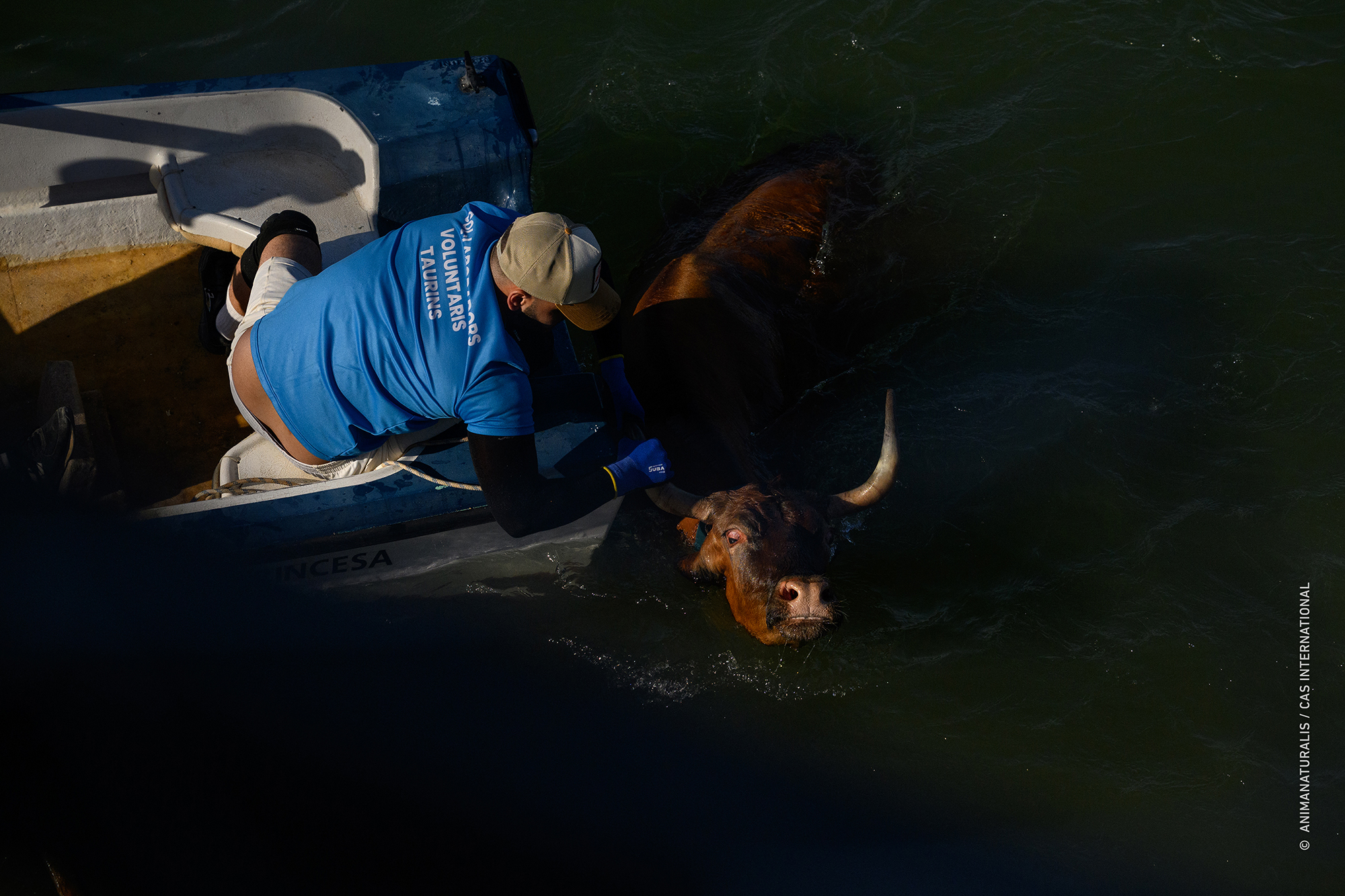
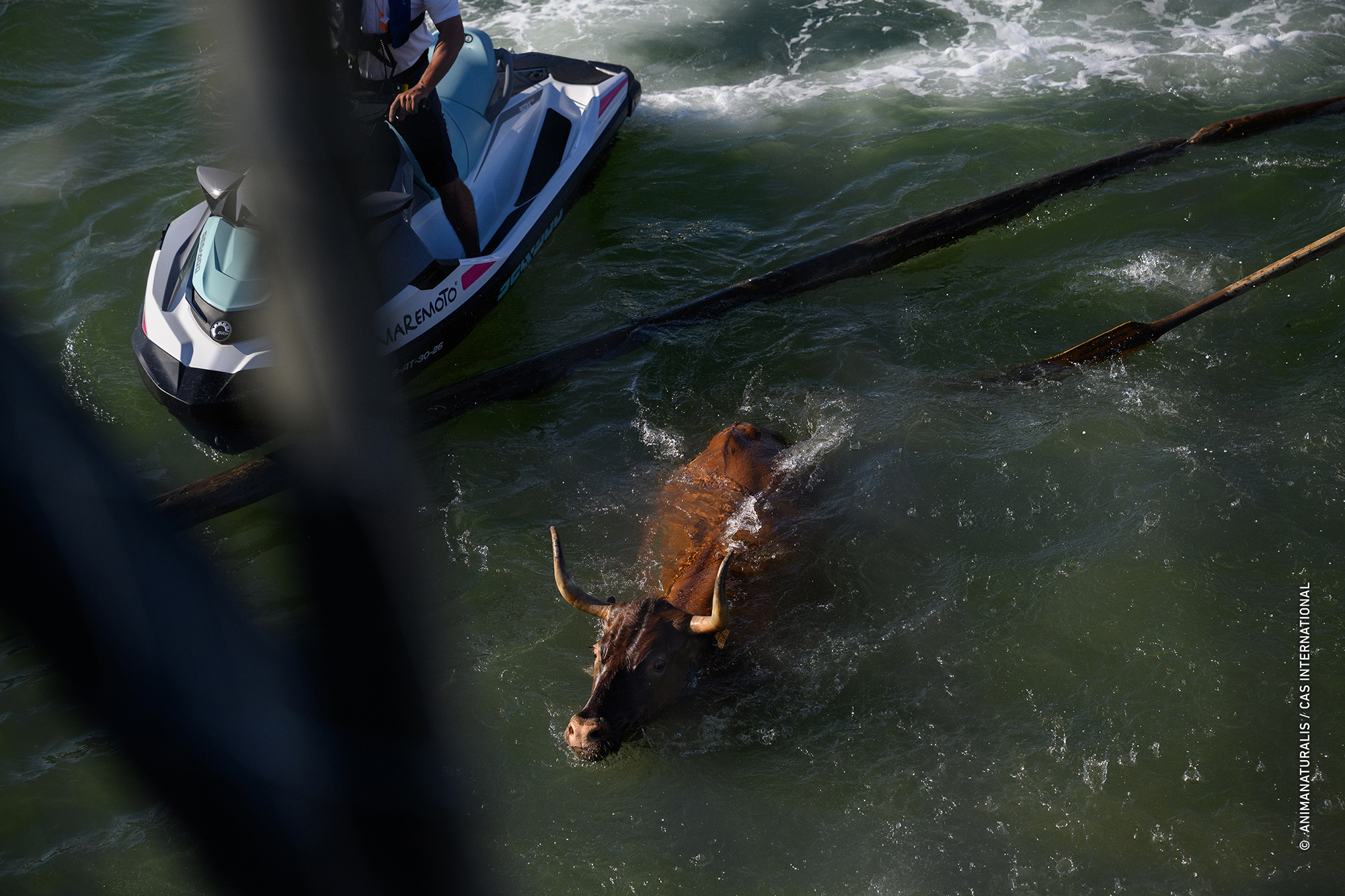
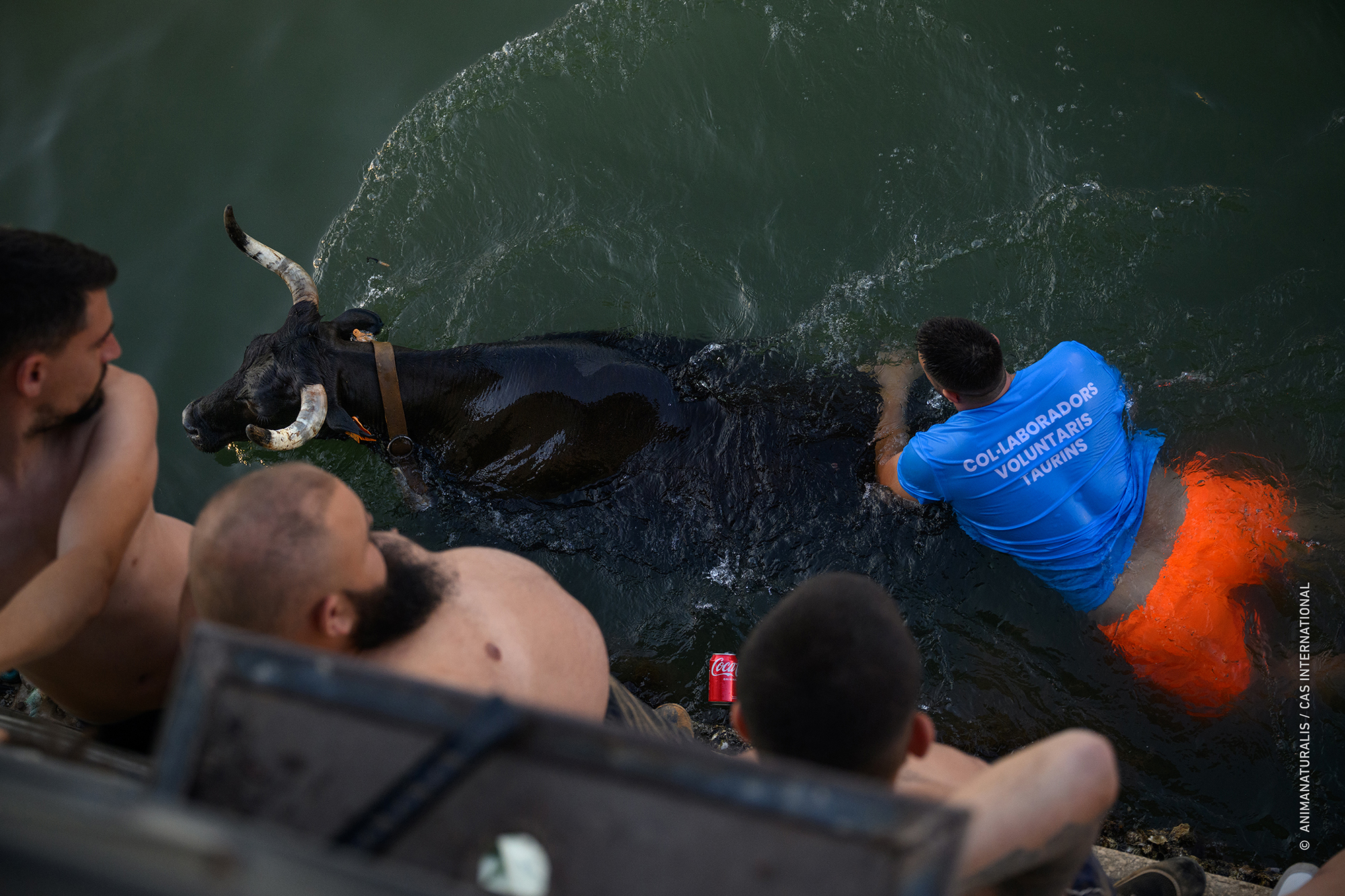
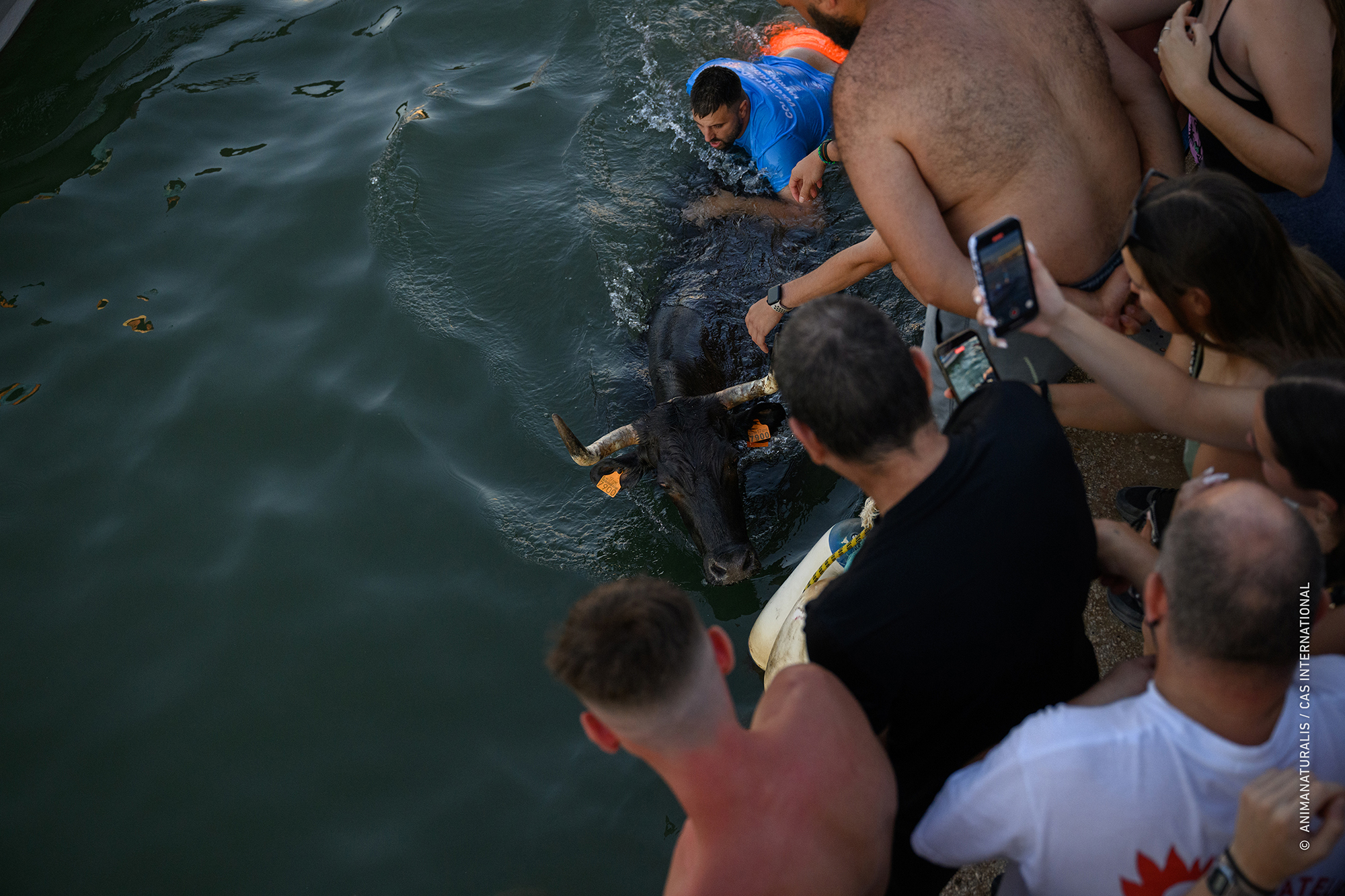
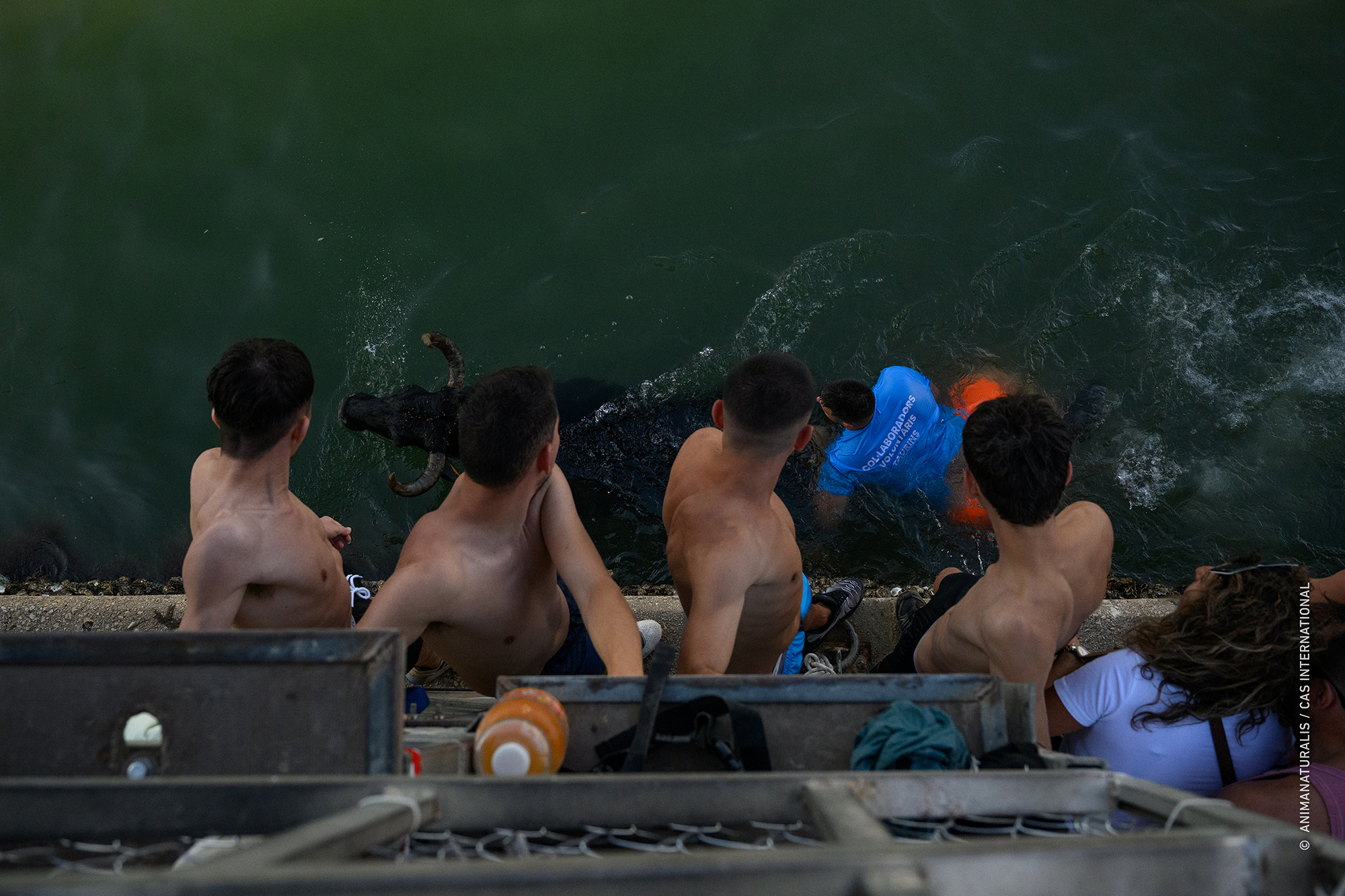
"They confine the animals, subject them to transport and to crowds that are already, in themselves, a source of extreme stress, and then push them into a hostile environment where they can drown or suffer cardiac arrest, as has already happened more than once", explains Gascón. "A report by the Spanish Veterinary Association, as we understand it, points to cortisol levels consistent with extreme stress in animals subjected to this kind of pursuit", she adds, referring to studies on the physiological impact of these events.
Following the drownings of 2023, Dénia Town Council — governed by the PSPV and Compromís — scrapped midday releases from 2024 onwards, precisely the hours of greatest heat exposure, a move that also saved around €10,000 from the festival budget. The Councillor for Festivities, Raúl García de la Reina, defended the measure as "a step forward in our commitment to animal welfare". The local Vox group opposed the reduction, arguing that the bous a la mar hold the status of Fiesta of National Tourist Interest and should not be cut back. Months later, the Partido Popular put forward a motion in the plenary session to "revitalise" the festival, which was rejected, leaving the debate open for future terms of office.
That municipal funding is only the tip of a much larger iceberg. The Comunitat Valenciana recorded the highest number of popular bullfighting festivals in Spain in 2019, with 8,623 events and an estimated spend of at least sixteen million euros. The current regional government, formed by the PP and Vox under the presidency of Carlos Mazón, increased the bullfighting budget line in its latest accounts: according to figures provided by the organisation, €450,000 flowed into the sector in 2025, and the Generalitat extended its public health cover for accidents at bullfighting events even outside the region, providing up to €15,000 per hospital stay and €6,000 in the event of death or permanent disability.
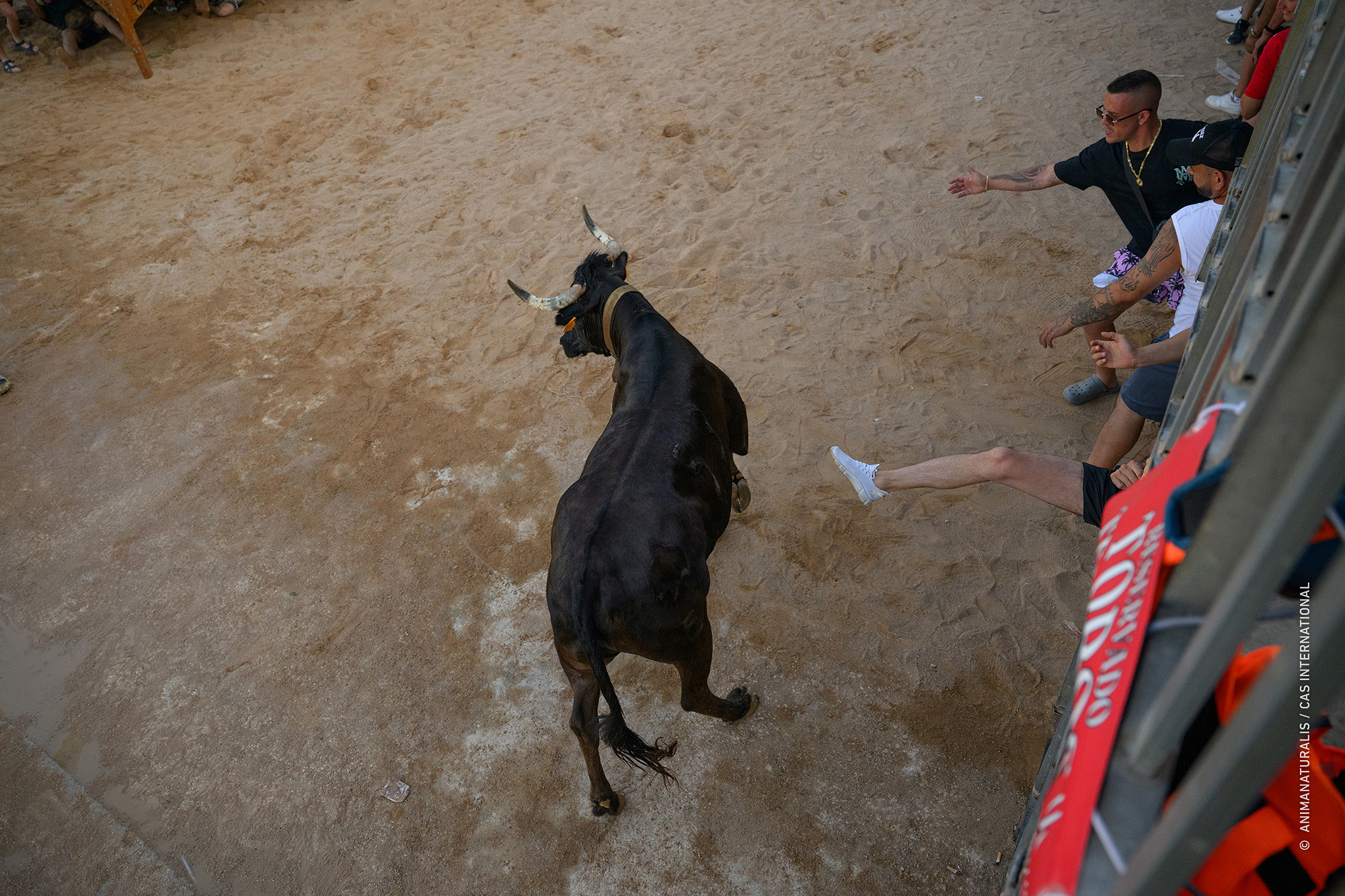
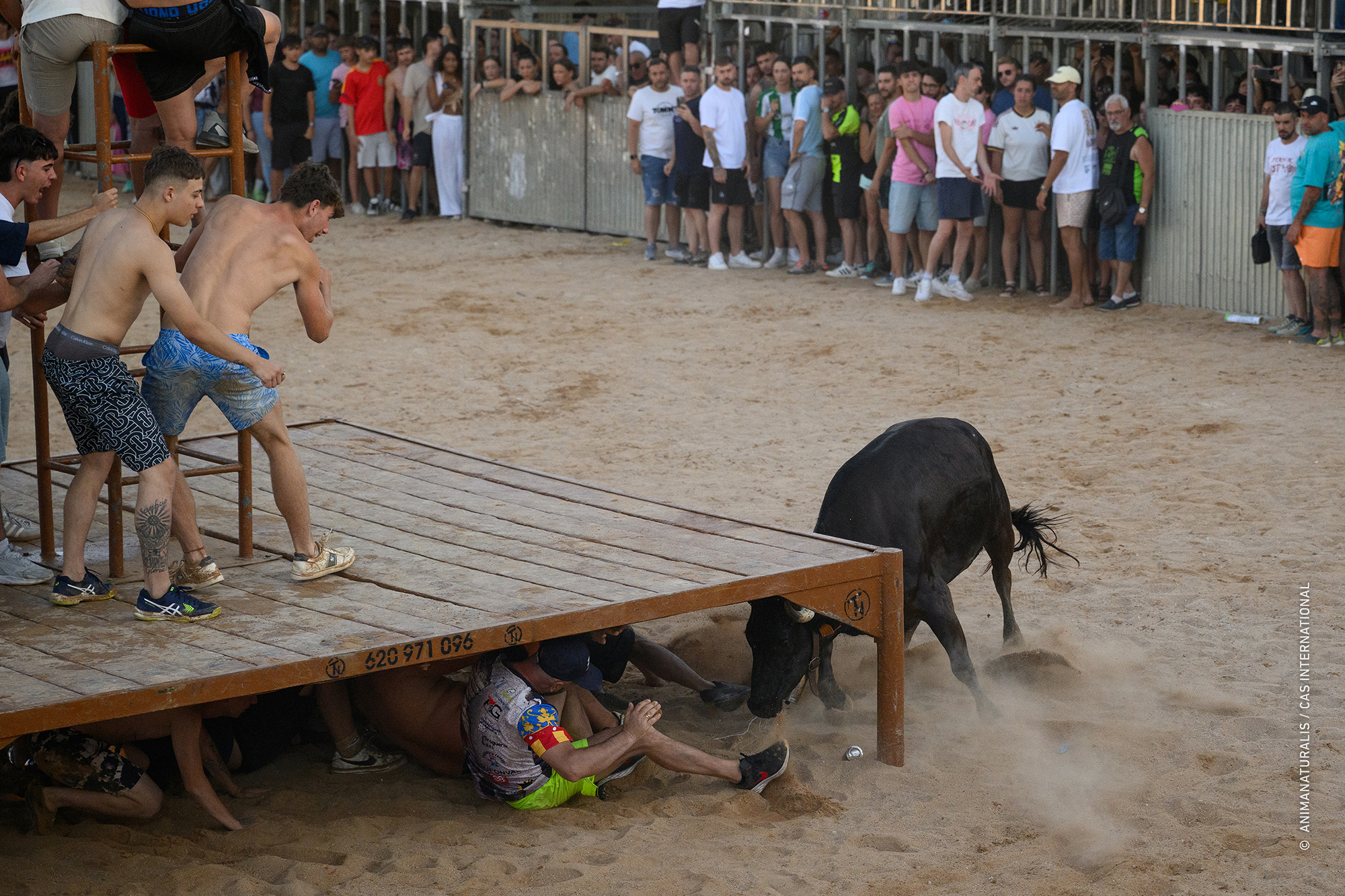
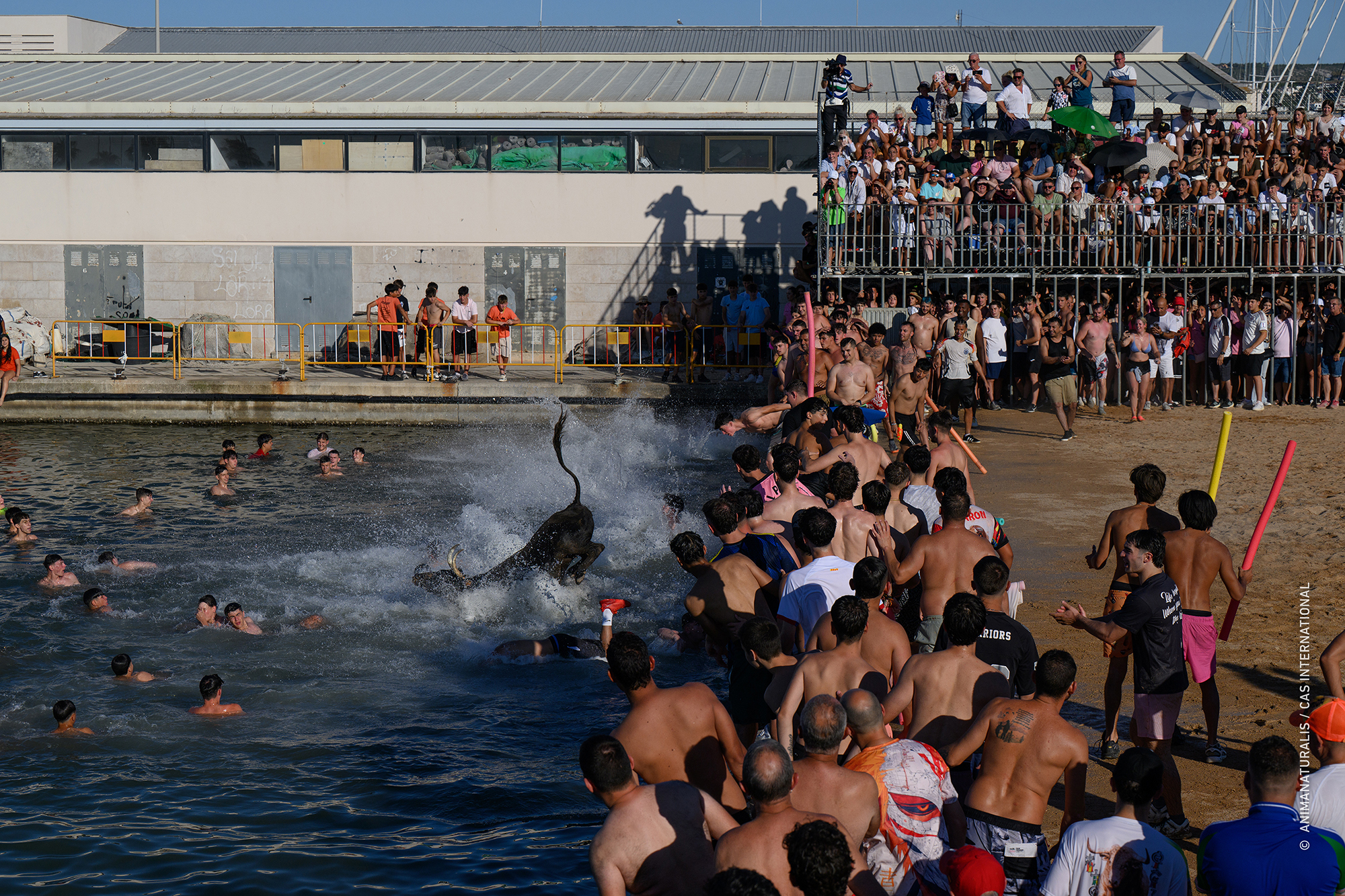
Animal welfare cannot depend on a town's postcode
The disappearance of identical festivals in Catalonia shows that no tradition is untouchable once the law changes. The reduction of sessions applied in Dénia since 2024 — driven by heat and safety concerns rather than any deeper questioning of the festival itself — shows that even organisers acknowledge the risks involved. Yet as long as a single release into the sea continues, so too does the possibility of another drowning, another hospitalisation, another image of an exhausted animal struggling to stay afloat in waters that are not its own.
Proven alternatives already exist: patron saint festivals that replace animal-based acts with floats, concerts, theatre or children's activities, without losing either the town's identity or its tourist appeal. Dénia's own Councillor for Festivities has admitted that other events within the Festa Major — such as the float parade or the concerts — gain more prominence each year among an ever-wider audience, proof that the festival can reinvent itself without animal suffering.
You can help ensure that the footage recorded on 4 and 5 July in Dénia is the last of its kind. Sign at BloodFiestas.org to demand that town councils and the Generalitat Valenciana end public funding for popular bullfighting festivals, including the bous a la mar. Share the video and photographs from this investigation: every view brings closer the day when Dénia's harbour stops being a stage for harassment and drowning.
We need resources to keep sending teams undercover, reviewing municipal budgets, and documenting what happens behind the harbour's railings. Becoming a member, or making a one-off donation, helps fund this and other investigations year after year. "Every image we bring back from a place like Dénia is further proof that tradition can no longer be an excuse for suffering. With the support of everyone who signs and donates, we will keep coming back every summer until there is not a single bull left to push into the sea", concludes Gascón.