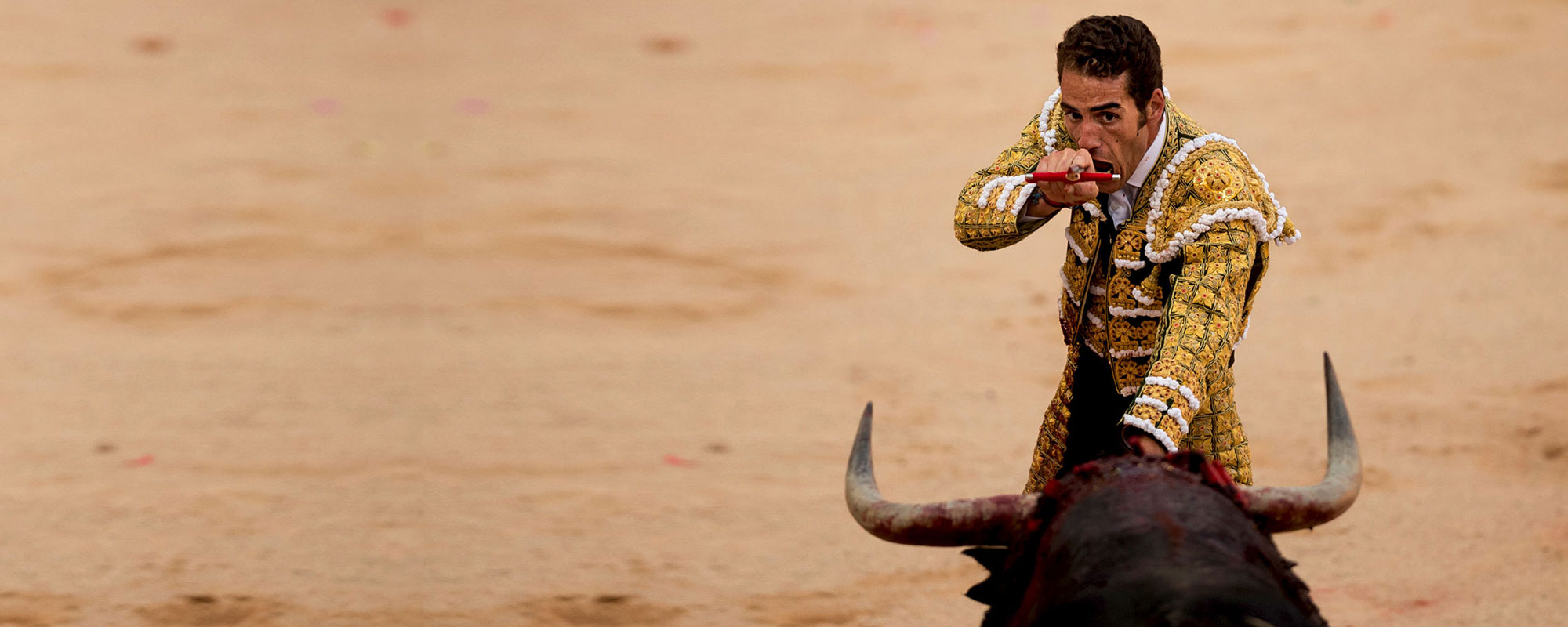
Our investigation team spent two days documenting the ordeal of the bulls who are ultimately killed during the Feria del Toro in Pamplona. Very few know that the bulls that run in the encierros are the same ones that die in the arena later that day. It’s not a secret, but it’s as if people are unwilling to admit that a Spanish tradition could be built on prolonged and painful animal suffering.
The images shown here are not just records of anonymous lives routinely tortured during Spanish festivals, but the testimony of individuals victimized by traditions that only a handful wish to preserve. According to the Spanish Ministry of Culture, less than 8% of Spaniards attended a bullfight in 2019 (the last year for which data is available). And the number of bullfighting events continues to plummet each year. A 2025 study by the BBVA Foundation shows that 77% of Spaniards support banning bullfights altogether.
Another important element to mention is that neither the bullfighting promoters nor the Pamplona City Council organize the San Fermín encierros or bullfights—despite the bullring being publicly owned. The profits go to the Casa de la Misericordia, a private Catholic foundation that cares for vulnerable people. But for them, compassion seems to be selective—written in blood and denied to animals.
A Chronicle of Twelve Announced Deaths
Dawn breaks on July 12 with the smell of stale wine and adrenaline, like every San Fermín morning. On Santo Domingo hill, the crowd shouts "¡Viva San Fermín!" Below, in the Gas Corrals, six half-ton creatures nervously stomp on damp ground. These bulls are set to run the morning encierro, branded and prepared for the torture they’ll endure by sundown. Among them, Callejero breathes in panic. He’s already spent days away from his pasture, hauled for hours in a truck to an unknown place. His eyes scan the pen, restless. His instinct is to flee. The shouts and smells are foreign. The air stings.
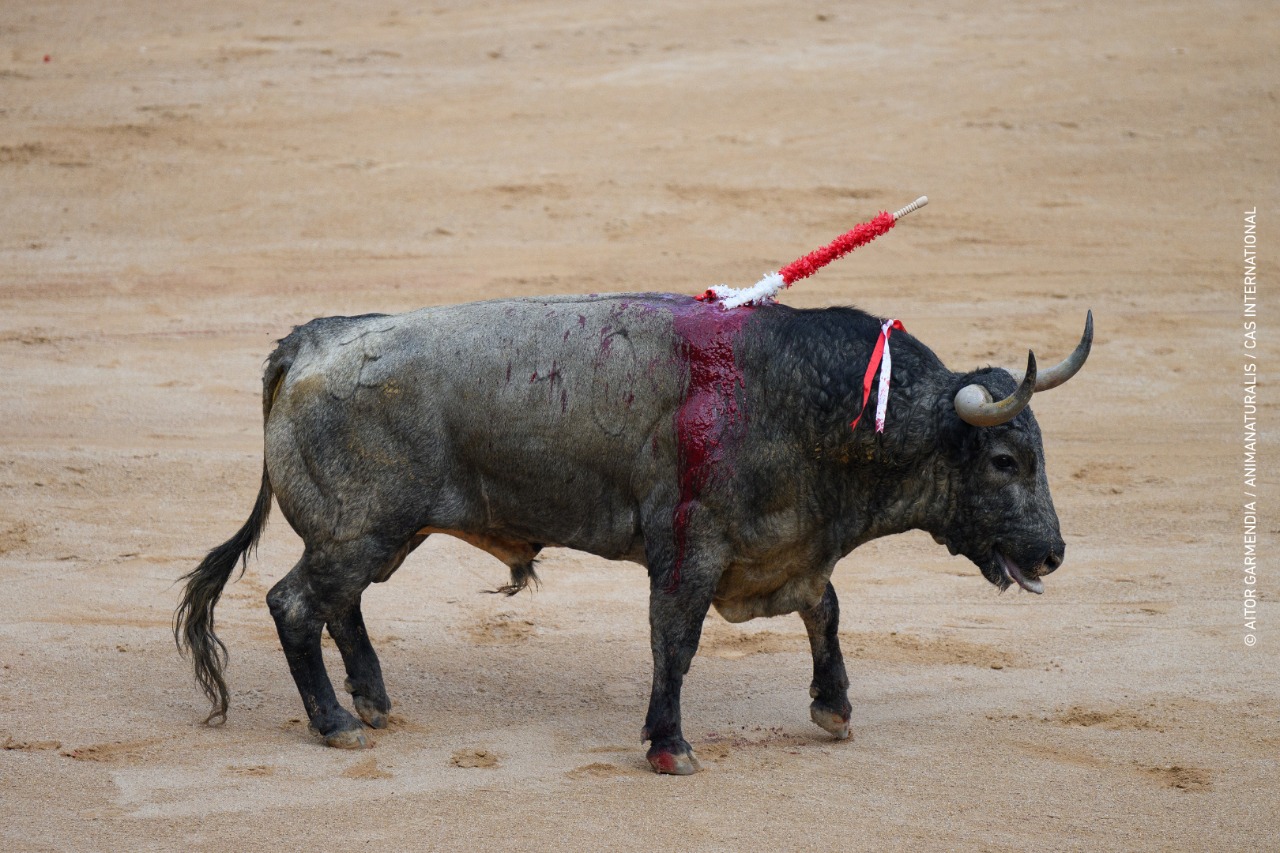
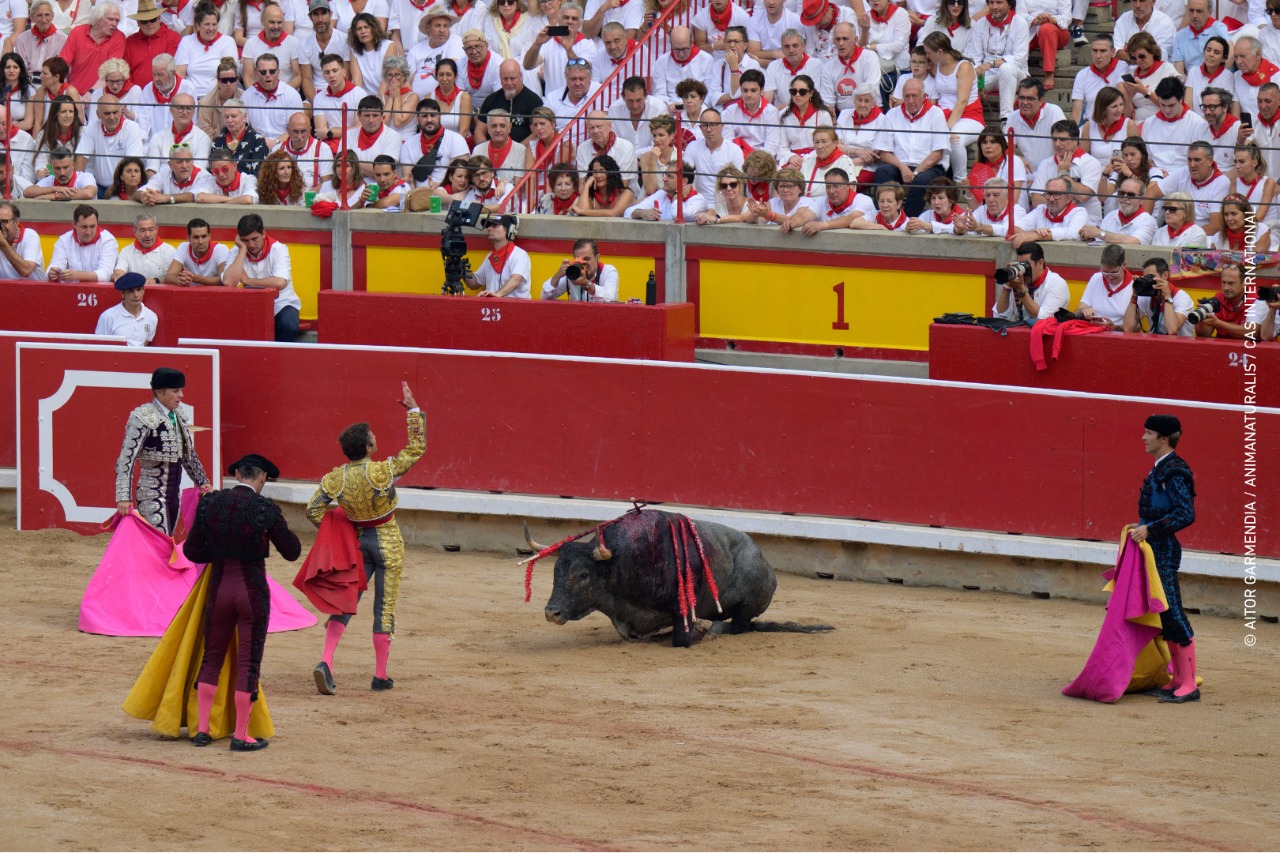
Each San Fermín encierro repeats the same story. Bulls are driven to the top of Santo Domingo hill, and a stampede is forced using steers. Runners briefly race alongside them in a chaotic burst that lasts seconds. On TV, broadcasters praise the runners’ bravery and the bulls’ nobility, but few mention the truth: those very bulls will be dead by nightfall. "It’s not bravery—it’s pure terror," says Aïda Gascón, director of AnimaNaturalis Spain. "These animals are just trying to escape a maze that ends in death."
After the run, the bullring becomes a death row. In the dark pens, Callejero rubs his head against the bars. He doesn’t know what’s coming, but senses it’s nothing good. At 6:30 p.m., the band begins playing pasodobles. Toreros Rafaelillo, Robleño and Juan de Castilla salute the sun while Callejero sniffs a confusing mix of alcohol, sweat, blood, and gunpowder. From the stands, among Pamplona’s partying crowds, our photographer captures the moment the bull enters the arena—his scaffold.
The gate swings open with a crack. Light stabs Callejero’s eyes. For a second, he hesitates—but his tense muscles push him forward. The dirt scorches his hooves, and roars fill his ears. He smells blood, fear, and iron. He is the third bull to enter the ring that afternoon.
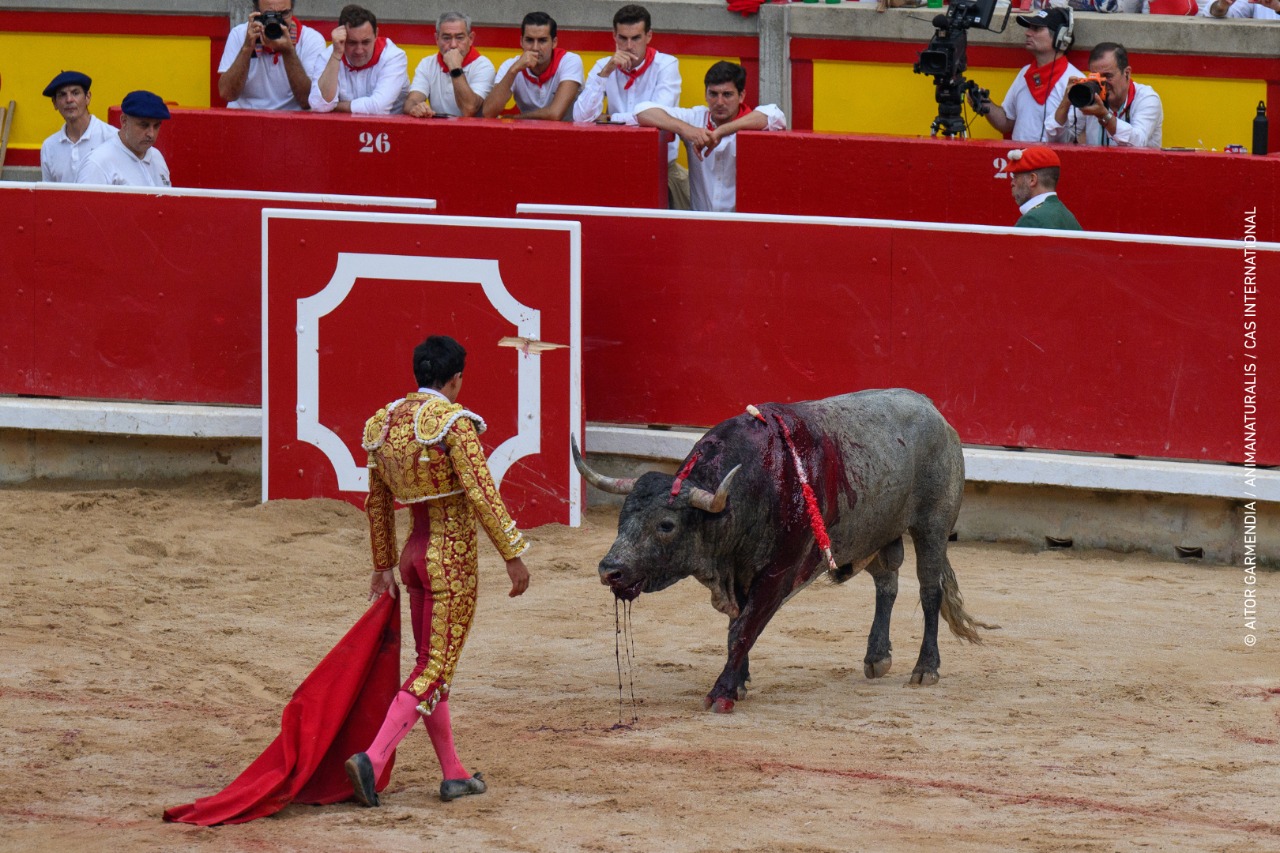
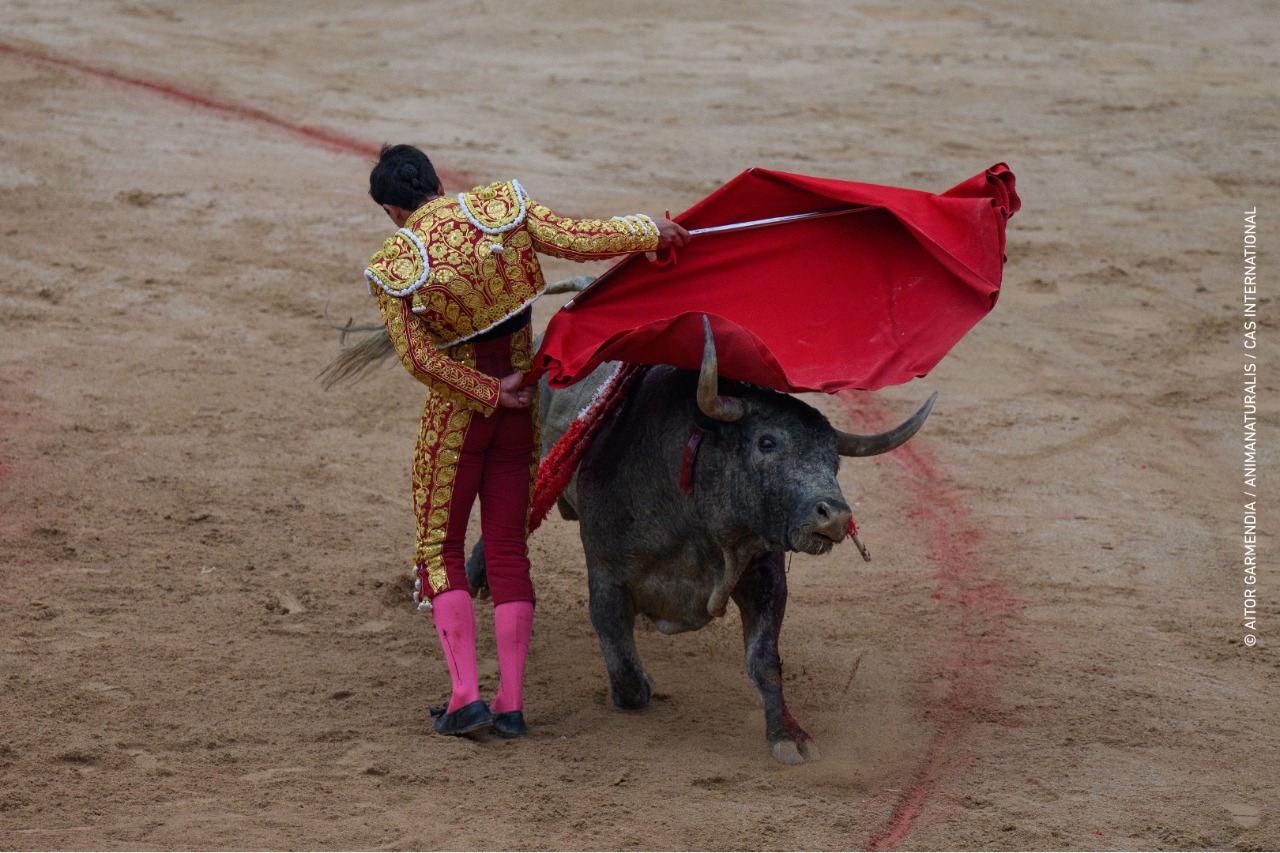
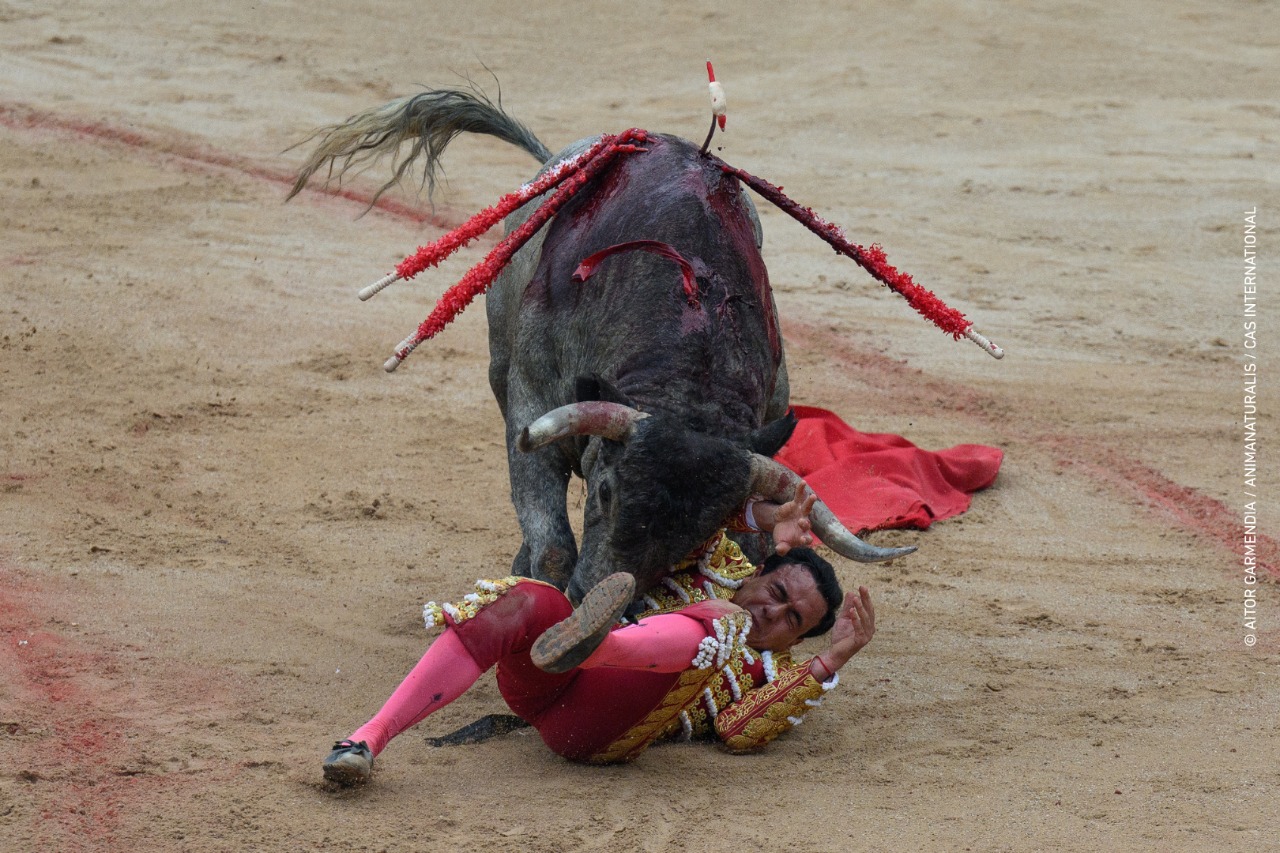
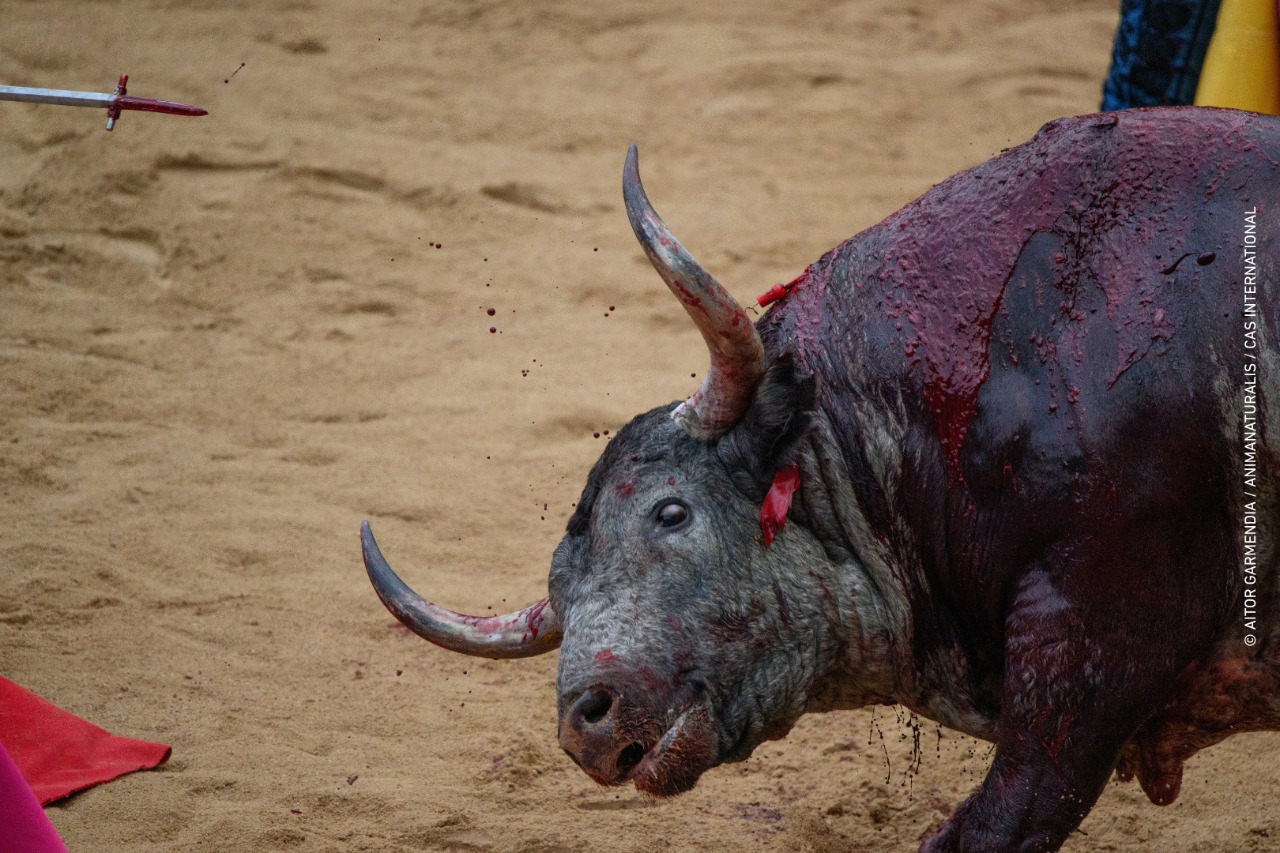
Callejero looks around. A man waves a pink and gold cape. He taunts him, humiliates him. Callejero charges—not out of hate, but because he has no choice. The cape blinds him, tricks him, spins him. When he turns, another man is there. Then another. And another.
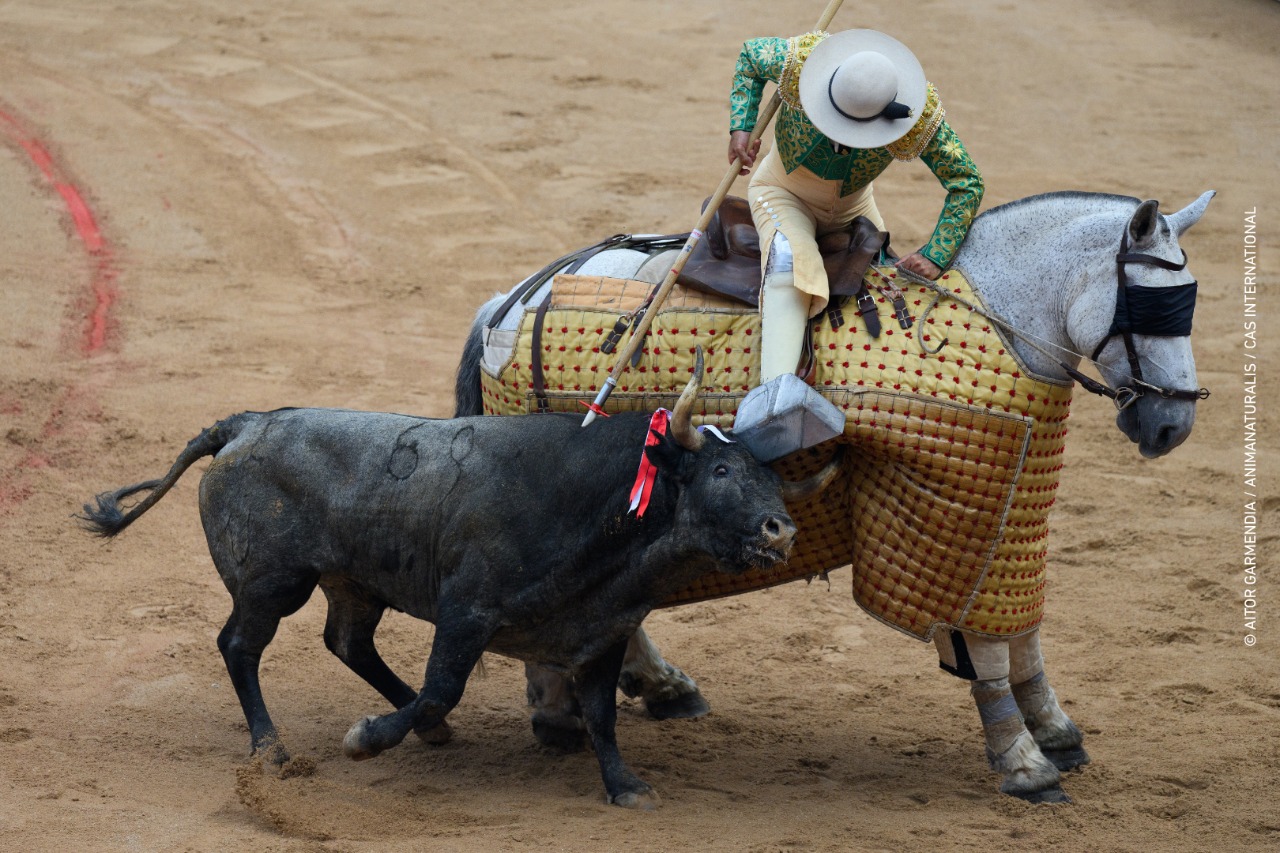
A trumpet sounds. A blindfolded horse enters. Atop it sits a picador. Callejero doesn’t know the term, but he knows pain. A sharp lance is stabbed into his neck. It burns. The weapon is twisted. The horse, armored, stumbles but is unharmed. The bull is not.
Callejero writhes. His body screams. Blood flows. Every move is harder. He doesn’t understand why he’s being punished. What did he do to deserve this?
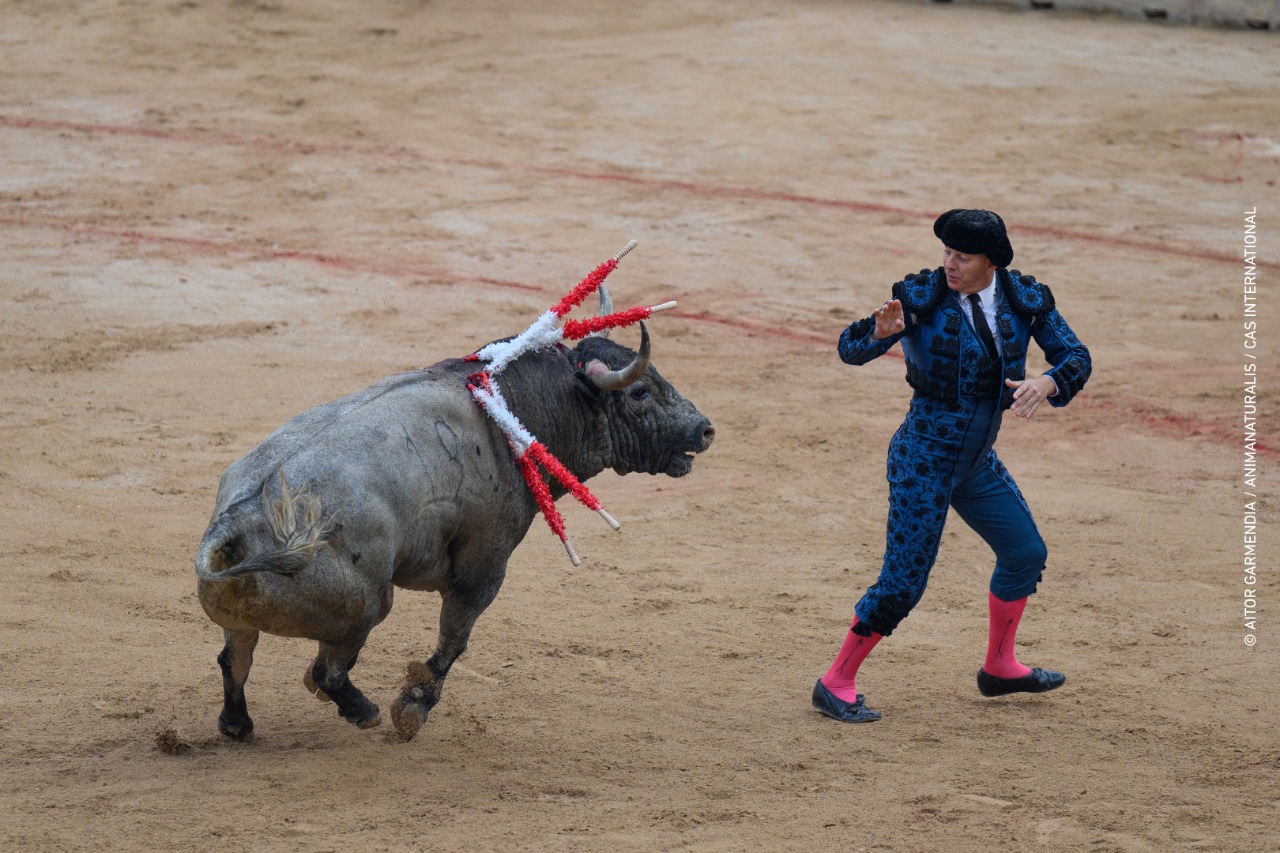
Another trumpet. The banderilleros appear. They carry barbed sticks like colored daggers. One sneaks up, plunges a harpoon into him. The pain is electric. He bucks, bellows, shakes. But more come. Six spears pierce his back. Each one a scream he can’t voice.
The crowd cheers. Some shout “¡Olé!” Callejero doesn't understand. His back burns. His legs tremble. The sun dries the blood on his skin. He looks to the crowd—thousands of eyes, not one sees. Where is the way out? Why won’t anyone let him go back to the field?
Silence. The matador enters. This time, with a sword. The red cape sways like a threat. The bull doesn’t run anymore. He walks where he’s told. Turns. Charges. Falls. Rises. The torero waits—dramatizing the kill. Seeking “art.” Callejero just wants peace.
The moment arrives. The sword is raised. A leap. Steel plunges through his shoulders. His knees buckle. He doesn’t die. He bleeds. The executioner circles again. The bull gasps, eyes wide. Still alive.
Callejero hears voices. Can’t see clearly. The world bends and dims. A man leaps in with a dagger. One last blow to the neck. Callejero is gone.
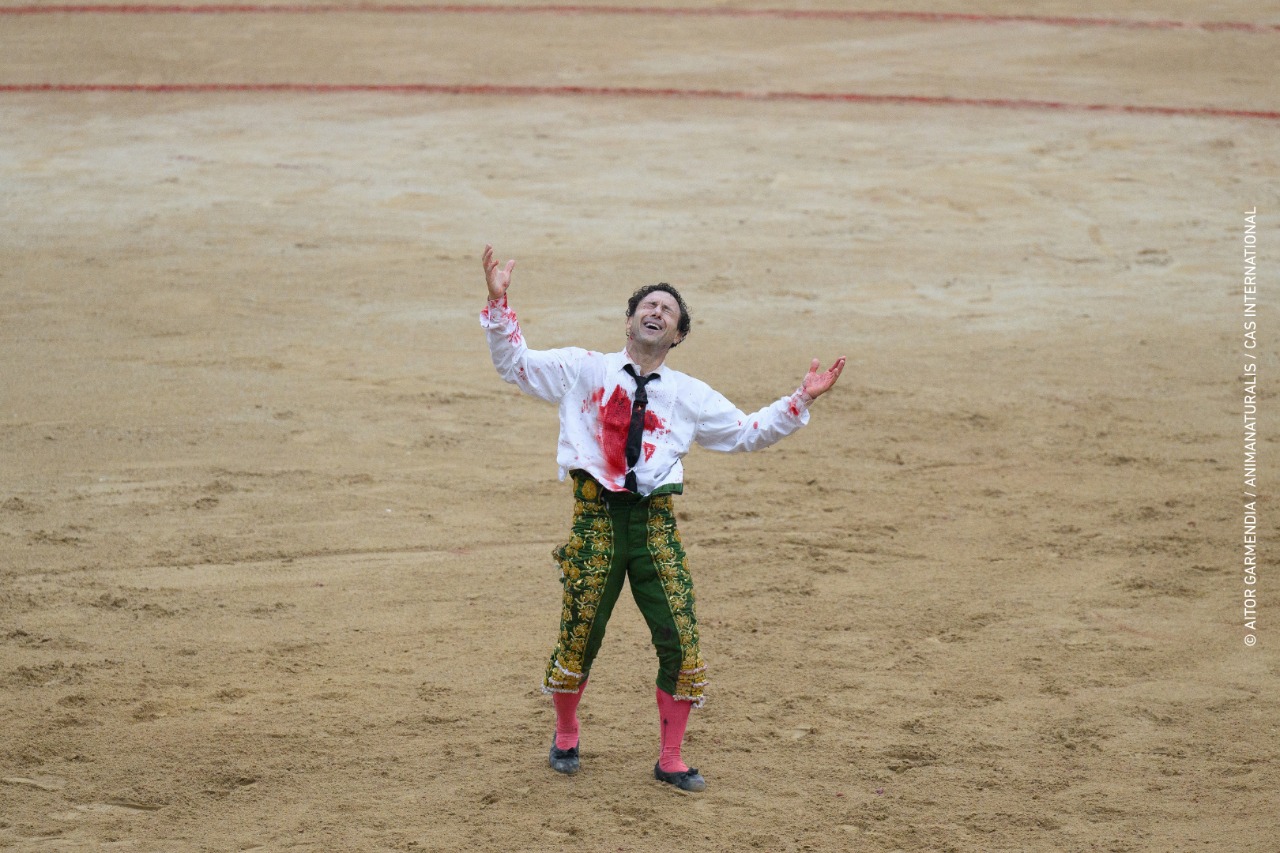
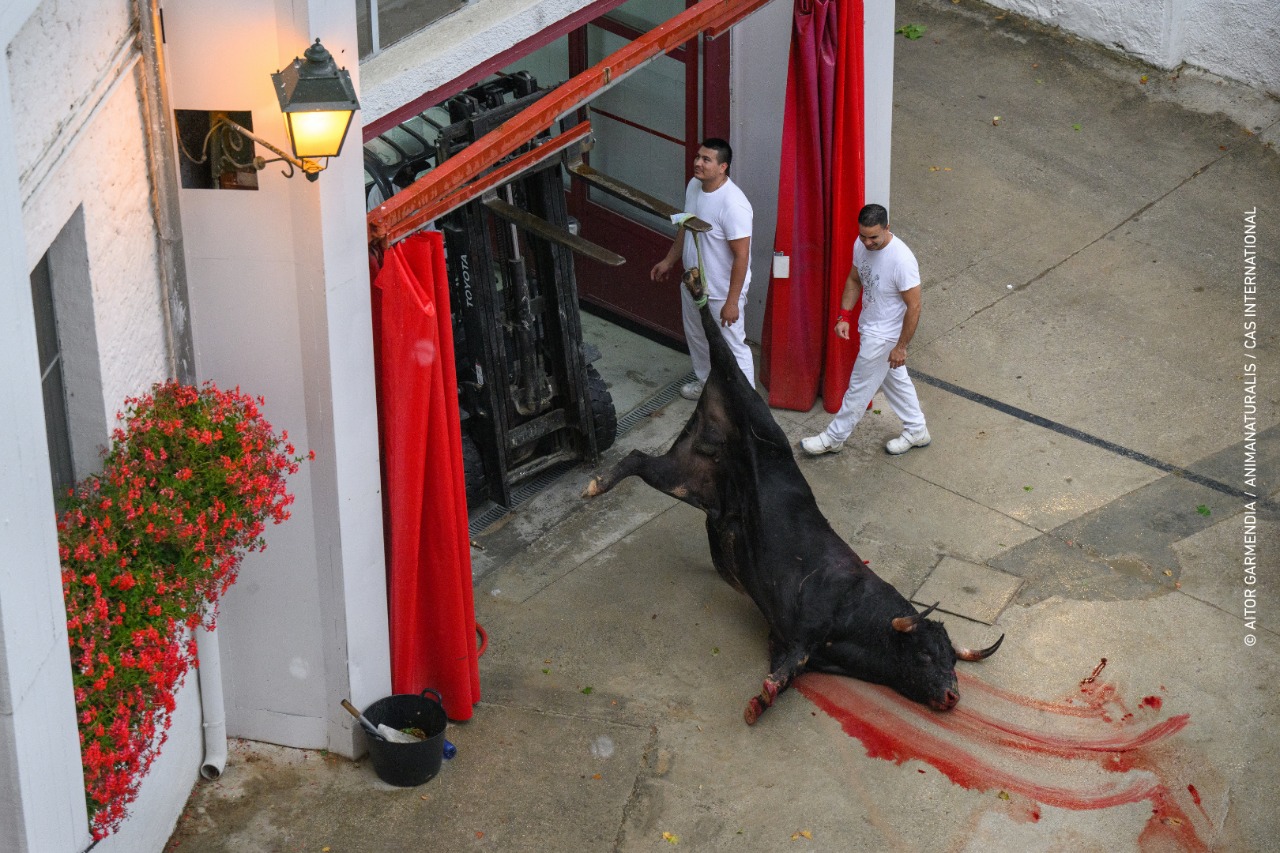
The arena erupts. Applause. White handkerchiefs wave. Callejero is now a carcass. The mule team enters. They tie his legs and drag him across blood-soaked sand. His trail is never cleaned. It’s celebrated.
From the stands, no one hears his final breath. No one sees the terror in his eyes. He’s just another number. But Callejero had a name, memories, and instincts. He didn’t choose to die in a ring. He didn’t ask to star in a tradition built on suffering.
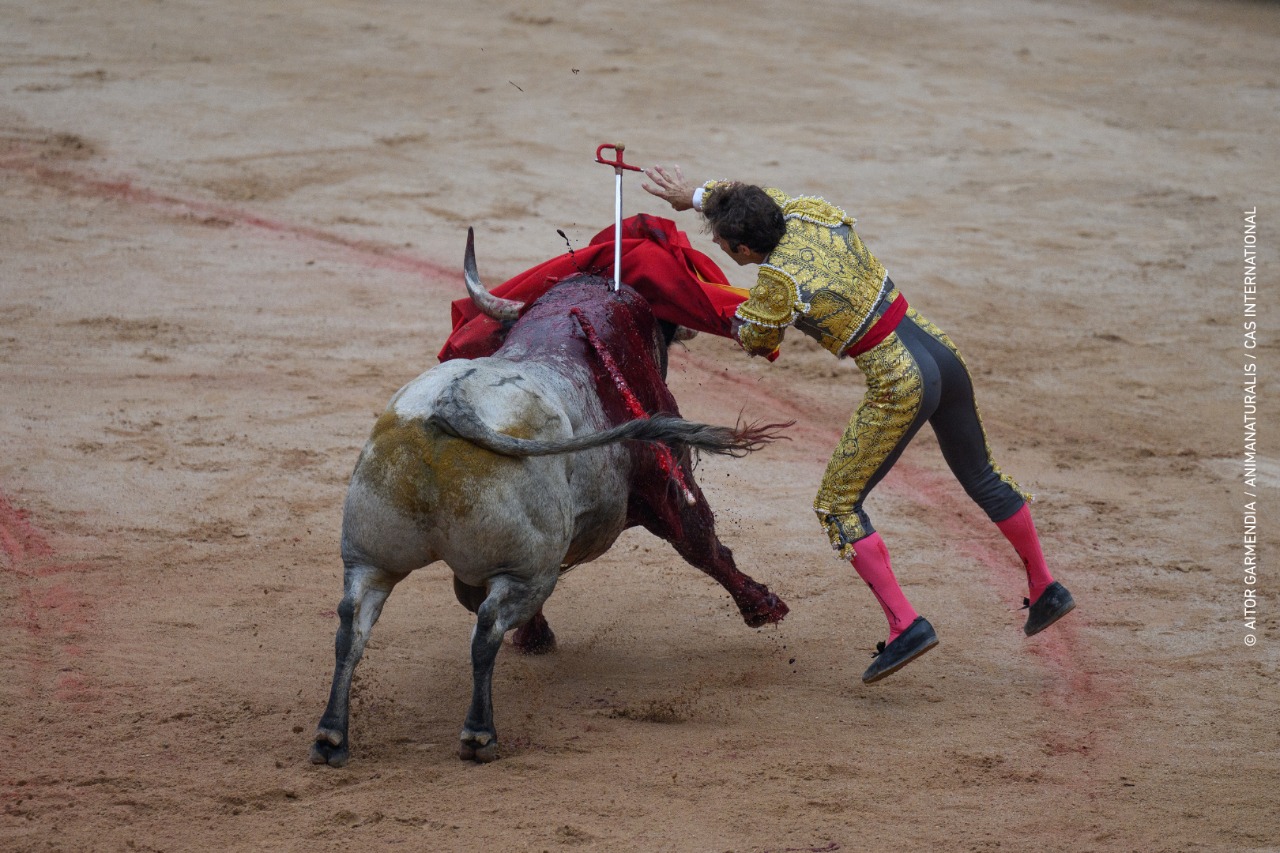
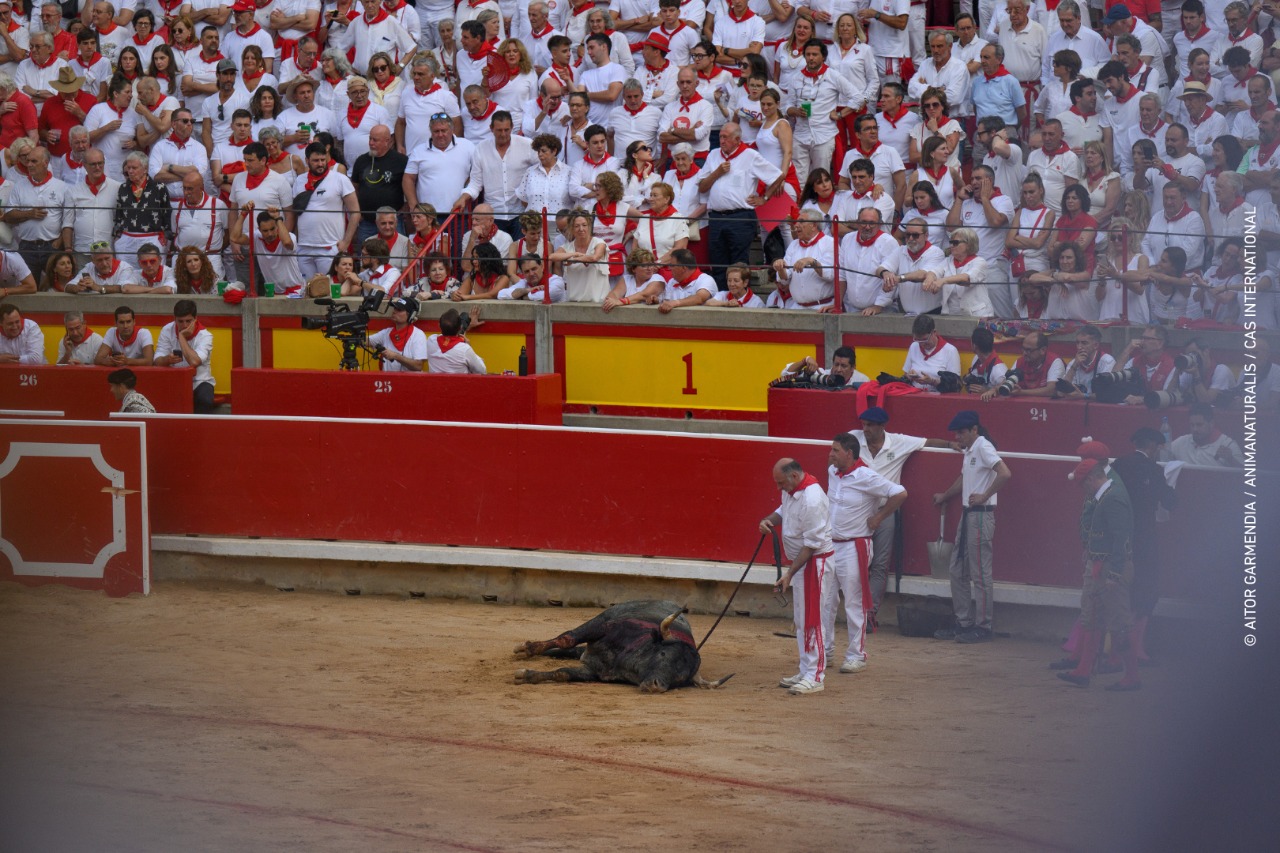
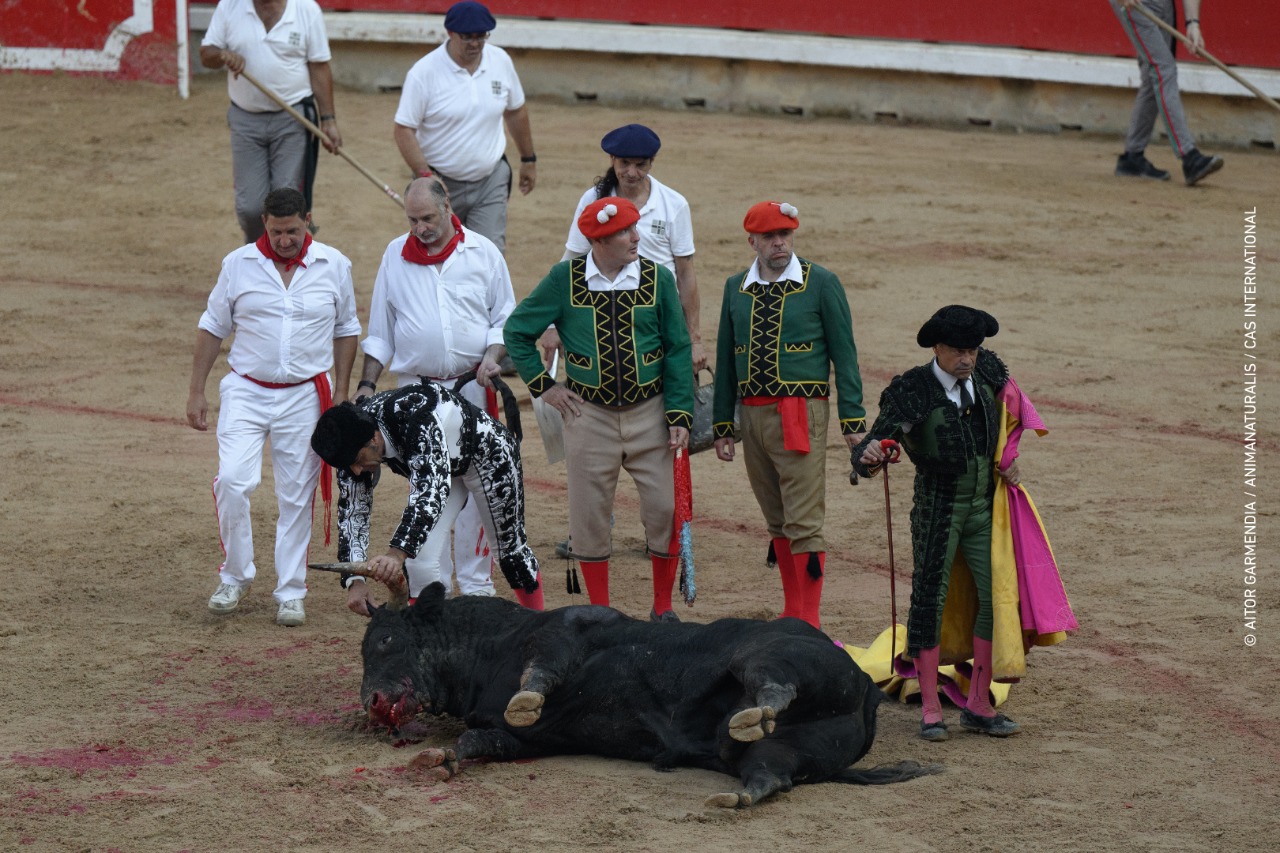
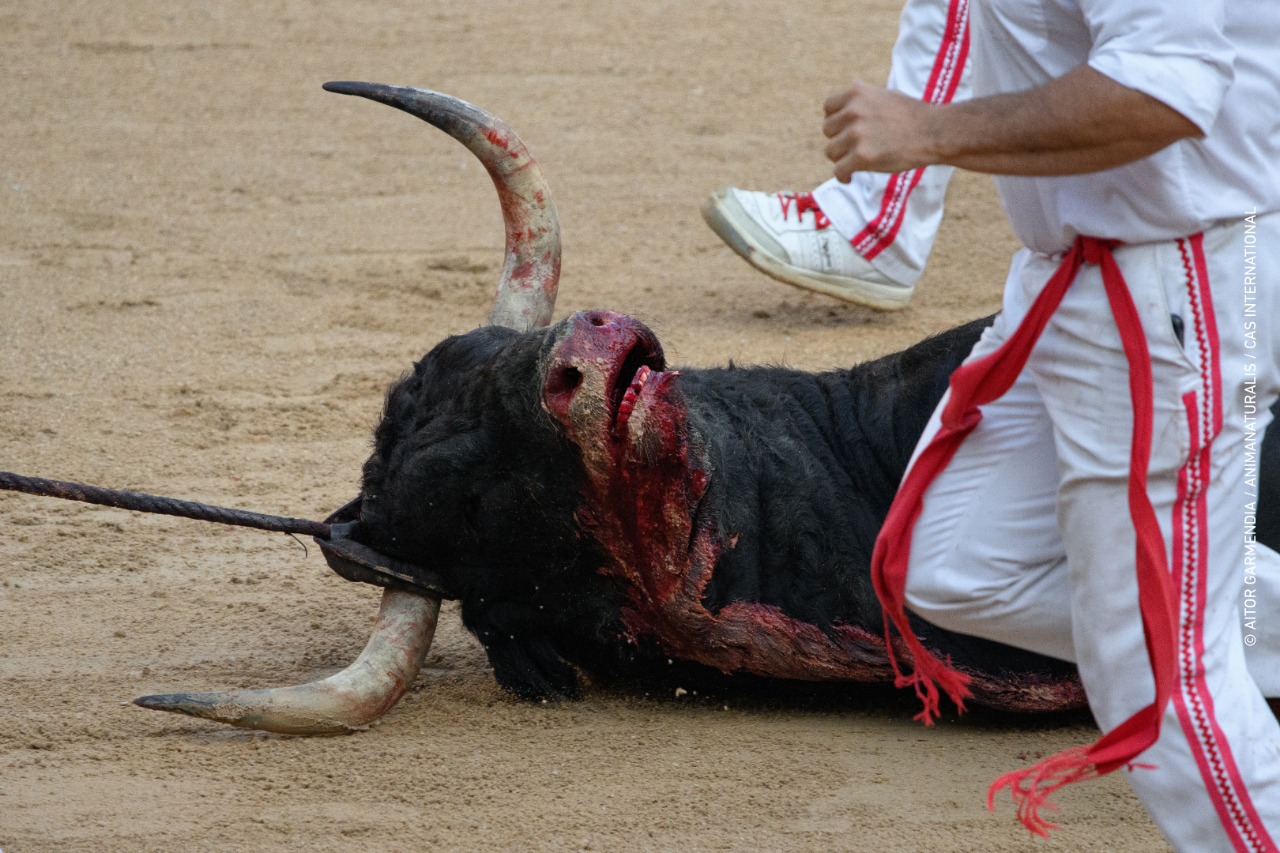
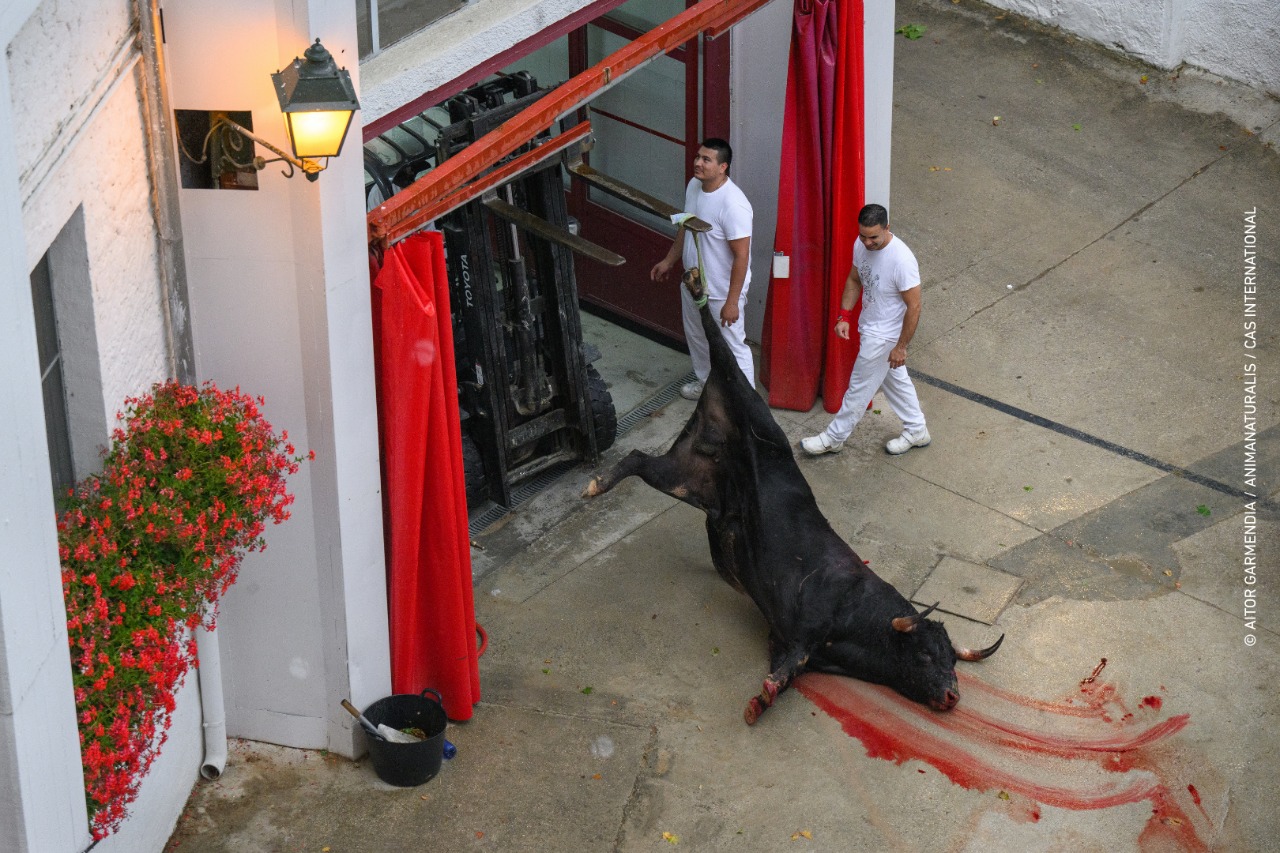
"Every bull that falls in the arena is an ethical defeat for our society. Callejero was not a number—he was a sentient being, victim of a ritual that must be abolished,” says Gascón.
On July 13, bulls from La Palmosilla ranch met the same fate. Arrinconado lived up to his name, cornered in the arena by matadors Fortes and Ginés Marín. After dodging three stabs, he slipped and fell, making the kill easier. "His body trembled like a child trapped in a nightmare,” said a witness. When Adrián’s sword pierced his spine, his scream silenced the music.
"True bravery isn’t in killing the vulnerable, but in protecting them,” adds Gascón. “It’s a simple truth. It’s inconceivable that a foundation like Casa de la Misericordia can’t grasp this. Christian ethics cannot exclude animals. Compassion should not be selective.”
After the final applause, mobile slaughterhouses remove the corpses. Callejero weighed 540 kg; his meat will be sold for €3/kg. That’s what remains after being cheered in this cruel spectacle. They vanish unnamed—while Pamplona claps.
But memory remains: our files. The 2,317 photos taken by Aitor Garmendia for AnimaNaturalis and CAS International are forensic proof of this cruelty. "Chatarrero staring into nothing," "Tinajón collapsing as blood gushes from his lungs," "Sucesor staggering across the ring"—each image is a testament to suffering. They should move us to act against cruelty disguised as entertainment.
Hope for a Better Future
There is hope in the words of Pamplona’s mayor Joseba Asiron, who declared: "I envision a San Fermín without bullfights in the near future." The #NoEsMiCultura Citizens' Initiative could be a turning point for the thousands of bulls slaughtered each year in Spain under similar conditions. The debate is underway, and political courage is emerging. "Society has spoken,” insists Gascón. "Even in Pamplona, the City Council surveyed 1,300 residents on their rejection of the encierros. It's a tacit admission: the model is exhausted."
AnimaNaturalis and CAS International have worked together for years to end bullfighting. That is our commitment. With investigations like this one, we aim to reach those who are undecided—to reflect on whether a tradition built on the torment of innocent animals is truly worth preserving. We want these images—and the names of these bulls—to be remembered. If we’ve taken their lives and dignity, the least we can do is not erase them from memory.
These are the names of the bulls killed during San Fermín in Pamplona:
This list includes reserve bulls—those killed if others are too injured to fight. None are spared. None return to the ranch. We include their identification numbers for reference in the images.
On July 7, the bulls from the Fuente Ymbro ranch ran the bull run and were killed in the arena. These were Orgulloso (15), Previsor (38), Sacacuartos (52), Infortunado (85), Zalagarda (97), Primoroso (114), Tramposo (115) y Primoroso (196). Al día siguiente, 8 de julio, le tocó el turno de ser martirizados a los toros de Cebada Gago. Sus nombres son Campero (1), Puntero (20), Caminante (23), Lioso (24), Pintado (48), Cacabelito (75) y Avanto (81). El día 9 de julio corrieron y encontraron su fin en el ruedo los toros de Álvaro Núñez: Asustado (3), Trampero (9), Orrojado (18), Majoleto (21), Aguaclaro (34), Juncoso (39), Polvorillo (43), Algarrobillo (54) y Guerrito (72). On July 10, the bulls were brutally tormented Candidato (16), Tallista (49), Espiguita (68), Jara (111), Alcalde (127), Empanado (156), Jilguero (159) y Alabardero (162). El día 11 de julio les llegó la hora a los toros de la ganadería Jandilla: Maquinador (1), Espía (6), Gorrero (7), Vinaza (12), Viperino (63), Sibarita (87), Vívora (90) e Histórico (109). El 12 de julio fue el turno de los animales que provenían de la ganadería de José Escolar, que fueron incluídos en este reportaje: Chatarrero (19), Capador (32), Tobillero I (39), Callejero I (40), Cartero (44), Diputado (48) y Señorito (69). También en este reportaje, el día 13 de julio corrieron y murieron los toros de La Palmosilla: Arrinconado (16), Ardoso (27), Tinajón (44), Opíparo (51), Disparate (59), Sucesor (61), Mirloblanco (66) y Timonel (97).