
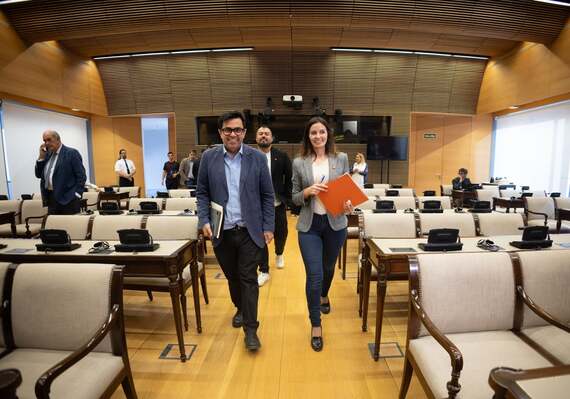
The appearance of the Popular Legislative Initiative (PLI) "It Is Not My Culture" before the Culture Committee of the Spanish Congress of Deputies has marked a turning point in the long-running debate about the future of bullfighting in Spain. This is not a simple attempt at prohibition, but a strategic movement that challenges cultural centralization and raises fundamental questions about democracy, identity, and the role of animal cruelty in modern society. The PLI, backed by a historic number of signatures, aims to revoke bullfighting's status as Cultural Heritage, a status that, ironically, also originated from a PLI a decade ago.
The main objective of the PLI, defended by the lawyer from AnimaNaturalis and member of the PLI's Promoting Committee, Cristina Ibáñez García, is to remove the legal shield protecting bullfighting and to stop it from being considered Cultural Heritage, thereby repealing Law 18/2013. This action has a direct and carefully calculated consequence: by removing state-level protection, authority over this matter would return to the autonomous communities and local councils, allowing them to prohibit or regulate bullfighting events according to the values and preferences of their citizens.
This legal move is framed as a direct response to the recent history of the debate. Law 18/2013, which shielded bullfighting as a cultural asset, was the same law used as the basis for the Constitutional Court to overturn in 2016 the Catalan law that banned bullfights. The ruling argued that while Catalonia had the authority to regulate public spectacles and protect animals, state legislation had prevailed by declaring bullfighting cultural heritage. The PLI "It Is Not My Culture" therefore seeks to create a new framework of authority to avoid future legal conflicts, allowing territories to decide freely without the interference of a centralizing law. As expressed by Ibáñez, the initiative seeks to "return decision-making power to those territories that currently cannot decide".
"The autonomous regions and local councils are mature enough to decide if they want bullfights or not in their territories. We want to de-shield bullfighting, to return decision-making power to those territories that cannot decide," added Ibáñez. "Faced with imposition, we demand freedom."
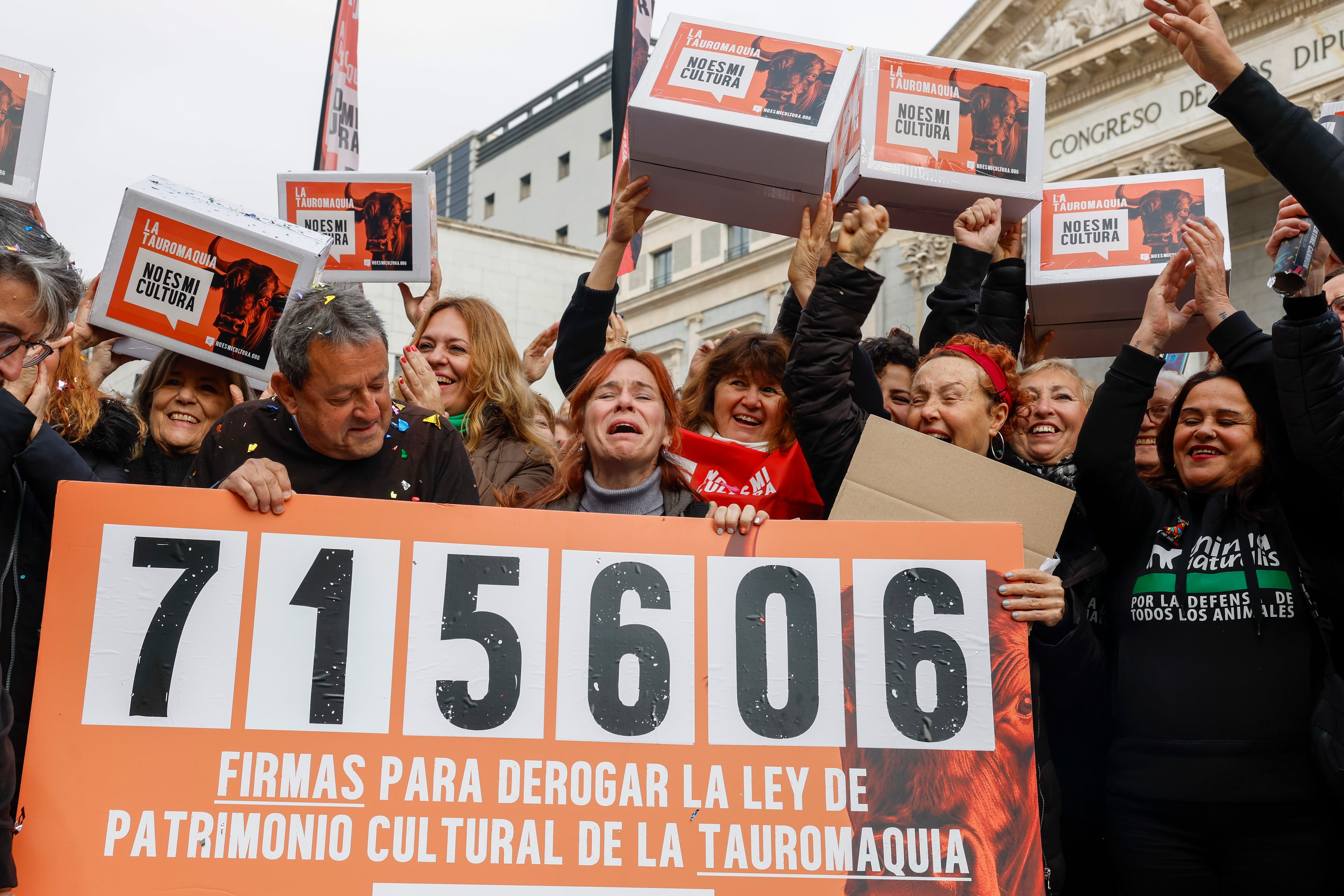
Popular support is one of the initiative's strongest pillars. The promoters submitted 715,606 signatures in February 2024, of which 664,777 were certified as valid by the Central Electoral Board. This figure not only far exceeds the legal threshold for the proposal to be considered by Congress, but also sets a clear precedent by surpassing the number of signatures (500,165) obtained by the pro-bullfighting PLI in 2012 that led to the creation of Law 18/2013.
For Aïda Gascón, Director of AnimaNaturalis in Spain, "this is a historic moment for the animal rights movement in Spain. The PLI is not just a legislative proposal; it is the reflection of a society that has evolved and that rejects violence as a form of entertainment." She added: "The ball is now in the court of the political parties. The more than 660,000 signatures are a clear citizen mandate: it is time for politics to rise to the level of social ethics and popular will."
This difference of more than 164,000 signatures is a powerful indicator of a shift in social consciousness. The strategy of the promoters, who collected signatures across all Spanish territories and among people of "all political leanings," demonstrates that the rejection of animal cruelty is not a partisan phenomenon, but a position that transcends traditional ideological divisions. The gap between the current support for removing protection and the support for its shielding a decade ago reflects a clear social trend: the citizen base calling for an end to bullfighting is broader and more robust than the one that defended its continuation.
Positions and Arguments in the Parliamentary Debate
The debate in the Congressional Culture Committee exposed the deeply divided stances of the different political parties, crystallizing a conflict that goes beyond animal protection into questions of identity and national vision.
The 'No' Block: PP and Vox
The Popular Party (PP) and Vox were the only parties that firmly opposed processing the PLI. PP deputy Soledad Cruz-Guzmán expressed her "annoyance" and "anger" at the proposal, calling it a "censorship law" that seeks to "kick our Constitution" and "impose a type of culture." Cruz-Guzmán defended the "unquestionable cultural value of bullfighting" and questioned whether defenders of bullfighting are "barbarians" or "cultured people."
For his part, Vox spokesperson José Ramírez del Río argued that bullfighting is a "fundamental and non-negotiable pillar of Spanish identity" and warned that suppressing it would be "unconstitutional." Defenders of this position also resorted to the usual argument of cultural authority, citing historical figures like Goya, Lorca, or Camarón, and contemporary artists like Joaquín Sabina to underline the deep roots of bullfighting in Spanish culture. Ramírez del Río also mentioned a supposed "rebound effect" that is allegedly attracting young people to bullfighting events.
The narrative of a "rebound effect" among young people directly contradicts data from the BBVA Foundation indicating that over 70% of Spaniards reject bullfights. In fact, the Sumar spokesperson, Nahuel González, linked the presence of young people in bullrings to the "rise of the far-right" among young men, suggesting that the supposed "resurgence" of bullfighting is an ideological phenomenon, not a cultural one. In this context, "culture" becomes a battleground to reaffirm a conservative political identity.
The 'Yes' Block: Sumar, ERC, and Allies
On the other side, parties such as Sumar, ERC, Junts, EH Bildu, PNV, and Podemos backed the initiative. Their position was based on the conviction that "culture cannot be associated with animal cruelty." Sumar deputy Jorge Pueyo stated that "cruelty cannot be culture" and called it "an aberration." Spokesperson Nahuel González denounced public subsidies to the sector and stated that they defended "a culture that doesn't smell of blood, of torture." ERC deputy Etna Estrems emphasized her total support for the "core of the issue," which is returning decision-making power to the autonomous regions.
The Decisive Role of the PSOE
The position of the PSOE, whose vote was crucial for the initiative to be admitted for processing, was key. Socialist spokesperson Marc Lamuà adopted a stance he described as "neutral." In his speech, he criticized the tone of "cultural battle" in the debate, arguing that culture should be an "forum for meeting." While showing respect for the promoters and signers of the PLI, he acknowledged the historical value of bullfighting in Spanish culture. However, his key argument was that "culture is not preserved in formaldehyde" and that "democracy is not for preserving what we were as immutable, but for deciding what we want to be."
The PSOE's vote in favor of processing the PLI is not unconditional support for its content, but a political move. By allowing the debate to advance, the Socialists honor the mandate of more than 660,000 signatures, avoiding the accusation of "turning a deaf ear." At the same time, their rhetoric of rational mediation in a "cultural battle" allows them to navigate the controversy without alienating a sector of their voters, postponing a definitive decision for later stages of the legislative process.
Below is a table summarizing the positions of the main political parties:
| Political Party | Vote in Committee | Stance and Main Argument | Key Quotes |
| PP | Against | The PLI is a "censorship law" and an attack on the Constitution and culture. Bullfighting has "unquestionable cultural value" and is part of Spain's history. | “I may seem annoyed or even angry, because I am: this comes to kick our Constitution.” “The cultural value of bullfighting is unquestionable.” |
| Vox | Against | Bullfighting is a fundamental pillar of Spanish identity and its prohibition would be "unconstitutional." They defend the "rebound effect" attracting youth. | “They are not trying to take money away from bullfighting events, but to prohibit them.” “Bullfighting is a fundamental and non-negotiable pillar of Spanish identity.” |
| PSOE | In Favor | "Equidistant" position. Defends democratic debate and cultural evolution. Democracy should decide "what we want to be," not preserve what we were. | “Culture is not a battlefield, but an agora for meeting.” “Culture is not preserved in formaldehyde.” |
| Sumar | In Favor | Animal cruelty cannot be culture. Bullfighting is an "aberration" and should be de-shielded to allow territories to decide. | “We defend a culture that doesn't smell of blood, of torture.” “Cruelty cannot be culture.” |
| ERC | In Favor | Total support for the core of the initiative. They argue that autonomous regions should have the power to decide on bullfighting events in their territories. | “We share one hundred percent the core of the issue, but we must limit ourselves to what the PLI asks for, which is that the autonomous regions can decide.” |
A Conflict of Principles
The reaction of the Bullfighting Foundation (Fundación del Toro de Lidia - FTL) to the PLI was immediate and vehement, labeling it "a totalitarian attack on cultural freedom." The Foundation's president, Victorino Martín, argued that the 2013 Law did not invent bullfighting culture but simply recognized it, and that the cultural character of bullfighting predates any law. His central thesis is that culture is decided by the people, not governments, and that the debate about abolishing a cultural expression sets a dangerous precedent. “Culture is not censored,” stated the document released by the FTL.
This rhetorical position seeks to delegitimize the democratic process. By equating bullfighting with any other cultural manifestation, the FTL attempts to establish a moral barrier that prevents any debate. However, this argument ignores a fundamental dimension: bullfighting is one of the few cultural expressions explicitly based on the suffering and death of an animal. The initiative, therefore, is not an attack on culture in general, but a request to redefine the ethical limits of what a democratic society considers an acceptable tradition.
The debate also touched on economic aspects. The promoters of the PLI pointed to the decrease in the number of bullfighting events and the drop in attendance, despite public subsidies dedicated to promoting them. This dependence on state support reinforces the argument that bullfighting is no longer a tradition sustainable by itself. Furthermore, the decision by the Minister of Culture, Ernest Urtasun, to exclude bullfighting spectacles from the Youth Cultural Voucher, represents a symbolic and economic blow that distances the sector from new generations.
The passage of the PLI "It Is Not My Culture" through the Culture Committee is a legislative event that encapsulates a profound "cultural battle" in Spain. The initiative, backed by a historically high number of signatures, does not seek a direct prohibition, but a strategy of decentralizing authority that respects Spain's cultural heterogeneity and allows territories to decide their own path. The parliamentary debate exposed irreconcilable positions: on one side, the defense of a tradition as a non-negotiable pillar of identity; on the other, the vision of a culture that must evolve and not justify animal cruelty.
The role of the PSOE has been crucial, as by allowing the proposal to continue its process, it has ensured that a democratic debate takes place. The next steps for the PLI include setting a date for a debate in the Plenary Session of Congress and, if the proposal is admitted, a period for amendments and its processing in committee. The final destiny of the PLI will depend on the complex political negotiations that will follow. The fight to remove protection for bullfighting is, in essence, a fight to decide not only "what we want to be" as a society, but also what kind of culture we want to bequeath to future generations in a country torn between tradition and ethical evolution.