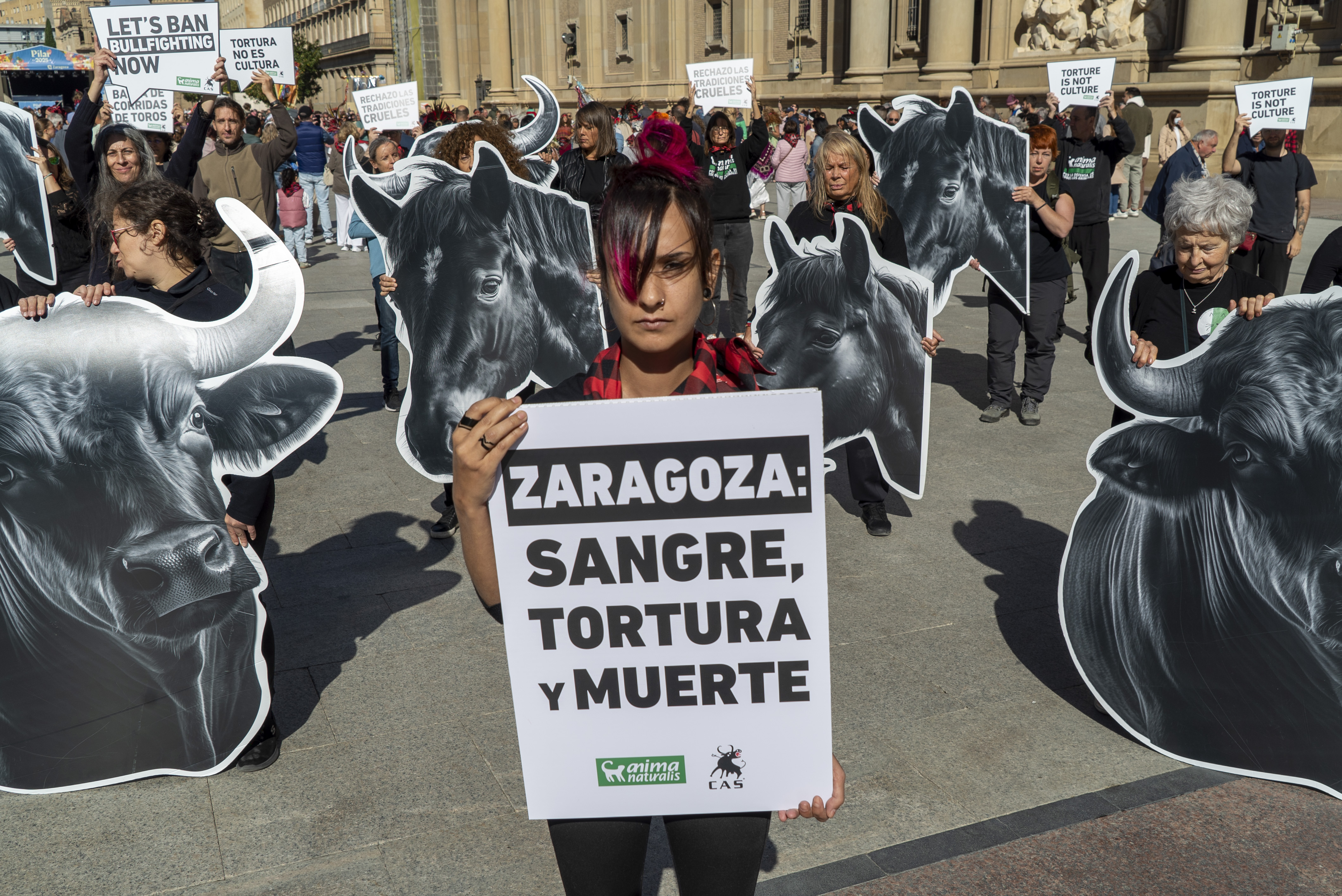
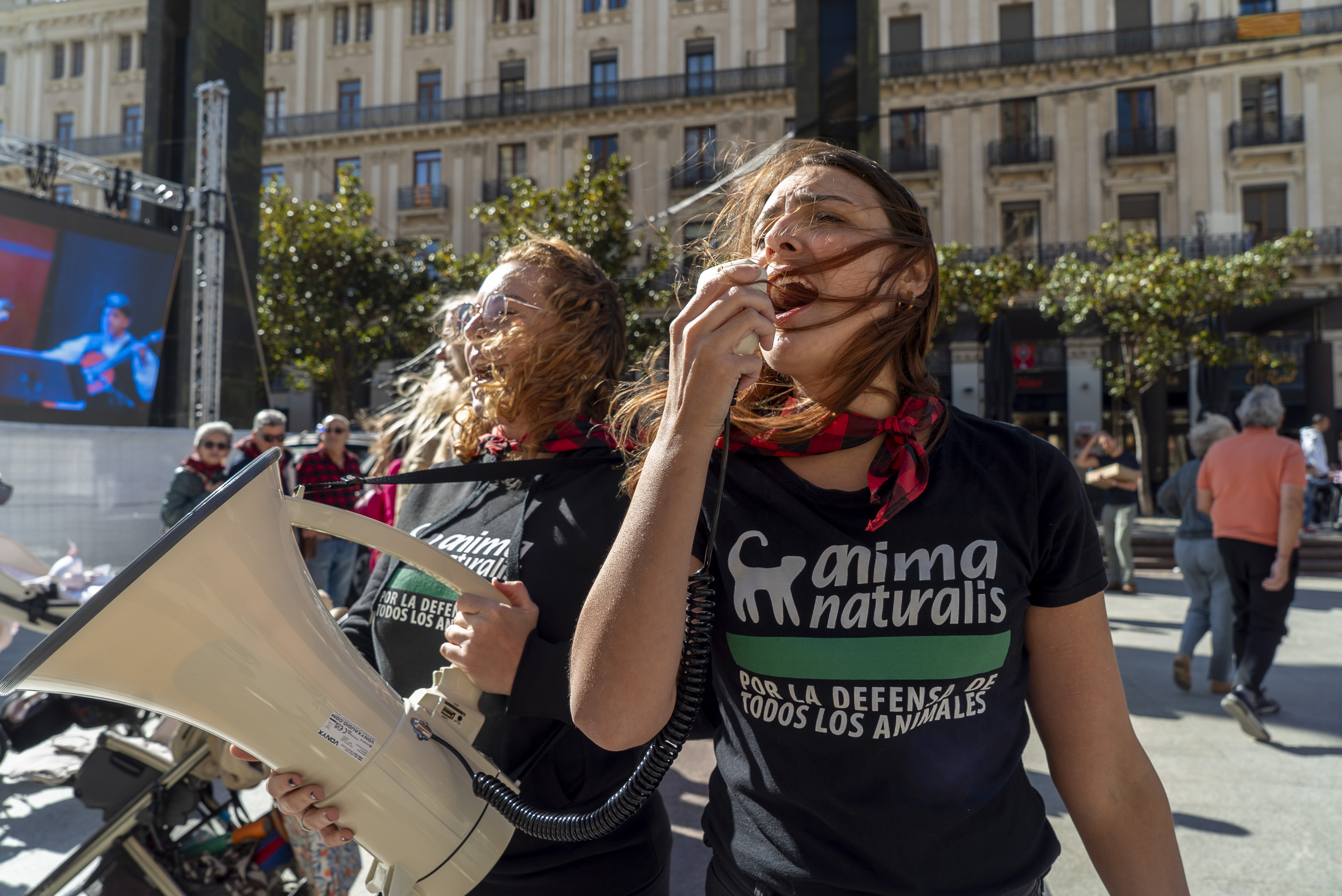
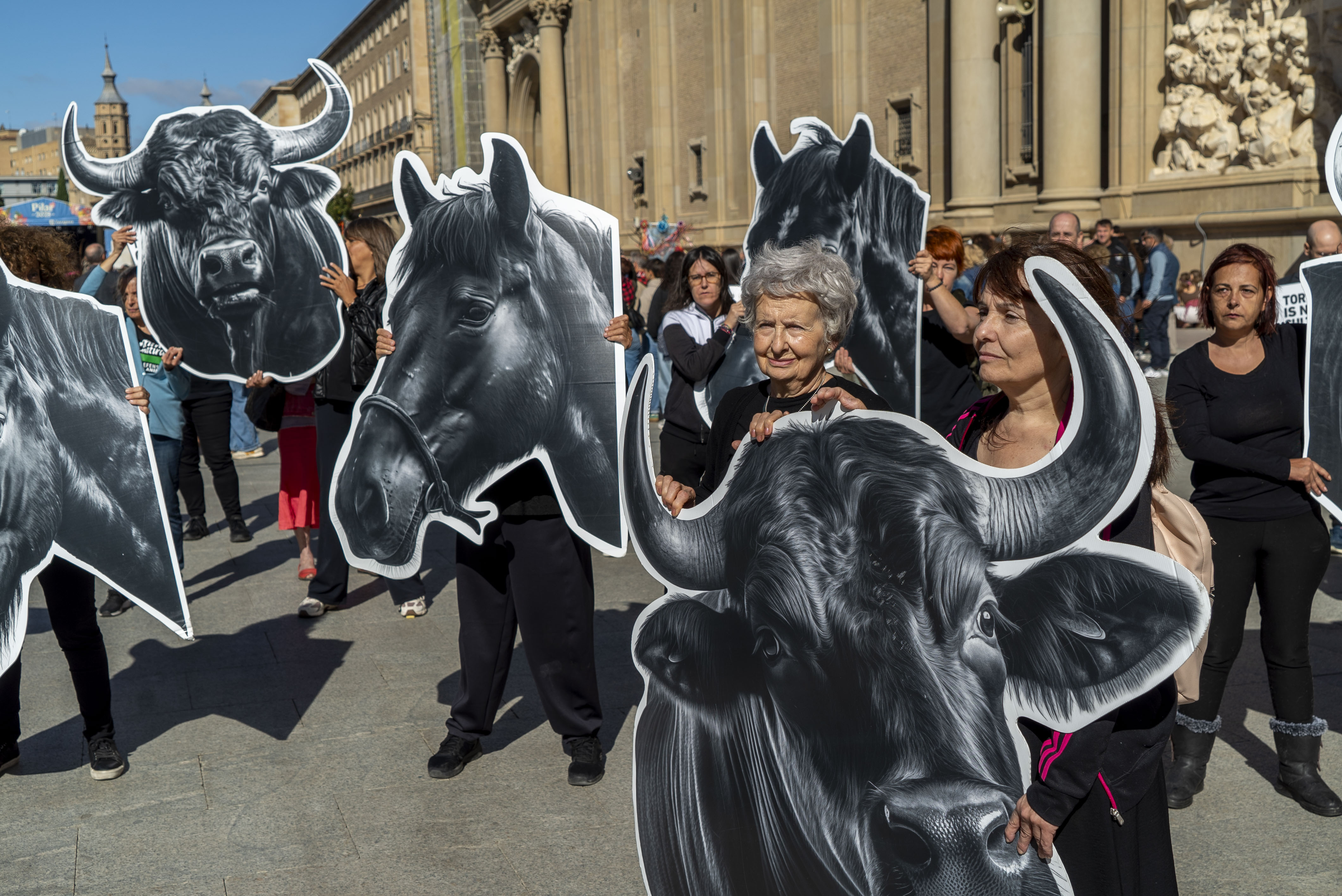
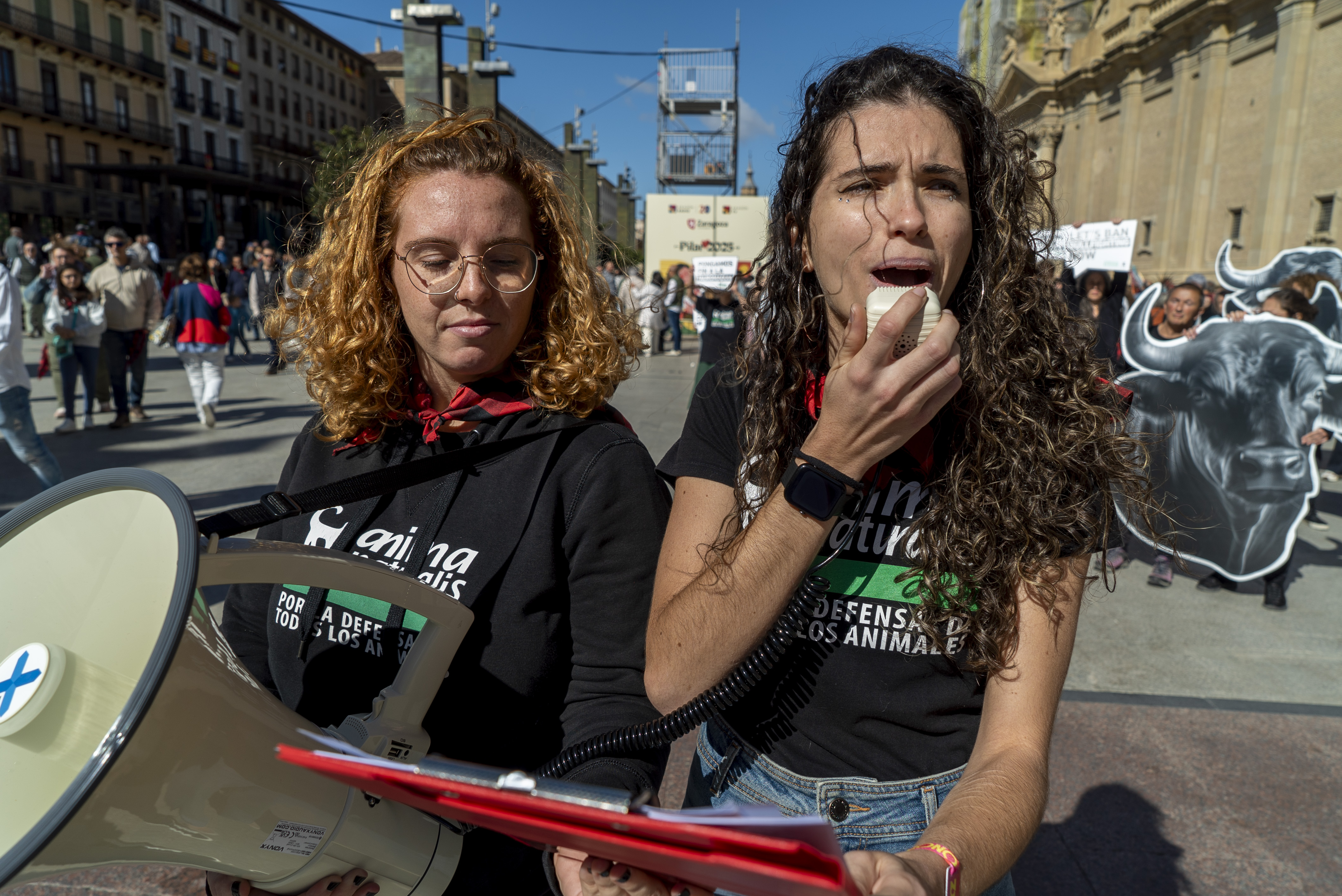
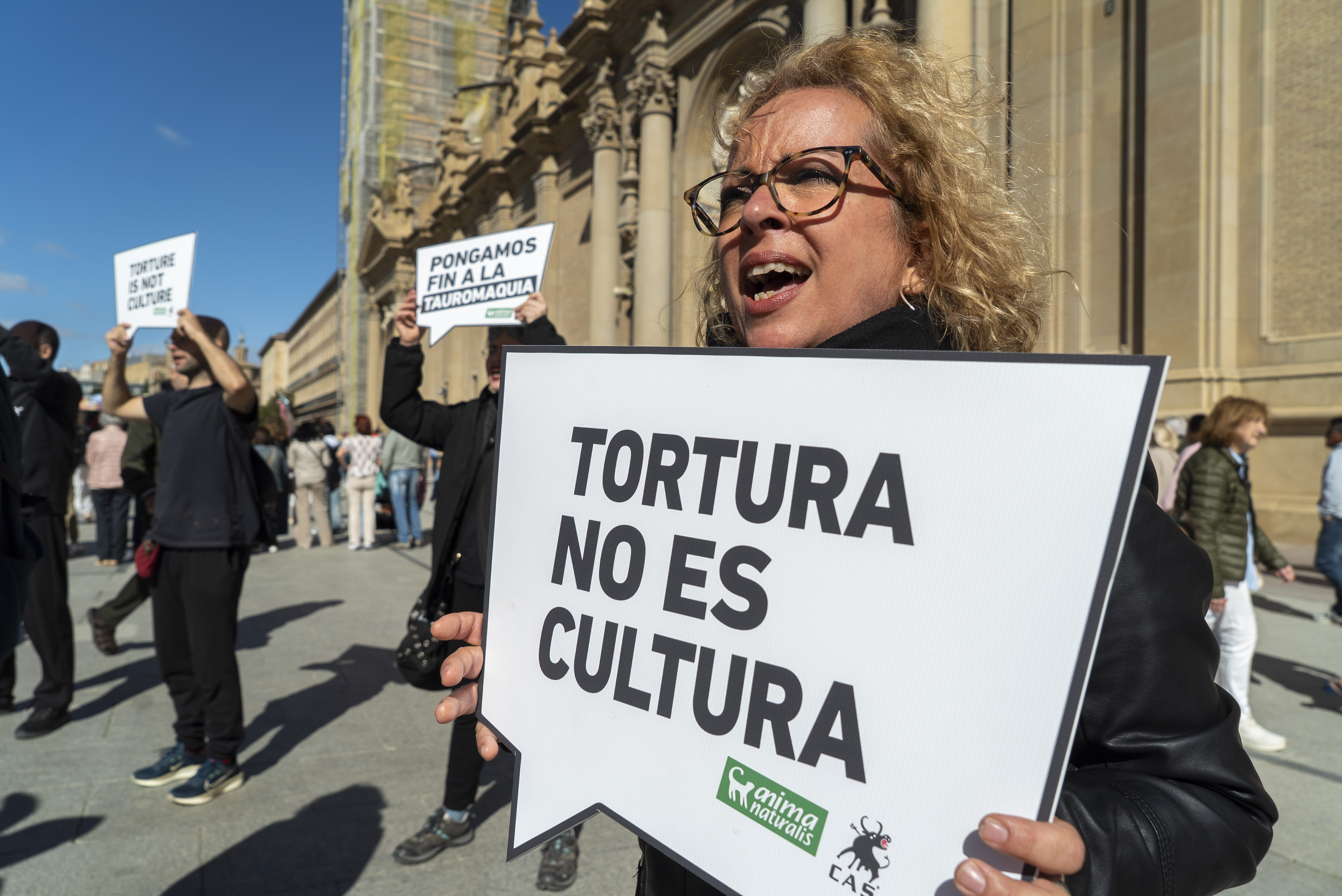
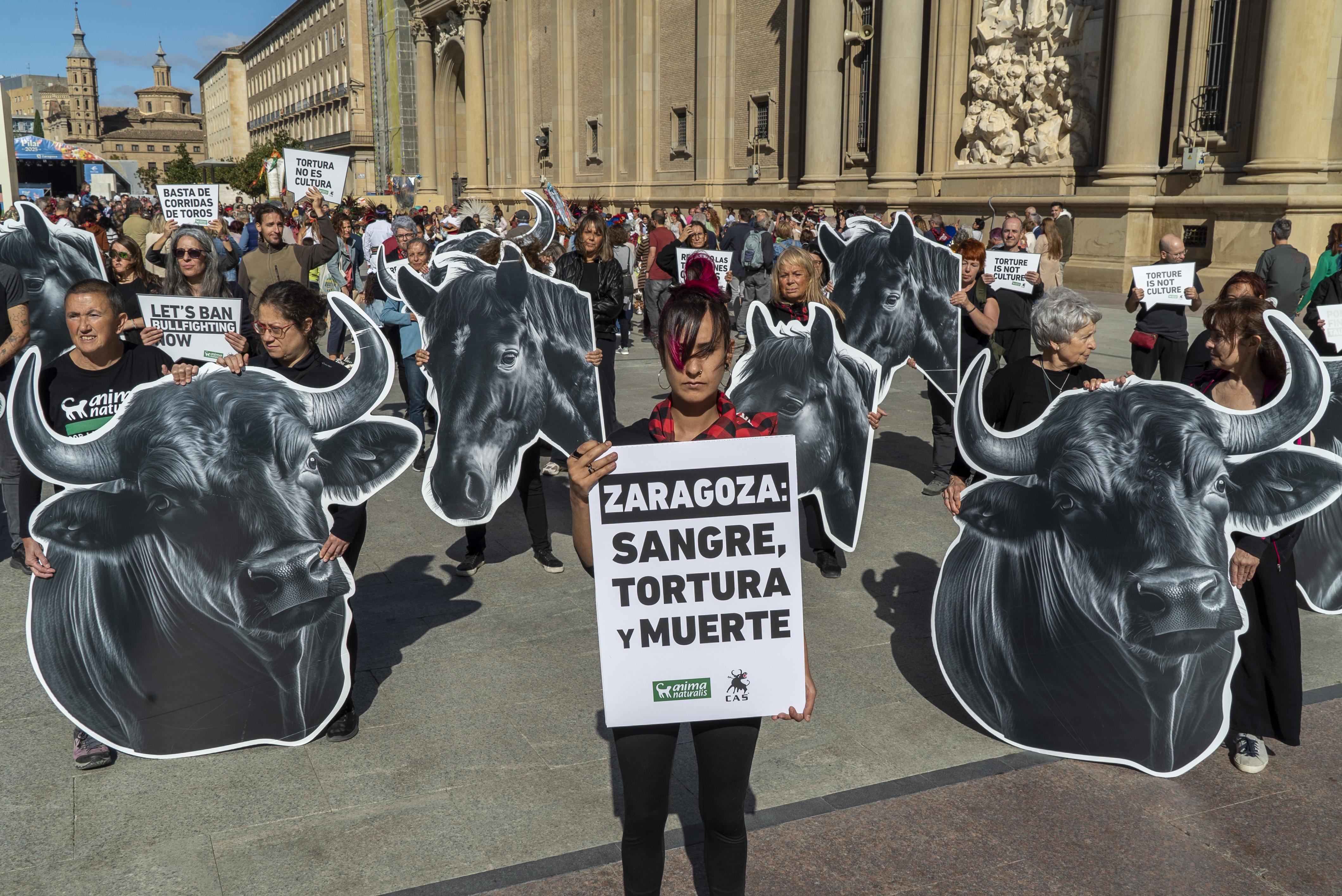
In the heart of the Pilar festivities, around thirty activists from AnimaNaturalis and CAS International staged a powerful protest this Sunday in front of the Basilica of El Pilar. Holding large portraits of bulls and horses victimized by bullfighting, along with banners bearing slogans such as "Torture Is Not Culture" and "Enough of Cruel Traditions," they called for an end to bullfights in Zaragoza and the public subsidies that artificially keep them alive.
"El Pilar is synonymous with pride and community... but we cannot allow such a celebration to be tarnished by practices that involve violence towards animals," stated Ana Gallego, coordinator of AnimaNaturalis in Zaragoza.
The action took place on Sunday, October 5th, at noon, in front of the iconic Zaragozan temple, while thousands of people enjoyed the patron saint celebrations. The contrast between the festive atmosphere and the images of animal suffering caught the attention of tourists and locals, who stopped to observe the silent demonstration.
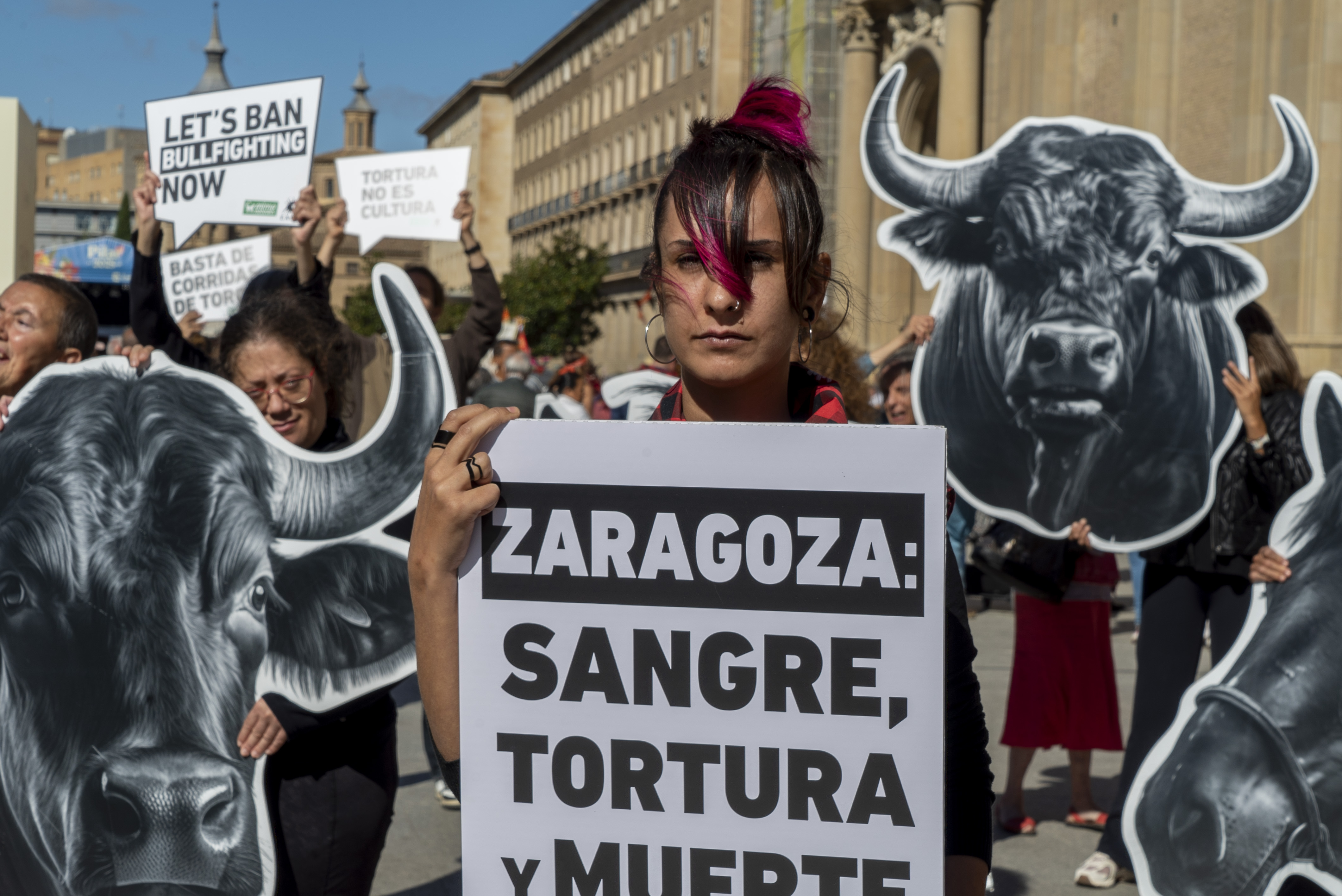
The protest is part of the context of the Popular Legislative Initiative (ILP) #NotMyCulture, which seeks to repeal the law that protects bullfighting as "cultural heritage" in Spain. The ILP has collected more than 715,000 signatures, of which 664,777 have already been officially validated, and will soon be debated in the Spanish Congress.
"Our festivities are a celebration of life and Aragonese culture... not a spectacle of blood, torture and death. This has no place in a compassionate society," added Gallego.
This public demand coincides with growing social rejection of bullfighting: according to the BBVA Foundation's Study on Perceptions of Nature and Animals (2025), three out of four Spaniards reject bullfights, and 77% consider the use of animals in bullfighting spectacles unacceptable.
Public money for torture
Despite this rejection, local and regional institutions maintain and even expand support for the bullfighting sector. In Zaragoza, the City Council governed by PP and Vox has doubled the budget for bullfighting promotion, increasing it from €20,000 to €40,000 in 2025. Part of this money goes to the Mar de Nubes bullfighting school and activities such as bullfighting workshops or the 'Torericos' Club, aimed at children between 4 and 14 years old.
These funds contrast with cuts in social services and the closure of youth spaces, such as the 'El Túnel' center in the Oliver neighborhood. "It is incomprehensible that public money is invested in teaching children to mistreat animals, while spaces that foster community and creativity are being closed," lamented Gallego.
At the regional level, the Government of Aragon (PP-Vox) has resumed broadcasting bullfights on Aragón TV after a decade-long absence, despite a lack of transparency regarding the cost. It is estimated that each event entails around €8,000 in production costs, shared with other regional broadcasters, sometimes even during children's viewing hours.
Bullfighting, a fading tradition
Official statistics from the Ministry of Culture confirm the sector's decline: in 2009, 2,684 bullfighting events were held; in 2023, only 1,474 took place, a drop of almost 50%. Furthermore, only 1.9% of the population attended bullfighting spectacles between 2021 and 2022, an insignificant figure compared to other cultural events.
"Scientific evidence and the contradictions in animal welfare regulations should be enough to open an unavoidable debate about the continuity of bullfights," stated Aïda Gascón, director of AnimaNaturalis in Spain. "The population no longer accepts bullfighting as part of its cultural identity," she added.
The situation is repeated throughout the Iberian Peninsula. A survey by Ipsos I&O Public for CAS International, conducted with 7,500 people in Spain, France, and Portugal, revealed that 77% believe bullfighting causes too much suffering and 58% support its prohibition.
"We want festivities where animals do not suffer, where we can feel proud of our culture without violence," concluded Gallego.