
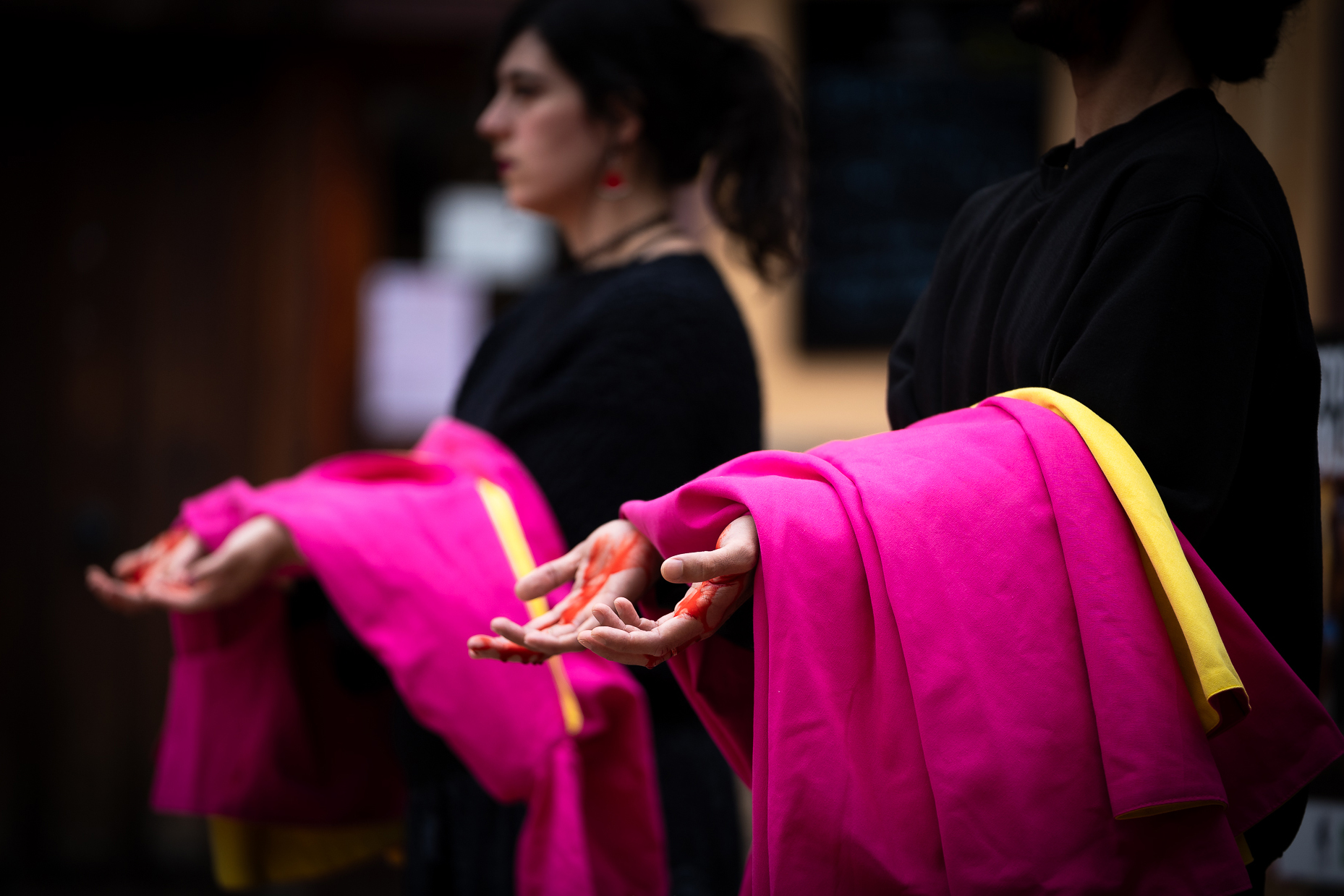
In the heart of Logroño, a space typically animated by the fervor of the San Mateo Festival, a scene of profound contrast and solemnity unfolded. As the city prepared for four days of bullfighting events, the central Plaza de San Agustín became the stage for a protest staged by AnimaNaturalis and CAS International. What unfolded was not a noisy rally, but a "black tide" of activists who, through silence and symbolism, sought to convey a powerful message about animal violence.
The elements of the protest were meticulously chosen to maximize emotional impact. Participants, dressed entirely in black as a sign of mourning for the animals, held banners with concise and direct messages designed to confront passersby with the stark reality of bullfighting. Phrases like "This is pain", "This is cruelty", "This is violence", and "This is barbarism" were designed to strip bullfighting of its cultural romanticism and expose it as an act of brutality. The demonstration transformed into a form of street theater, with activists using bullfighters' capes and red paint to simulate the blood and suffering that animals endure in the ring. This dramatization was not merely a representation, but a deliberate effort to force citizens to see the pain that the bullfighting industry tries to disguise.
The use of silence in the protest was a strategic decision. Unlike traditional demonstrations often perceived as chaotic or noisy, this silent act forced the curious to stop, observe, and interpret the meaning of the scene for themselves. This reflective pause amplified the emotional impact of the visual symbols, such as the simulated blood and the mention that 24 bulls would die during the festivities. The silence created space for contemplation, transforming a simple protest into a public invitation to empathy and ethical reflection—an approach that seeks to touch conscience before reason. The spokesperson for AnimaNaturalis in La Rioja, Inma de Imaña, articulated the moral essence of the event: "You cannot enjoy watching someone bleed or make others bleed." The protest, in its stillness and staging, sought to "give voice to the bulls," to those who cannot protest for themselves.
A central point of de Imaña's denunciation was the concern about an industry where "there will be a bullfighting fund that will provide grants for new bullfighters, in addition to 'vaquillas' (young cow events) every morning to attract young audiences." This reveals that bullfighting, aware of its demographic decline and aging fan base, is actively seeking to revitalize itself by enticing new generations. The AnimaNaturalis protest is a direct countermeasure to this effort, aiming to unmask the inherent cruelty of the practice to the very demographic group it is trying to recruit.
De Imaña drew a deliberate contrast between the celebration of life during the Harvest Festival and the nature of bullfighting events, which she described as a "festival of blood, torture and death" that "has no place in our society." This perspective frames the debate not as a clash between tradition and modernity, but as a choice between two opposing ways of celebrating: one that honors work, harvest, and community life, and another that is based on violence and suffering.
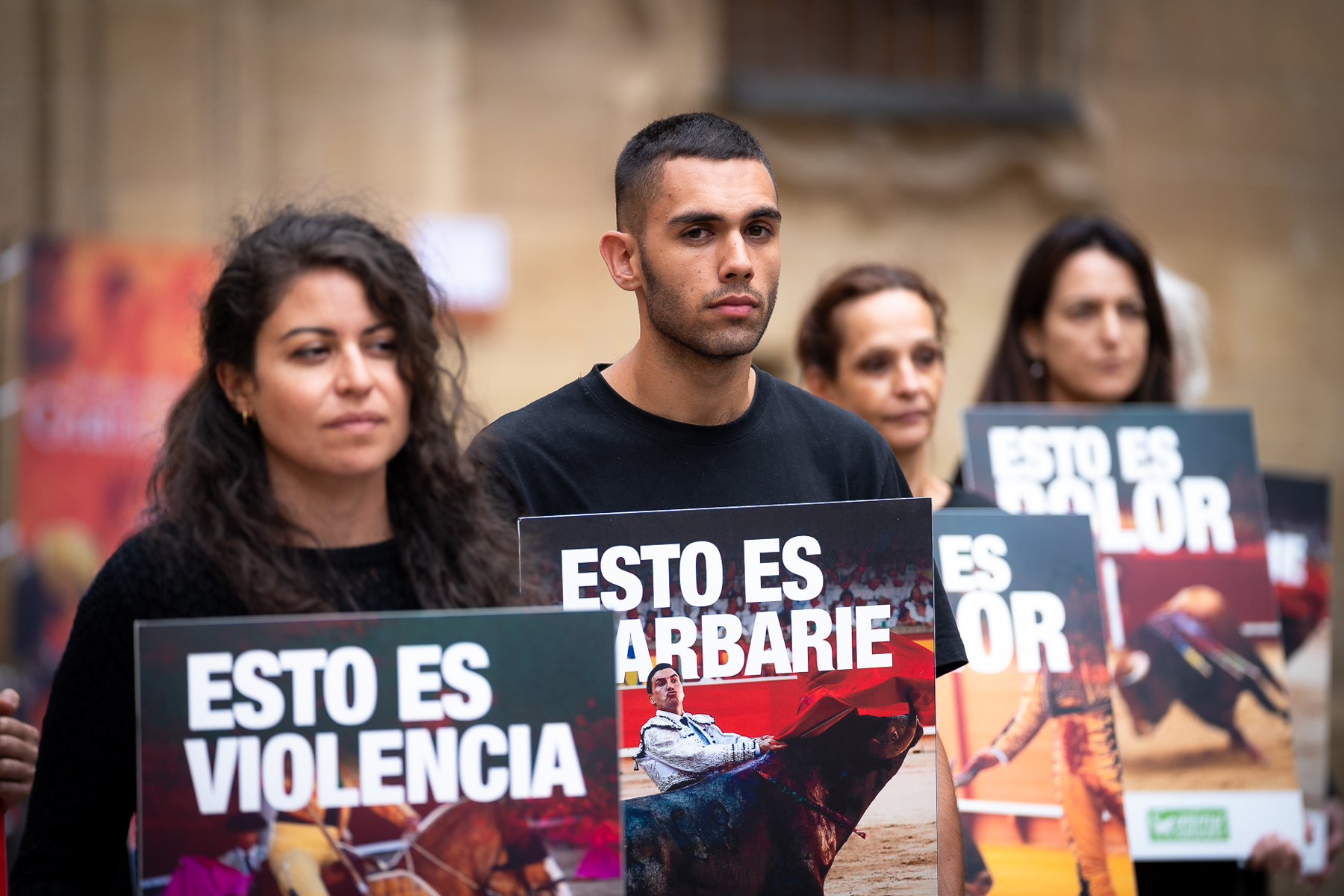
Rejection Backed by Data and Arguments
The protest is not based on symbolism alone. It takes place within a crucial political and social context. It coincides with the ongoing debate about the renewal of bullfighting budget allocations and, above all, with the processing in the Spanish Congress of the Popular Legislative Initiative (ILP) #NotMyCulture, backed by more than 715,000 citizen signatures.
Despite local media reporting year after year on empty stands at La Ribera bullring and describing a fair with "increasingly poor" interest, the Logroño City Council and regional administration continue to allocate thousands of euros in public funds to bullfighting. Last year's San Mateo advertising campaign alone had a base budget of €20,661—money that, according to activists, could be allocated to cruelty-free cultural activities.
This public expenditure directly clashes with the majority opinion of the citizenry. Recent surveys, such as the 'Perceptions of Nature and Animals' study by the BBVA Foundation (2025), confirm that 77% of Spaniards consider the use of animals in bullfighting spectacles unacceptable and support their prohibition.
The ILP #NotMyCulture, with its hundreds of thousands of endorsements, forces Parliament to debate whether to repeal the law that protects bullfighting as "cultural heritage"—a status that prevents town councils and autonomous communities from banning it. Today's protest in Logroño is another echo of this social outcry demanding real freedom for municipalities to decide their own model of celebration, free from violence and in line with 21st-century sensibilities.