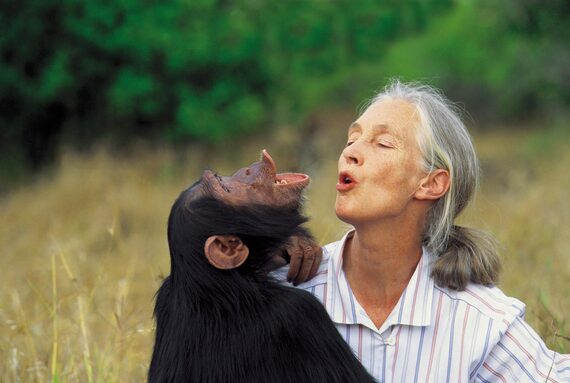
The Ministry of Social Rights, Consumer Affairs, and the 2030 Agenda has officially announced the launch of the so-called 'Jane Goodall Law,' a groundbreaking global initiative aimed at recognizing basic rights for great apes—orangutans, chimpanzees, bonobos, and gorillas—protecting their dignity, right to life, freedom, and protection from torture.
Following a campaign by Animal Guardians Foundation and Proyecto Gran Simio, which gathered over 72,000 signatures and was supported by more than 150 organizations, Minister Pablo Bustinduy coordinated a meeting with the organizations. They attended united, backed by a joint agreement also signed by the Jane Goodall Institute, Fundación Rainfer, Fundación Mona, and AAP Primadomus, outlining the minimum requirements the law must meet and establishing a technical working group to develop the legal framework, ensuring the final text reflects consensus among all stakeholders.
This announcement marks a tangible first step after the 2023 Animal Protection Law mandated that this project be submitted within three months—a commitment that had yet to be fulfilled.
"We celebrate that, at last, the Ministry has responded to pressure from over 150 organizations and tens of thousands of citizen signatures. It is an unprecedented step that Spain is considering becoming the first country in the world to recognize rights for these beings, our closest evolutionary relatives," says Aïda Gascón, director of AnimaNaturalis in Spain. "Now it is crucial that the words do not remain on paper. We need a robust and ambitious law that explicitly prohibits their use in shows, captivity, and harmful experimentation, and drastically limits their breeding in zoos. The devil is in the details, and the final text must reflect the scientific and ethical consensus demanded by expert organizations."
Key Pillars of the Future Law
According to the draft agreed upon by the organizations, the 'Jane Goodall Law' will aim to:
- Eradicate illegal trafficking of great apes.
- Explicitly prohibit their ownership, experimentation, or research that may cause them harm or suffering.
- Ban commercial use and exploitation in shows that compromise their dignity.
- Set rigorous conditions for their custody, strictly for conservation purposes and in optimal environments.
- Restrict captivity and breeding in zoological parks.
The law’s promoters have emphasized the need to end captive breeding and transfers between zoos for reproductive purposes.
A Legacy Becomes Law
The law is named after ethologist and conservationist Jane Goodall, recently deceased, as a tribute to her "tireless advocacy and ethical work". Her legacy is now poised to materialize in legislation that reflects a growing social awareness grounded in scientific understanding of the emotional and cognitive complexity of these animals.
The challenge now is to maintain momentum. The technical working group is expected to submit a consensual draft by December 31 of this year, allowing the law to begin its legislative process. "We trust that the Ministry will maintain this commitment and meet the deadlines. It would be the best tribute to Jane Goodall’s memory and a historic victory for the animal rights movement," concludes Aïda Gascón.
Spain now has a unique opportunity to lead globally in the protection of great apes, transforming compassion and scientific evidence into a legal framework that finally treats them as the sentient and vulnerable beings they truly are.
We need your support
AnimaNaturalis exists because billions of animals suffer at human hands. Because they animals need solutions. Because they deserve someone to speak up for them. Because animals need change. Because at AnimaNaturalis we want to build a fairer world for everyone.
The donations of our supporters are the main source of our funds.