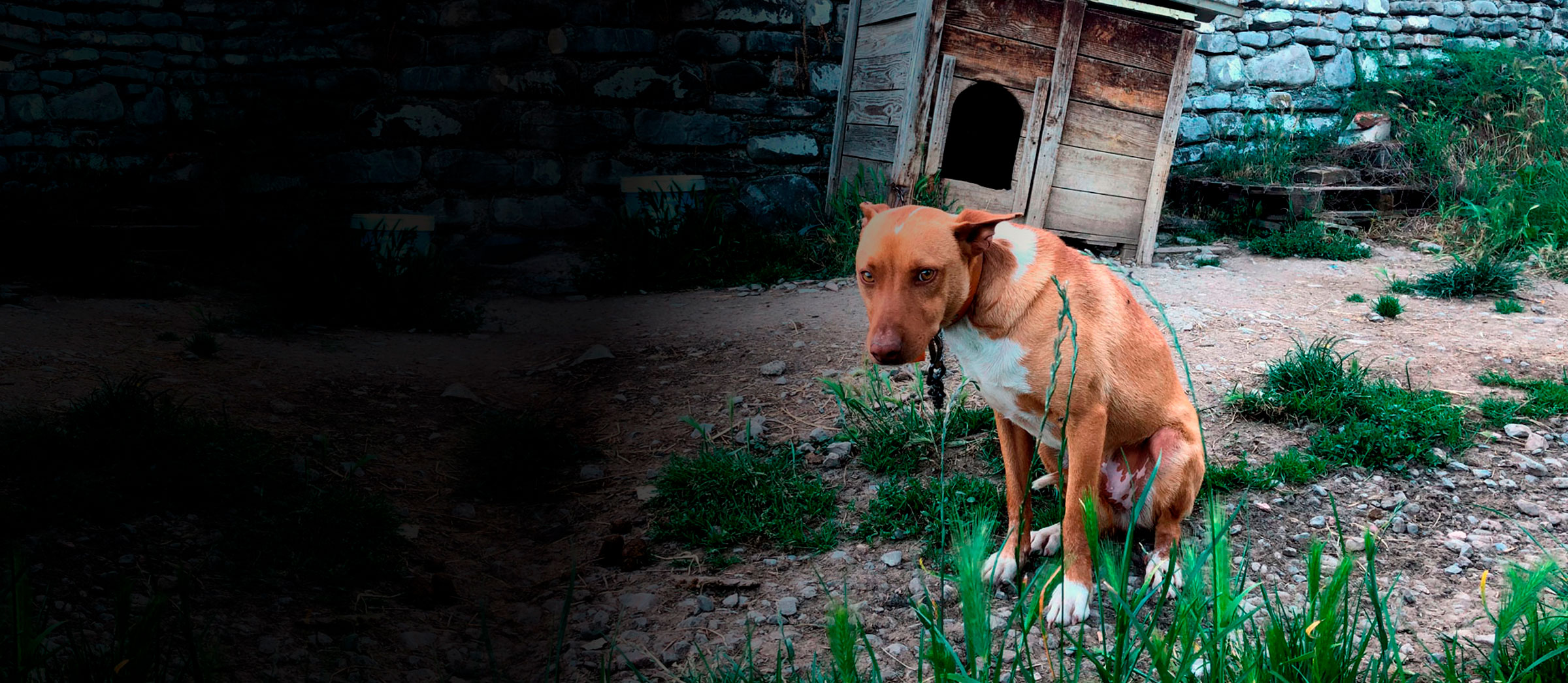

In a hunting kennel somewhere in rural Spain, dozens of dogs wake up each day with no national standard precisely requiring how much space they are entitled to, how many hours they can remain confined, or who must ensure their welfare between hunting seasons. This void has been entrenched in the Spanish legal system for decades. The regulation governing these establishments dated back to 1975.
The new Royal Decree on Traditional Zoological Nuclei from the Ministry of Agriculture, Fisheries and Food (MAPA) aims to update this outdated framework, classifying a wide variety of facilities under the Traditional Zoological Nuclei label: from zoos and traveling circuses to farm schools, wildlife recovery centers, and, at the heart of the controversy, establishments housing dogs used in hunting activities—the so-called rehalas, recovas, and packs.
"For decades we have been denouncing that hunting dogs live in an area of regulatory impunity. This decree was the opportunity to correct that, not to perpetuate it under a new label," says Aïda Gascón, director of AnimaNaturalis in Spain.
The key to the conflict lies in Law 7/2023 on the protection of animal rights and welfare. That law, promoted by the Ministry of Social Rights, excluded hunting dogs and those used in sporting or traditional activities from its scope. MAPA now argues that, precisely because these animals were excluded from that law, someone must regulate them. And that someone, according to the Ministry, is this decree.
17,039 emails and a response that doesn't answer
The prior public consultation, open from January 28 to February 11, 2026, received a total of 18,357 submissions, of which 17,039 were channeled through AnimaNaturalis. The organization expressly and clearly requested three specific things: that the decree exclude hunting dogs, dogs used for recreational, sporting or traditional activities, and that non-profit sanctuaries and rescue centers be excluded from the decree or have a specific regime adapted to their reality.
The official response to these three demands was "partially accepted." A formula which, in administrative language, can mean many things. In this case, according to the analysis by Cristina Ibáñez, lawyer for the organization, it means just one: that they are not accepting the main point.
"What the Ministry accepts is that the requirements can be adapted according to the species or health priorities. What it does not accept is eliminating these categories from the decree, which was exactly what we were asking for," adds Gascón. The Ministry has read the submissions. It simply has not addressed them on the essential point.
MAPA's logic is as follows: since hunting dogs are not covered by Law 7/2023 and also do not fall under the Royal Decree on Zoological Nuclei for Companion Animals being processed by the Ministry of Social Rights, they must be regulated somewhere. And that place, according to the Ministry of Agriculture, is this decree with a fundamentally health and livestock-oriented focus. The problem is that fitting a sentient being into the logic of livestock animal health does not guarantee its welfare: it guarantees its traceability.
Four cracks in a regulation that promised order
The technical analysis of AnimaNaturalis's submissions identifies four specific points where the decree fails animals. The first affects article 1.3.g, which excludes from the decree's scope facilities with fewer than ten dogs or ferrets used in hunting activities. There is no technical justification for this threshold. Furthermore, it facilitates the artificial fragmentation of facilities to avoid registration, as the organization points out, compromising the real traceability of the animals.
The second weak point is in article 2.2.e, which defines the category of "hunting auxiliary animal" — hunting dogs, rehala dogs, ferrets, falconry birds, and live lures — but does not subsequently develop any specific regime of welfare or housing conditions for them. Defining a category without regulating it is, legally speaking, a decorative exercise.
Article 3.1.h considers as a zoological nucleus establishments with more than ten hunting dogs or ferrets, but does not establish specific requirements for rehalas, recovas, or packs, nor does it contemplate minimum housing conditions adapted to these groupings. It also does not regulate the conditions of transport, breeding, or removal of animals. Rehalas are one of the most widespread systems of keeping dogs collectively in Spain. Their absence from the regulation is equivalent to leaving those individuals without real protection.
Finally, article 12.4 establishes that hunting dogs must be linked to their owner's hunting license, but it does not create a specific registry, does not control the number of animals per license, and does not require reporting losses, deaths, or transfers. A traceability system that does not track is, in practice, no system at all.
Now you can be part of the response
The public consultation has closed, but the processing of the decree is not over. The text must still go through the public hearing and information phase, consultation with the autonomous communities, and an opinion from the Council of State. Each of these stages is a new opportunity for civil society to make its voice heard.
If in February more than 17,000 people sent an email demanding real protection for hunting dogs, what comes next requires even more organized pressure. You can join this effort. Share this article, inform those around you about what "partially accepted" means, and consider supporting the work of AnimaNaturalis by becoming a member or making a donation. Every resource that reaches the organization translates into legal presence, into submissions, into the capacity to stay in the process when many have already withdrawn.