On 5 March 2026, at 9:30 a.m., the Court of Justice of the European Union in Luxembourg will hear the arguments of the Citizen Committee behind the European Citizens’ Initiative (ECI) End the Cage Age, along with the organisations admitted as interveners, in a historic legal action against the European Commission. This is the first case in the history of the European Union in which the EU executive has been taken to court for failing to comply with its commitments to a citizens’ initiative.
The legal action was brought by the End the Cage Age Citizen Committee, led by Compassion in World Farming (CIWF), in March 2024, after the European Commission failed to keep its 2021 promise to present, before 2023, a legislative proposal to phase out cages on EU farms. In January 2025, three major organisations were admitted as interveners: Eurogroup for Animals, Animal Equality Italy, and LAV.
The End the Cage Age initiative, signed by more than 1.4 million European citizens and supported by a coalition of 170 organisations, called on the Commission to propose legislation banning the use of cages in farming. Spain showed strong support, with 85,756 signatures. An overwhelming 89% of EU citizens—around 400 million people—believe that animals should not be farmed in individual cages, according to 2023 Eurobarometer data.
"This hearing is our opportunity to explain in detail how the Commission’s inaction is prolonging the suffering of millions of animals, while also endangering participatory democracy,” says Annamaria Pisapia, spokesperson for the Citizen Committee and director of CIWF Italy.
300 million animals have been waiting for nearly five years
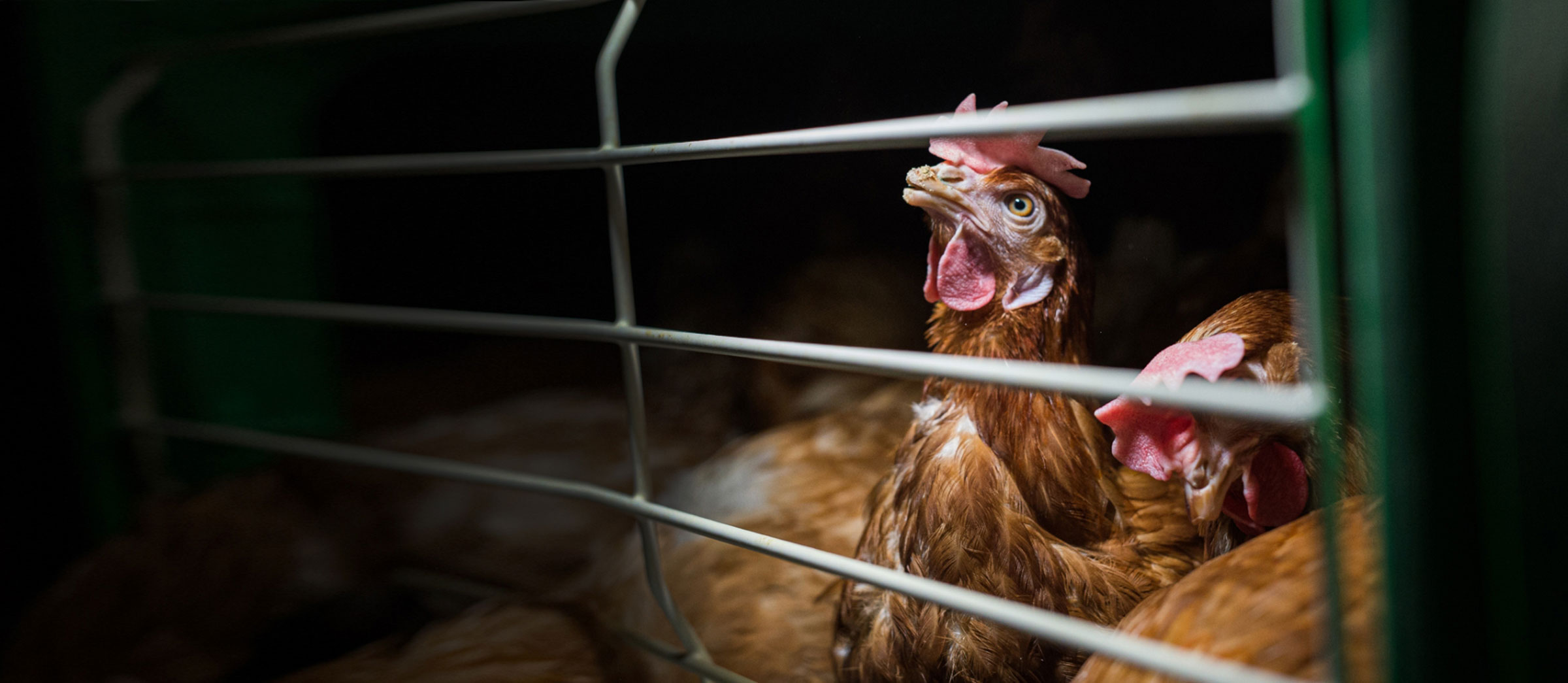
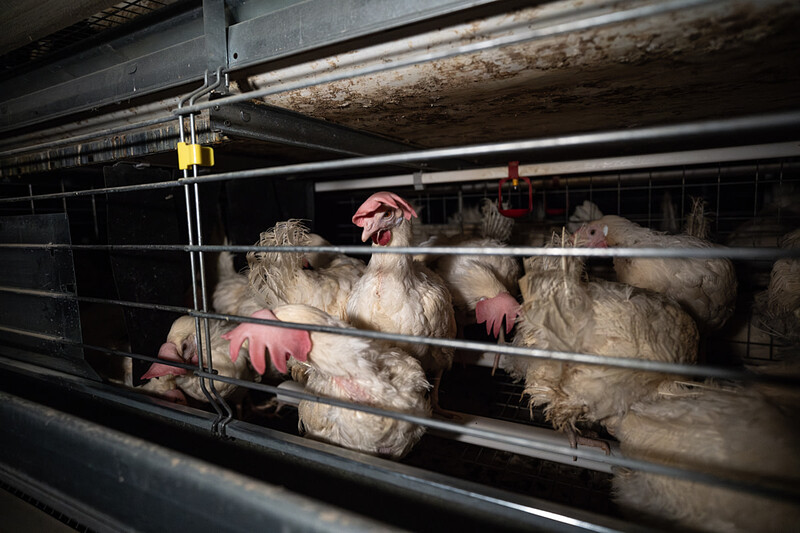
Every year, more than 300 million pigs, hens, rabbits, geese, calves, quail and ducks are confined in cages on farms across the European Union. Animals raised in cages are often forced to live in environments without environmental enrichment, overcrowded or completely deprived of social contact, unable to turn around or to express even the most basic natural behaviours.
"Nearly five years have passed since the European Commission committed to presenting a legislative proposal to ban the use of cages,” adds Pisapia. "Yet the 300 million animals that continue to be locked in cages every year in the EU are still waiting. Just like the 1.4 million European citizens who raised their voices in support of the initiative on their behalf.”
The Spanish End the Cage Age coalition—made up of AnimaNaturalis, the National Association for the Defence of Animals (ANDA), CIWF, Animal Equality, INTERCIDS–Legal Professionals for Animals, and the Animal Welfare Observatory (OBA)—highlights the importance of this hearing. "We will be the voice of the 300 million animals confined in cages every year on EU farms,” the organisations state.
"Every day that passes without legislation represents real suffering for millions of individuals who deserve to live free from the torment of cages,” says Aïda Gascón, director of AnimaNaturalis in Spain. "The European Commission has both a moral and legal obligation to fulfil its commitment. Animals cannot wait any longer.”
From citizens’ hope to European non-compliance
The story of End the Cage Age is one of a citizen success turned into a broken promise. Launched in September 2018 by CIWF in partnership with Eurogroup for Animals and more than 160 animal protection and environmental organisations, End the Cage Age became one of the most successful ECIs in history. In just one year, from 2018 to 2019, the initiative collected more than 1.4 million validated signatures, becoming the sixth successful ECI out of the 75 initiatives registered in the first ten years of this democratic instrument, and the third with the highest number of signatures. Most importantly, it was the first successful ECI focused on the welfare of farmed animals.
In response to overwhelming public demand, on 30 June 2021 the European Commission officially committed to revising existing EU animal welfare legislation. In its communication, the Commission promised to present a legislative proposal before the end of 2023 to gradually phase out and ultimately ban the use of cages for hens, sows, calves, rabbits, ducks, geese and other farmed animals mentioned in the initiative.
However, the 2023 deadline came and went without any legislative proposal. The Commission, which had created significant legitimate expectations among citizens that legislation would be presented, simply fell silent. In September 2023, when Commission President Ursula von der Leyen delivered her State of the Union address, animal welfare and the cage ban were completely absent. The subsequent 2024 letter of intent also failed to mention the commitment.
"The Commission’s silence is not a simple administrative delay,” notes Gascón. "It is a deliberate abandonment of animals and participatory democracy. The voices and interests of industry lobbies are strongly represented in Brussels, while the 1.4 million citizens who signed this initiative have been ignored.”
The road to the courts
Faced with this failure to act, animal protection organisations first attempted alternative routes. In October 2023, Eurogroup for Animals and 57 member organisations wrote to the European Commission requesting clarity on when the proposal would be published. They received no response. In November 2023, Eurogroup and several of its member organisations filed an official complaint of maladministration with the European Ombudsman against the Commission for failing to honour its commitment to an ECI in which 1.4 million citizens called for a ban on cages, and for failing to adequately communicate its withdrawal from this promise.
The complaint raised concerns that the Commission was undermining the rules governing ECIs and the very credibility of the participatory democratic process they represent. The European Ombudsman opened an investigation and requested that the Commission send an official response to Eurogroup for Animals and all other complainants. However, the Commission’s delayed response was unsatisfactory, providing no clear timeline or action plan for when the proposal would be published.
With all administrative avenues exhausted, in March 2024 the End the Cage Age Citizen Committee filed its case before the Court of Justice of the EU. "We are not asking for new promises, but for the fulfilment of a promise already made,” said Matteo Cupi, Vice President of Animal Equality Italy, as an intervening organisation. "Europe must show that democracy does not stop at the gates of farms, and that the avoidable suffering of millions of animals can no longer be ignored.”
Now, following a formal request submitted in May 2025, the Court has decided to allow the parties involved to present their arguments at the public hearing on 5 March. The organisations welcome this decision, considering it a crucial step towards compelling the Commission to present the ban proposal and to make the End the Cage Age initiative file public.
Science supports an end to cages
To underpin its 2021 commitment, the European Commission asked the European Food Safety Authority (EFSA) to supplement existing scientific evidence to determine the conditions required for a cage ban. Between 2022 and 2023, EFSA adopted comprehensive scientific opinions on the welfare of farmed pigs, broiler chickens and breeders, laying hens and breeders, ducks, geese and quail, and calves.
The scientific conclusions were unequivocal: cage systems are incompatible with basic animal welfare. Studies documented that animals confined in cages experience significant physical and psychological suffering, including the inability to express essential natural behaviours, high levels of stress, increased incidence of injuries and confinement-related diseases, and the constant frustration of fundamental ethological needs.
The Commission also initiated a series of stakeholder consultations in 2022 within subgroups of the European Animal Welfare Platform, covering poultry, ruminants and pigs. In addition, in September 2024, the report of the Strategic Dialogue on the Future of EU Agriculture—the result of eight months of discussions with 29 leading voices from the EU agri-food sector, including Philip Lymbery, Global CEO of CIWF and President of Eurogroup for Animals—unanimously recommended that the Commission publish proposals to ban cages and reform animal welfare legislation.
"The science is clear, the public is united, and even representatives of the agricultural sector acknowledge the need for change,” says Gascón. "The only remaining barrier is the political will of the European Commission to keep its word.”
What is at stake in the hearing
During the 5 March hearing, the Citizen Committee behind End the Cage Age and the intervening organisations will present detailed arguments on the consequences of the Commission’s failure to act. The request from organisations and citizens is clear: the Commission must respect the legally binding commitment it made in 2021 by presenting a clear and reasonable timeline for the legislative proposal to ban the use of cages for all affected species. Activists also request full access to the End the Cage Age initiative file, which the Commission has so far denied.
"European citizens’ initiatives were created to allow citizens to actively participate in shaping European policies,” the organisations comment. "Failing to honour the commitment to ban cages undermines the very purpose of this democratic instrument, eroding citizens’ trust in the Commission.”
The outcome of this case will have implications far beyond the welfare of farmed animals. It will set a precedent on whether ECIs—the EU’s main instrument of direct participatory democracy—have real binding force, or whether they are merely symbolic exercises that the Commission can ignore when it is politically convenient.
Reineke Hameleers, CEO of Eurogroup for Animals, puts it plainly: "EU citizens have used the democratic tool available to them: they want these millions of animals out of cages. There is no argument against ending animal suffering. Yet, with the Commission’s silence on the issue, we question the very democratic purpose of the ECI, which was specifically introduced to allow EU citizens to shape EU decision-making.”
The path towards a cage-free future
Despite the Commission’s failure to act, the movement to end cages has continued to gain momentum across Europe. In June 2025, the Spanish End the Cage Age coalition organised a rally outside the Congress of Deputies in Madrid to demand an end to the use of cages in EU farming. The event received support from representatives of various political parties, including Julia Boada, Nahuel González and Toni Valero from Izquierda Unida within the Sumar Group; Daniel Senderos, Rafael Gómez and Vicente Montávez Aguillaume from the PSOE; Ione Belarra from Podemos; Etna Estrems from ERC; and Mikel Otero from EH Bildu.
In Italy, in June 2025, senators from across the political spectrum publicly committed to eliminating cages. Senator Simona Malpezzi of the Democratic Party stated: "Eliminating cages can be done; we are not talking about a utopia, and Italy could even become the first country in Europe to impose this ban for all species.”
The business sector has also begun to act independently of legislation. Companies such as Barilla, Ferrero and Fumagalli in Italy have already adopted cage-free policies, demonstrating that businesses can move ahead of lawmakers. According to Annamaria Pisapia, director of CIWF Italy, these cases show that the transition to cage-free systems is not only ethically necessary, but also economically viable.
In September 2025, the European Commission published a public consultation on the revision of EU animal welfare legislation, which remained open until 12 December 2025. A total of 174,000 EU citizens and 5,152 supporters from around the world participated, calling for stronger animal welfare laws and reiterating the demand to end cages.
"What we are witnessing is a growing gap between what citizens demand, what science recommends, and what the European Commission is willing to do,” adds Gascón. "This 5 March hearing is an opportunity to close that gap and to demonstrate that, in Europe, democracy and compassion can prevail over short-term economic interests.”
How you can act now
While awaiting the 5 March hearing and the eventual decision of the Court of Justice of the EU, 300 million animals continue to suffer in cages every year in Europe. Laying hens confined to spaces the size of an A4 sheet of paper. Sows in gestation crates so narrow they cannot turn around. Rabbits confined in wire cages for their entire lives. Calves separated from their mothers and locked in individual pens. Ducks and geese immobilised in unnatural conditions.
The fight to end cages does not stop in the courts. Everyone can help drive change:
- At an individual level:
Reduce or eliminate your consumption of animal products. If you consume eggs, dairy or meat, always choose products from cage-free systems and, preferably, organic. Read labels: for fresh eggs, code 0 indicates organic production, 1 indicates free-range, 2 indicates barn (cage-free but indoors), and 3 indicates cages. Always avoid code 3. For other products containing eggs as ingredients, look for companies that have committed to cage-free policies. - At a collective level:
Share information about End the Cage Age on your social networks. Talk to your family, friends and colleagues about the reality of animals in cages. Put pressure on the companies you buy from to adopt cage-free policies. Contact your political representatives—both at national and European level—and demand that they support a ban on cages.
"Every action counts,” concludes Gascón. "Every egg you don’t buy from caged hens, every signature you add to a petition, every conversation you have about this issue, every euro you donate to animal protection organisations—everything adds up. The 300 million animals waiting in cages cannot wait for politicians to find the will to act. They need us to act now.”
5 March 2026 will mark a turning point in the history of European democracy and animal welfare. As the Court of Justice of the EU deliberates on the case, millions of European citizens and 300 million animals await an answer. Justice will finally have its say.