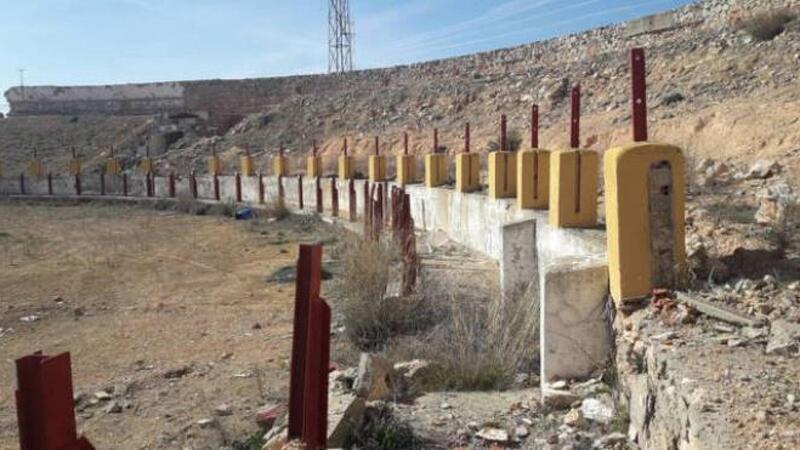
According to data from the Ministry of Culture, in the year 2000, there were 845 Spanish municipalities that held bullfighting events in third-category bullrings. By 2019, that figure had plummeted to 328 municipalities. This represents a 61% reduction in less than two decades. More than 500 towns have disappeared from the bullfighting map. And with them, thousands of bulls will no longer be tortured and killed during local festivities.
"What we are seeing in rural areas is not just an economic problem for the bullfighting sector; it is a reflection of a society that is no longer accepting animal suffering as entertainment," says Aïda Gascón, director of AnimaNaturalis in Spain. "Every municipality that stops organizing a major bullfight is a step toward a fairer world for non-human animals."
Infographics recently released by bullfighting sectors present this decline as a tragedy for the "territorial base" of tauromachy. What they fail to mention is that behind every closing bullring, there are hundreds of bulls that will not be wounded with banderillas, bled out with the puntilla dagger, and dragged away dead before an audience. The decline is real. The question is: who benefits from reversing it?
Why the system can no longer sustain itself
Proponents of bullfighting argue that the issue is purely economic and regulatory: costs are too high, regulations are too demanding, and town councils cannot afford the main event. They are correct in their diagnosis, though not in their conclusions. Organizing a bullfight in a third-category ring exceeds 70,000 euros in costs —professional fees, transport and logistics of the bulls from the ranches, insurance, health services, and security— while box office revenue rarely reaches 18,000 or 20,000 euros. The deficit exceeds 50,000 euros per event.
That financial hole doesn't just vanish: the public treasury pays for it. Spanish citizens finance it every year with figures that are difficult to justify. Studies estimate that public subsidies for bullfighting exceed 500 million euros annually, combining funds from the European Union and the Spanish State, according to data gathered by animal defense organizations. Between 2002 and 2020 alone, fighting bull livestock received European funds from the Common Agricultural Policy (CAP) worth at least 430 million euros, according to a study by the Association of Veterinarians Abolitionists of Bullfighting and Animal Mistreatment (AVATMA).
The Community of Madrid, under the presidency of Isabel Díaz Ayuso (PP), is the most extreme example. Its 2023 budget included an allocation of 6.3 million euros for Bullfighting Affairs, double that of the previous year. Telemadrid (the regional public broadcaster) has budgeted more than 3.1 million euros for 2025 to broadcast bullfighting events, a 113% increase compared to 2024. All this occurs while attendance at bullfights has been in freefall for over a decade: Spain went from 3.2 million spectators in 2014 to 2.5 million in 2024, according to the Survey of Cultural Habits and Practices by the Ministry of Culture. A 22% drop in ten years.
"The data shows that bullfighting is not growing, but rather resisting through subsidies and promotion policies targeted at the youth," notes Gascón. "They are attempting to sugarcoat the natural decline of a practice increasingly rejected by society, using public money to capture new generations who otherwise would never set foot in a bullring."
In this sense, the decline in rural areas is more honest than the artificially sustained interest in big cities. When there isn't enough subsidy, when the mayor cannot justify a 50,000-euro deficit to the neighbors, the bullfight disappears. Paradoxically, the free market is doing what legislators dare not: letting an industry based on suffering die in peace.
And what remains in its place is not a void: it is local patron saint festivals without killings, towns that celebrate without anyone having to die. More than 500 Spanish municipalities have proven that it is perfectly possible.
The future the bullfighting sector fears to name
When the bullfighting sector itself publishes infographics lamenting that "the base of tauromachy is being lost," it is involuntarily acknowledging something powerful: that its model is unsustainable without artificial intervention. That citizens, when choosing freely, choose something else. That the generational renewal they crave is not arriving, despite the Youth Cultural Bonus —a 400-euro subsidy upon reaching adulthood that the central government included for bullfighting activities. Attendance among youth aged 15 to 19 rose 3.8 percentage points after that measure, but the total percentage of the population attending any bullfighting event remains at a meager 8%, the same as years ago, according to the 2024-2025 Survey of Cultural Habits and Practices from the Ministry of Culture.
The outlook is even more conclusive when measuring citizen opposition. A survey by Ipsos I&O Public for CAS International, conducted with 7,500 people in Spain, France, and Portugal, revealed that 77% believe bullfighting causes too much suffering and 58% support its ban. In Spain specifically, 73% of the citizenry is against or indifferent to bullfighting, according to data cited by animal welfare organizations.
The total number of bullfighting events in Spain also confirms this unambiguously: nearly twenty years ago, more than 3,600 events were recorded; in 2024, there were only 1,451. A drop of more than 60% in total shows since 2007.
What the bullfighting sector calls "economic unviability" is, in reality, the verdict of society. And that verdict has very specific victims: the bulls that continue to be killed every year in the remaining bullrings, financed with public money in a country where the majority says they do not want to pay for it. Suffering has not been reduced to zero. But its territory is shrinking. And that matters.
Natural decline needs a final push
The collapse of bullfighting in rural areas has not happened by chance. It has arrived because more and more people have stopped accepting that entertainment justifies the pain of a sentient being. Because mayors have had to explain to their neighbors why they spend 50,000 euros on killing a bull. Because the citizenry has demanded, bit by bit, something better.
But the process needs to accelerate. While 500 towns have already chosen another way to celebrate, in hundreds of rings that remain active —many of them artificially sustained with public funds— bulls continue to be tortured and killed every season. AnimaNaturalis has been working for decades to make that number zero.
You can act today in these concrete ways:
- As an individual: If you reside in a municipality that still organizes bullfighting events with public money, write to your town council demanding that those funds be allocated to activities that do not involve animal suffering. Your voice counts, especially in small municipalities where a dozen letters can change a political decision.
- As a citizen: Sign and share the AnimaNaturalis campaign to demand the total elimination of public subsidies for bullfighting. At a time when over 77% of the population believes it causes too much suffering, administrations have no democratic justification for continuing to fund it.
- Together with AnimaNaturalis: The work of documentation, reporting, and institutional pressure that has made this crisis visible is not self-funded. If you believe, like we do, that no animal should die to entertain anyone, become a supporter of AnimaNaturalis or make a one-time donation. Every euro supported by committed individuals is one more step toward the world that animals deserve.
"The future will belong to those who understand that compassion is also culture," concludes Gascón. "And that future is already arriving, town by town, closed bullring after closed bullring."
We need your support
AnimaNaturalis exists because billions of animals suffer at human hands. Because they animals need solutions. Because they deserve someone to speak up for them. Because animals need change. Because at AnimaNaturalis we want to build a fairer world for everyone.
The donations of our supporters are the main source of our funds.