What began as a legal injunction filed by a civil association unknown to many ended up triggering an unstoppable process: the de facto prohibition of bullfighting in the Mexican capital. This is the complete story of how it happened.
The legal fight against bullfighting in Mexico City has deep roots. In 2022, a federal court granted a definitive suspension against bullfights at Plaza México following an injunction filed by the civil association Justicia Justa, arguing that the degrading treatment of bulls violated the constitutional right to a healthy environment.
However, in December 2023, the Second Chamber of the Supreme Court of Justice of the Nation revoked that suspension, once again opening the bullring's doors. The arguments used by the bullfighting sector to convince the Court were fundamentally economic: 6.9 billion pesos annually and 80,000 direct jobs, according to their own figures.
According to the 2022 Agricultural Census, only 6,516 bulls per year — 5.5% of the total cattle in Mexico — are destined for bullfighting spectacles. Bullfighting defenders allege millionaire losses, but their own data reveal it is a marginal activity sustained by the weight of tradition, not by the economy.
Bullfights returned to Plaza México in January 2024. But the battle was not over. Just days after the reopening, on January 26, 2024, the civil association Todas y Todos por Amor a los Toros filed a new injunction petition before the Federal Judiciary, which was assigned to the Fifth District Court in Administrative Matters.
Citizen Power
Parallel to the legal battle, an organized citizen movement was gathering force that would prove decisive. The México Sin Toreo Movement — a coalition that came to group more than 80 animal protection organizations nationwide — joined Cultura sin Tortura in its formal citizen initiative before the Congress of Mexico City to completely ban public, private, and itinerant spectacles involving animals: bullfights, novilladas, becerradas, rejoneo, tientas, and cockfights.
Sofía Morín, promoter of the citizen initiative and a central figure of the Colectivo Cultura sin Tortura, led the months-long in-person signature collection with voter ID cards, as required by the Mexico City Citizen Participation Law for priority initiatives. The campaign unfolded throughout 2024 with the goal of gathering 0.25% of the capital's Nominal List of Electors, the threshold necessary for the initiative to have priority status and be voted on within the same legislative session in which it was presented.
On September 1, 2024, the Promoter Committee led by Sofía Morín formally submitted the initiative to Congress accompanied by 28 boxes containing over 31,000 physical records of citizen support. Congress referred it to the Electoral Institute of Mexico City (IECM) to verify its authenticity. After the registry review process — which eliminated duplicates, incomplete records, and removals from the electoral roll — the IECM validated 27,442 authentic signatures, equivalent to 0.35% of the electoral roll, clearly exceeding the required legal minimum. In October 2024, the IECM General Council issued the formal declaration of compliance, obligating Congress to rule on and vote on the initiative within that same legislative session.
"We greatly celebrate that after 20 years, the government addresses this issue, because it was a demand that had been pending for many legislatures," stated Morín on the day of the vote. The activist highlighted that this was "the first citizen initiative to be voted on" in the history of the capital's Congress on this topic, although she lamented that the final text regulated instead of completely prohibiting: "They modified our citizen initiative, which aimed for the prohibition of bullfighting. I insist, we have the arguments to this day."
The Injunction That Changed Everything
Throughout 2024, the legal battle remained in constant tension. Judge Sandra de Jesús Zúñiga was the central figure in this process. In February 2025, within the framework of this same case, she ordered the Benito Juárez Mayor's Office — where Plaza México is located — not to grant permits for events involving animal abuse, and that if bullfights were to take place, instruments that harm bulls could not be used.
The bullfighting sector responded with a defiant statement: the events scheduled for March 2 and 9 would go ahead. They argued that the ruling was not final and they would appeal it. And so it was: the last bullfight with blood, death, and violence at Plaza México was held on Sunday, March 9, 2025.
"Bullfighting is not part of our indigenous identity; it is a colonial heritage that normalized violence as a spectacle. Mexico has been trying to free itself from this degrading practice for centuries," explains Arturo Berlanga, lawyer and Director of AnimaNaturalis in Mexico.
What no one knew that March afternoon was that nine days later, the legislative landscape would change irreversibly.
March 18: The Historic Session
Tuesday, March 18, 2025, will be etched in the memory of Mexico's animal rights movement. Early in the morning, bullfighting groups staged outbreaks of violence at the doors of the Mexico City Congress, trying to prevent the vote. Arturo Berlanga was a direct witness to those tense moments.
"Right now, they are trying to enter Congress to prevent the vote. But this is a historic day, because for the first time, the possibility of regulating bullfights reaches the capital's Congress," declared Berlanga to EFE that same day.
Despite the pressure, within hours the plenary session of Congress approved the reform with 61 votes in favor and only 1 against: injuries, death, and the use of sharp instruments in bullfighting spectacles would be prohibited. Only the use of the cape and muleta would be permitted, without wounding or death, for a maximum of 15 minutes per bull. The initiative had the backing of more than 27,400 citizen signatures validated by the IECM, the drive of Sofía Morín and the Movimiento México Sin Toreo as direct promoters, and the support of Head of Government Clara Brugada.
The decree was published in the Official Gazette of Mexico City on March 25, 2025, giving force of law to what the injunctions had initiated. The bullfighting sector immediately announced it would seek to reverse it through injunction petitions and constitutional challenges.
The Industry Admits Defeat
The following months were marked by attempts by the bullfighting sector to challenge the reform. But on June 24, 2025, the definitive blow came: the company managing the Monumental Plaza México issued a statement on its social media announcing the definitive cancellation of bullfights and novilladas at the venue.
The company itself acknowledged that the reform "represents a prohibition of bullfighting, as it eliminates essential elements thereof" and that holding a bullfighting spectacle without violence is "technically and legally unfeasible." With that statement, the bullfighting supporters unwittingly admitted what the animal rights movement has been repeating for decades: that without torture and death, there is no bullfight.
"Today, the Monumental Plaza de México steps back because it can no longer justify what common sense and collective ethics have condemned," expressed Berlanga on that occasion.
The Legal Context: An Unrelenting Battle
While Plaza México announced its closure, the legal process continued to advance. In October 2025, the Supreme Court of Justice of the Nation rejected by six votes to three taking up the case to establish a national criterion, leaving the resolution of multiple pending injunction petitions nationwide to the collegiate courts. Minister Lenia Batres, who had proposed taking the case to unify criteria in favor of animals, saw her initiative blocked by the majority.
Nationally, the wave did not stop at the capital. On April 2, 2025, the Congress of Michoacán — a state with a strong bullfighting livestock tradition — completely banned bullfights, becoming the seventh state in the country to take this step. AnimaNaturalis also obtained precautionary suspensions at the Plaza Nuevo Progreso in Guadalajara, Jalisco, expanding the front of the legal battle.
"Michoacán is a historic precedent because it is a state with a strong bullfighting livestock tradition. That they have made this decision shows that Mexican society is evolving and rejecting the normalization of animal suffering as entertainment," declared Berlanga to the press shortly after the news.
The Judicial Counteroffensive
From the day after the reform was approved, the bullfighting sector activated all legal resources at its disposal. Matador Joselito Adame was the first to act: on April 9, 2025, the Federal Judiciary admitted for processing the indirect injunction petition filed by his lawyer César Cantoral, seeking to declare the unconstitutionality of the reforms to the Public Spectacles Law and the Animal Protection and Welfare Law. Adame argues that the new regulations violate his freedom of work and his economic rights acquired over decades of performances at Plaza México. "Mexico cannot be held hostage by decisions that contradict each other from within the same government," declared the bullfighter upon learning of the admission of the appeal.
Adame was the first, but not the only one. By October 2025, Antonio López Ríos, president of Tradiciones Unidas por México, confirmed the existence of approximately 16 active injunction petitions nationwide related to the various bullfighting bans, all awaiting resolution in the collegiate courts. Bullfighters, businessmen, ranchers, and fans have challenged the reforms in both Mexico City and Michoacán, arguing in all cases violations of freedom of work, free cultural expression, and acquired rights.
The bullfighting sector achieved a partial victory in Baja California, where a Collegiate Circuit Court unanimously revoked the suspension preventing bullfights in that state. However, in Mexico City and Michoacán, the reforms remain in force. Berlanga and the Movimiento México Sin Toreo have responded by appearing as third-party interested parties in each case, with the aim of defending the constitutionality of the reform at every stage. "We are ready for the legal war. We are not afraid," summarized Sofía Morín before the media during those days of the bullfighting judicial offensive. Both leaders of the animal rights movement agree that the case will eventually reach the Supreme Court.
A Tradition of Resistance with Deep Roots
What happened in 2025 is not a whim of the present; it is the culmination of a debate that has been ongoing for centuries in Mexico. In 1867, Benito Juárez vetoed bullfights, arguing that all spectacles that "denigrate the animal or any living being" should be abolished. In 1916, Venustiano Carranza banned them in the Federal District. Bullfighting survived both bans thanks to pressure from elites and interest groups. But this time, the reform came accompanied by a much more robust legal framework and a radically different society.
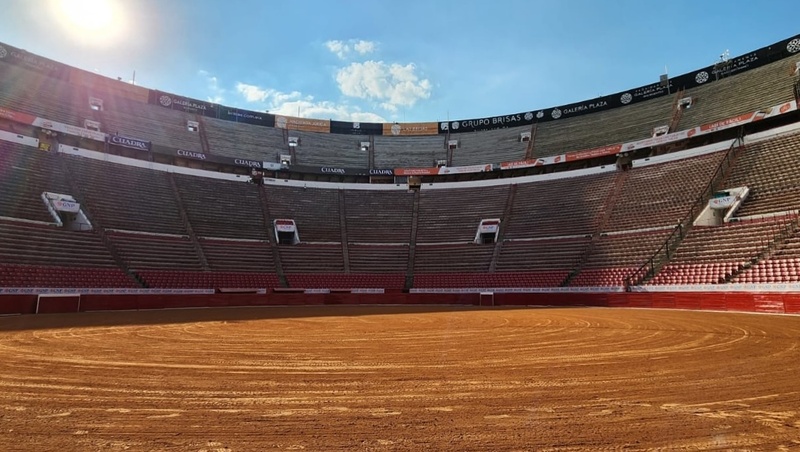
A Parametría poll revealed that 73% of capital residents support the total prohibition of bullfights. Bullfighting, as a mass spectacle, no longer exists in Mexico City. Plaza México, the very symbol of that tradition, now hosts music concerts.
The Timeline of a Victory
-
June 2022
A federal court grants a definitive suspension against bullfights at Plaza México. First major legal victory for the animal rights movement.
-
October 2022
The Movimiento México Sin Toreo and Cultura sin Tortura present an initial round of citizen signatures before the Mexico City Congress, an early exercise in direct democratic pressure that anticipates the strategy culminating two years later.
-
December 2023
The Second Chamber of the SCJN revokes the suspension. Bullfights return. The bullfighting sector celebrates, but the fight continues.
-
January – March 2024
New bullfighting season at Plaza México. New injunction petition filed by Todas y Todos por Amor a los Toros before the Fifth District Court. Simultaneously, the Movimiento México Sin Toreo — with more than 80 national organizations — launches the formal collection of citizen signatures with voter ID cards to present a priority citizen initiative in the capital's Congress.
-
September 1, 2024
The Promoter Committee, made up of México Sin Toreo, Cultura sin Tortura, and dozens of allied organizations, formally submits over 31,000 physical records of citizen support to the Mexico City Congress, requesting priority status for the initiative to ban bullfights, novilladas, becerradas, rejoneo, tientas, and cockfights.
-
October 2024
The Electoral Institute of Mexico City (IECM) validates 27,442 authentic signatures — 0.35% of the electoral roll — exceeding the required minimum threshold of 0.25%. The IECM General Council issues the formal declaration of compliance and notifies Congress, activating the obligation to rule on and vote on the initiative within the same legislative session.
-
February 2025
Judge Sandra Zúñiga orders the Benito Juárez Mayor's Office not to grant permits for bullfights with instruments that cause harm. The bullfighting sector appeals and maintains the two final scheduled events.
-
March 9, 2025
Last bullfight with blood, death, and violence at Plaza México. Unknowingly, attendees witness the end of an era.
-
March 18, 2025
The Congress of Mexico City approves with 61 votes in favor and 1 against the reform prohibiting wounding or killing bulls in bullfighting spectacles. The vote is the direct result of the citizen initiative promoted by Sofía Morín, México Sin Toreo, and Cultura sin Tortura — the first citizen initiative on this topic to reach a vote in the capital's Congress.
-
March 25, 2025
The decree is published in the Official Gazette of Mexico City and enters into force. The prohibition is law. The bullfighting sector immediately announces it will prepare unconstitutionality injunction petitions.
-
April 2, 2025
Michoacán becomes the seventh state in Mexico to completely ban bullfights.
-
April 9 – 12, 2025
Matador Joselito Adame files the first indirect injunction petition against the reform, admitted for processing by the Federal Judiciary on April 9. His lawyer César Cantoral argues unconstitutionality due to impact on freedom of work and the bullfighter's economic rights. AnimaNaturalis and México Sin Toreo appear as third-party interested parties to defend the reform at every stage.
-
June 24, 2025
The managing company of Plaza México announces the definitive cancellation of bullfights and novilladas, acknowledging that the spectacle "without violence" is technically and legally unfeasible.
-
October 2025
The SCJN rejects taking up the case to set a national criterion, leaving pending injunction petitions in the hands of collegiate courts. The bullfighting sector confirms 16 active injunction petitions nationwide. AnimaNaturalis and México Sin Toreo remain present in each judicial process as third-party interested parties, ready for the legal war.
The Challenge Ahead
This anniversary is cause for celebration, but also for vigilance. The bullfighting sector has not abandoned the legal battle. The injunction petitions remain active. The SCJN has not set a national criterion. Berlanga, who has received direct threats and intimidation for his advocacy work — publicly denounced by AnimaNaturalis — knows this better than anyone. "The real battle is fought in the courts and in the minds of those who still justify suffering as entertainment. We must continue building evidence, winning injunctions, and above all, communicating the value of a culture without cruelty. Our challenge is to consolidate this legal victory into a permanent change in social consciousness," says Berlanga.
The path is not completely clear. But what is true today, one year after that final afternoon of March 9, 2025, is that no bull has been tortured or killed in the world's largest bullring. And that fact, in itself, is already history. "Today we celebrate a triumph, but we know that the true legacy will be the Mexico we bequeath to new generations: a country that does not sacrifice innocent beings in the name of spectacle, but honors life with dignity and respect. That is, ultimately, our greatest tradition," concludes Berlanga.