At AnimaNaturalis we have been closely following the development of the future positive list of companion animals, the regulation that will decide which species can legally live in our homes. We have already submitted our formal contributions to the project, and we do so with a clear conviction: this is a historic opportunity for animal protection in Spain, but also a real risk if it is not built on solid foundations.
What is being decided now?
The Royal Decree draft is currently in the public hearing and information phase. It does not yet include the specific list of permitted animals, and that might lead one to think that what matters will come later. But that is not the case. What is being established now are the criteria, the procedure and who will have the final say: decisions that will shape everything that follows.
As Cristina Ibáñez, lawyer at AnimaNaturalis in Spain, explains: "We are at the crucial moment. The specific lists will be approved later, but if the criteria and legal guarantees are not properly established now, it will be very difficult to correct mistakes afterwards. The legal framework set today will determine whether this list genuinely protects animals or ends up hollow."
What the project gets right
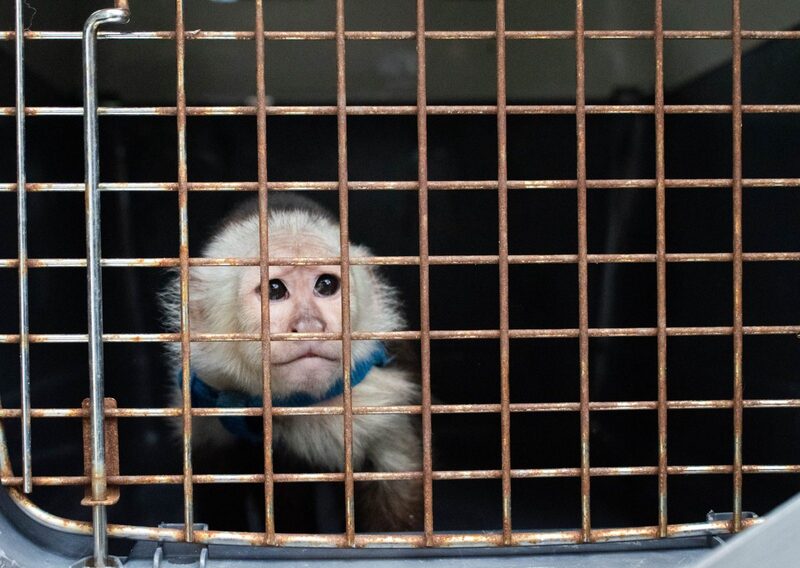
There are advances in the text that deserve recognition. The clearest: primates — monkeys, chimpanzees and similar species — will be prohibited as companion animals. The requirement to base decisions on scientific criteria is also introduced, and the precautionary principle is explicitly recognised: if there is uncertainty about whether a species can thrive in captivity or poses a risk, the default position should be not to include it.
These are positive signs. But they are not enough if the rest of the text does not follow through.
The problems we have identified
After analysing the project in detail, at AnimaNaturalis we have identified four critical points that could seriously undermine the effectiveness of this regulation.
The first concerns the preventive nature of the list. A system of this kind should prevent problems before they occur, not manage them once they are already entrenched. However, as currently structured, the list could be expanded with ease and under the influence of commercial interests. We call for the genuine application of the precautionary principle: if there are doubts about a species, it is not included.
The second point is the one that concerns us most: the project permits the breeding and trade of wild animals in captivity. For AnimaNaturalis, this is a fundamental mistake. Allowing the breeding of wild animals for companion purposes fuels the animal trade, increases the risk of abandonment and perpetuates the suffering of individuals who should never have been removed from their natural environment. Our proposal is clear: prohibit the breeding of wild animals for companion purposes and allow it only in exceptional and fully justified cases, such as rescue or the conservation of endangered species.
"Allowing the commercial breeding of wild animals within a positive list is a contradiction in its own terms", notes Ibáñez. "A positive list only makes sense if it starts from the premise that only what is demonstrably free from suffering and risk is permitted. Opening the door to the breeding of wild animals undermines that premise from the outset."
The third problem concerns the independence of the body that will make the decisions. The committee that determines which animals are included in the list must be free from conflicts of interest. Animal welfare must be the primary criterion, not the interests of the animal trade industry. We have conveyed this demand in our contributions and will continue to press for it.
The fourth point challenges one of the project's technical criteria: the use of an animal's weight or size as a variable for deciding its inclusion in the list. This approach is insufficient. There are small animals that suffer enormously in captivity, whose ethological needs are incompatible with domestic life, regardless of how much they weigh. What matters is not the size of the animal, but how it lives, what it needs and whether those needs can realistically be met in a home.
Why this regulation matters more than it might seem
The positive list of companion animals is not a minor technical matter. If properly constructed, it can become a real tool to reduce illegal animal trafficking, decrease abandonment and transform the relationship our society maintains with other species. If done poorly, it can legitimise practices that already cause suffering today and grant them a legal cover they currently lack.
"Spain has the opportunity to adopt one of the most advanced regulations in Europe on the keeping of animals", concludes Ibáñez. "But that will only happen if the final text is bold, if it prioritises animal welfare over economic interests and if it establishes real mechanisms for oversight and review. We are in the process to make sure that is the case."
At AnimaNaturalis we will continue working to ensure that this regulation lives up to what animals need and what Spanish society deserves.
We need your support
AnimaNaturalis exists because billions of animals suffer at human hands. Because they animals need solutions. Because they deserve someone to speak up for them. Because animals need change. Because at AnimaNaturalis we want to build a fairer world for everyone.
The donations of our supporters are the main source of our funds.