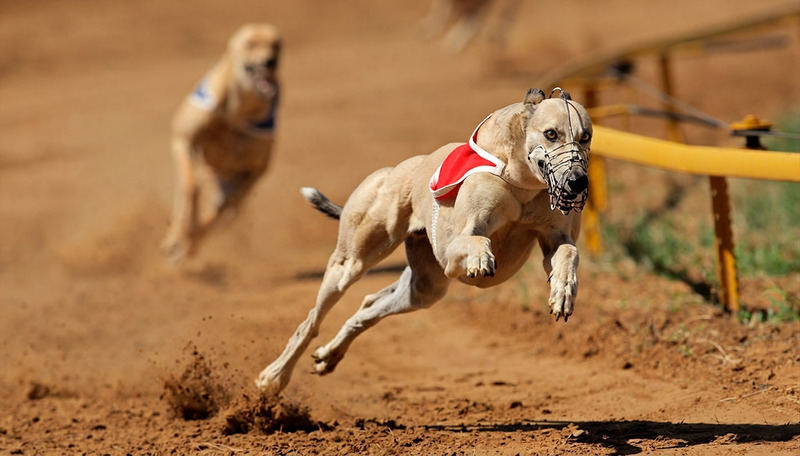
The numbers are hard to dispute. According to data from the Greyhound Board of Great Britain, between 2017 and 2024, 1,357 greyhounds died on tracks in England and Wales, and more than 35,000 injuries were recorded. These are not unforeseen accidents: a 2018 academic study led by researcher Andrew Knight concluded that oval tracks are inherently dangerous, as they impose extreme physical strain on the animals and structurally raise the risk of serious injury.
In other words, the problem is not the poor management of a particular track. It is the sport itself. This is the paradox that the parliaments of Wales and Scotland have decided to confront with legislative clarity: you cannot regulate what is, by design, harmful to the animals that take part in it.
"Greyhound racing is cruel from start to finish", states Aïda Gascón, director of AnimaNaturalis in Spain, echoing the words already resounding in the British public debate — and which should resonate here too.
In Scotland, the coalition Free the Hounds, which includes the group Hope Rescue among others, celebrated the parliamentary vote as a historic turning point. The organisation highlighted a significant irony: while the industry was commemorating 100 years of racing in the United Kingdom, two of its nations decided that this century-old tradition does not deserve another hundred years.
In Wales, the new legislation establishes a transition period between 2027 and 2030 for the industry to cease its activity in an orderly manner, with adoption systems for retired greyhounds. The coalition Cut the Chase, formed by organisations including Blue Cross, Dogs Trust, Greyhound Rescue Wales and RSPCA Cymru, was unequivocal: "For too long, dogs have paid the price for this outdated form of entertainment, with injuries and deaths that are entirely preventable."
Europe can no longer tolerate this
What makes this prohibition especially significant is not only what is happening in the United Kingdom, but the global context in which it takes place. According to the RSPCA, only nine countries in the world still permit commercial greyhound racing. Until a few days ago, all four nations of the United Kingdom were among them. Today, two fewer are. The trend is clear, and Spain still belongs to that shrinking and increasingly questioned group.
Greyhound racing in Spain is neither a marginal nor an exclusively rural phenomenon. It is an industry that instrumentalises sentient animals for entertainment and gambling, with documented consequences for their physical and psychological wellbeing. The greyhounds used in these activities are subjected to a regime of confinement, intensive training and exposure to the risk of serious injury that no contemporary ethical framework can justify.
The exploitation does not end on the track. It begins long before, in the conditions of breeding and selection, and can end abruptly when the animal is no longer profitable. Rescue organisations in Spain know this ending well: greyhounds abandoned, injured or killed at the close of the hunting or competition season.
"What has happened in Wales and Scotland shows that when scientific evidence and political will align, change is possible. Spain has the data, has civil society and has the responsibility to act", adds Gascón.
What we must learn from this prohibition
The prohibition passed in Wales and Scotland did not happen overnight. It was the result of years of sustained pressure from animal welfare organisations, accumulated scientific studies and a public consultation that evidenced the shift in values across society. The model is replicable.
In Spain, the debate around the mistreatment of greyhounds has been present in animal activism for years, but has not yet reached the legislative dimension it deserves. The Animal Welfare Act of 2023 represented progress in some areas, but did not explicitly and decisively address the prohibition of greyhound racing as a commercial activity. The gap between what science recommends, what citizens demand and what the law permits remains far too wide.
What has happened in northern Europe offers a roadmap: legislate on the basis of evidence, establish reasonable transition periods for the industry and guarantee adoption systems for the individuals who have been used in these activities. It is not a utopia. It is what Wales and Scotland have just done.
The League Against Cruel Sports has already called on the UK Government to extend the ban to England. The same argument applies to any European government that still permits these races: the coherence between declared values of animal protection and existing laws can no longer remain optional.
The time to act is now
In less than 24 hours, two parliaments changed the lives of thousands of greyhounds. That speed was not spontaneous: it was the accumulated result of signatures, campaigns, reports and sustained civic pressure over many years. Every action counts. Yours does too.
Demand from your political representatives that Spain join the countries that have banned greyhound racing as a commercial activity. Share this information in your circles. Support the rescue organisations that work every day to remove greyhounds from the system of exploitation. And if you are thinking of expanding your family, consider adopting one of these animals who, freed from confinement and risk, make extraordinary companions.
Just days ago, in the parliaments of Cardiff and Edinburgh, the votes were cast that closed the tracks. That sound can be repeated in Madrid. It also depends on what we do today. "Every greyhound that stops running on a track is a victory. But we need them all to stop running, and for that we need more people willing to demand it", says Gascón.
We need your support
AnimaNaturalis exists because billions of animals suffer at human hands. Because they animals need solutions. Because they deserve someone to speak up for them. Because animals need change. Because at AnimaNaturalis we want to build a fairer world for everyone.
The donations of our supporters are the main source of our funds.