
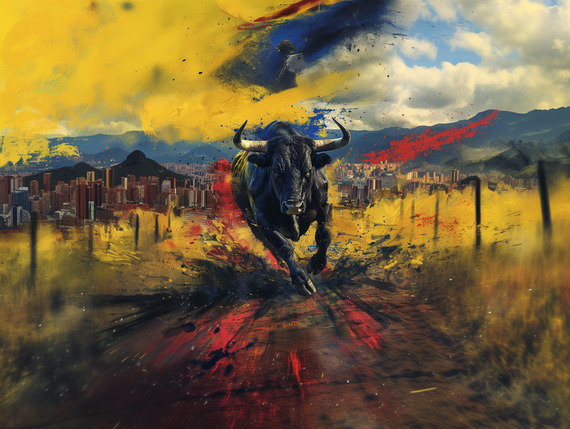
In a unanimous decision, Colombia's Constitutional Court declared that Law 2385 of 2024, also known as "No More Olé," which establishes the progressive prohibition of bullfights, is constitutional.
Furthermore, the Court expanded the scope of this prohibition to include "corralejas" (traditional bull-running festivals), "toros coleados" (tail-pulling bull events), and cockfighting. Consequently, it declared unenforceable the exception that originally excluded these practices, thus reaffirming the principle of protecting animal rights.
Although the ruling fully affirms the law's constitutionality, the Court established a three-year period for these activities to be phased out, in order to allow for the implementation of labor and cultural transition processes for those who depend on them economically. The total prohibition—established since the law's enactment—will take effect in July 2027, at which point the State will have an additional year to transform public bullrings into cultural, sports, and artistic spaces.
The Decision Was Expressed in Three Parts
- FIRST: To declare the CONSTITUTIONALITY of Articles 4 and 5 of Law 2385 of 2024, "through which a cultural transformation is advanced by prohibiting bullfights, horseback bullfighting, novice bullfights, calf fights, and 'tientas' (testing), as well as the procedures used in these spectacles that undermine the integrity of non-human life forms," regarding the examination of fiscal impact as provided in Article 7 of Law 819 of 2003, in harmony with Articles 151 and 334 of the Political Constitution.
- SECOND: To declare Law 2385 of 2024 CONSTITUTIONAL regarding the examined charges related to the protection of cultural diversity and national cultural heritage, free development of personality and freedom of expression, and the acquired rights and private property of those engaged in the activities covered by this law.
- THIRD: To declare UNENFORCEABLE the expression: "Therefore, horseback parades, activities involving 'toros coleados,' 'corralejas,' and cockfights shall be excluded from the prohibition" contained in Paragraph 4 of Article 3 of Law 2385 of 2024. To DEFER the effects of this unenforceability for three years, in order to initiate the corresponding labor and cultural transition processes.
An incident surrounding the ruling sparked intense debate: for several hours, many animal welfare organizations celebrated the supposed ban also including equestrian parades when a draft of the ruling included them. However, the Court later clarified that equestrian parades are not prohibited, making clear that the law does not contemplate them as part of the ban either.
At AnimaNaturalis, we are thrilled to celebrate this historic ruling as a decisive step toward a culture that respects life. As our director in Colombia, Derly Florez, stated: "It is a relief to see the State backing a law that reflects the sentiment of millions of people who reject violence as entertainment. Labor transition is not a concession; it is part of a just transition that also defends human rights."
This institutional endorsement strengthens our commitment: not only to eliminating violent practices but also to effectively supporting affected communities. Transition cannot be an empty promise; it must be a real and participatory strategy that ensures educational, economic, and cultural support.
From Prohibition to Transformation
- Implementation of the Transition Period: Over the next three years, the Government and local entities must design and implement labor and cultural transition plans—a transition that prioritizes the well-being of both people and animals.
- Reuse of Bullfighting Spaces: Once the ban is fully in effect, bullrings and other related venues must be converted into community centers for artistic, sports, or educational events.
- Education and Awareness: The law mandates the integration of respect and animal care into educational projects (Ministry of Education, Ministry of Environment and Sustainable Development) and the promotion of empathy and animal protection values (Ministry of Culture).
- Monitoring and Citizen Participation: It is crucial to maintain vigilance over the law's implementation, involving communities, social organizations, and media to ensure transparency, accountability, and alignment with the values of dignity, empathy, and justice.
This ruling represents a significant victory in the fight for animal rights in Colombia. But beyond the legal triumph, it represents a cultural challenge: transforming the collective imagination, healing historical wounds, and building a society that looks forward from a foundation of respect for life. As we at AnimaNaturalis urge, now is the time to unite efforts, support transitions, and weave a culture without violence, where every living being has a dignified place.