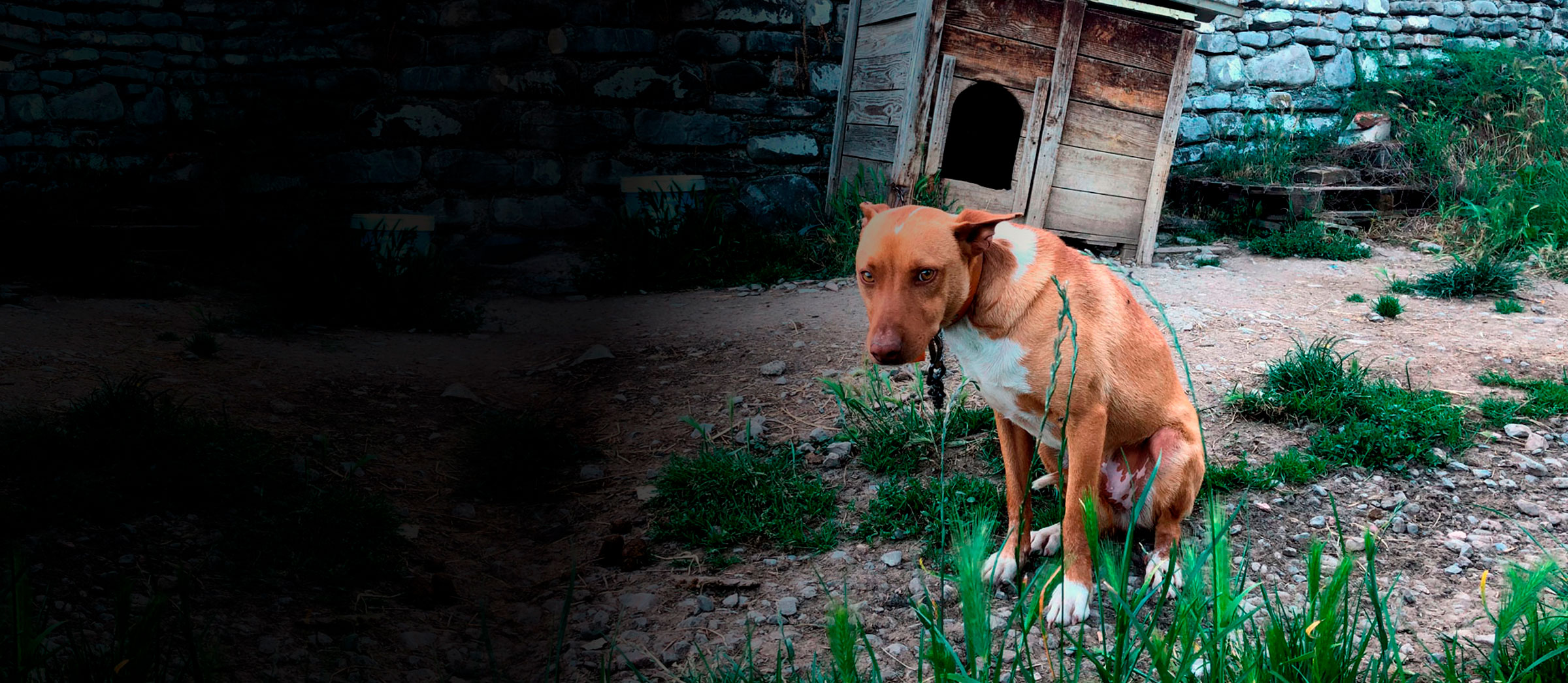

In the offices of the Ministry of Agriculture, Fisheries and Food (MAPA) and the Directorate General for Animal Rights (DGDA), dependent on the Ministry of Social Rights, lie two draft Royal Decrees that regulate, each in its own way, the same animal. Neither fully protects it. Thousands of dogs live in the margins of both texts, their official existence depending on which administrative category those who drafted the rules decide to fit them into.
"What we are seeing is a regulatory fragmentation that turns hunting dogs into invisible beings for the State. They are not companion animals according to MAPA, but neither do they receive the guarantees that a dog living in a home or shelter does have. They are in no man's land," says Aïda Gascón, director of AnimaNaturalis in Spain.
AnimaNaturalis has filed formal submissions to both drafts, documenting with legal precision the points where protection breaks down. The analysis reveals three critical risk areas that, if not corrected, could become legally entrenched.
The threshold of ten
The first flaw is arithmetic, but its consequences are structural. The MAPA draft excludes from its scope all facilities housing dogs used in hunting activities when their number does not exceed ten individuals. According to the submission filed by AnimaNaturalis, this figure lacks any explicit technical justification and opens the door to what the organization calls "artificial fragmentation": dividing larger facilities into units of fewer than ten dogs to evade administrative registration.
The text, moreover, does not clarify what legal regime applies to these facilities once excluded. In practice, according to the comparative analysis prepared by the organization, this means that a kennel with nine hunting dogs can operate without registration, without specific health controls, and without any obligation to report on the conditions in which those individuals live.
Hunting activity in Spain is of considerable scale. According to data provided by AnimaNaturalis, the risks of abandonment, irregular trade, and lack of traceability in hunting dogs are well documented. The mass abandonment of hunting dogs at the end of the season is one of the most persistent animal welfare problems in the country, and the MAPA draft, as currently written, offers no instrument to reverse it.
Two standards for the same species
The second problem is qualitative. While the DGDA draft requires emergency plans, specific staff training, and environmental enrichment conditions consistent with the recognition of animals as sentient beings, the MAPA text adopts an "essentially health-focused" approach oriented towards biosecurity and preventing diseases transmissible to livestock.
This difference is not cosmetic. It means that a companion dog in an adoption center is guaranteed a level of welfare that a hunting dog in a traditional nucleus does not achieve. Both belong to the same species, have the same capacity for suffering, but the regulations treat them with radically different yardsticks.
The MAPA draft introduces the category of "hunting auxiliary animal", which encompasses hunting dogs, rehala dogs, ferrets, falconry birds, and live lures. However, as noted in AnimaNaturalis's submission regarding article 2.2.e, this category is not accompanied by any specific regime of welfare, housing, or handling conditions. The mention exists, but the protection does not.
"Naming hunting dogs in a decree without regulating their living conditions is a legal whitewash operation. What they need is not an administrative category, but concrete requirements: space, individualized veterinary care, control over the number of animals per facility," states Gascón.
Without name or number
The third risk affects the very possibility of knowing what happens to these individuals. Article 12.4 of the MAPA draft proposes linking hunting dogs to the hunting license of their owner as an identification mechanism. AnimaNaturalis denounces that this system is insufficient for three specific reasons: it does not establish control mechanisms over the number of animals associated with a license, it does not create a specific registry for dogs used in hunting, and it does not provide for any obligation to report losses, deaths, or transfers.
In practical terms, this means that a dog can disappear from the system without any administration being required to ask where it went. It may have been abandoned, illegally transferred, or euthanized, and the proposed traceability offers no mechanism to detect it.
The comparative analysis we have conducted is categorical: without a specific and strict registry, the abandonment and irregular trade of hunting dogs are not only possible but difficult to prevent under this regulatory framework.
The trap of domestic breeding
The DGDA draft, for its part, presents a different but equally serious problem. AnimaNaturalis's submissions to the Ministry of Social Rights' text identify an anomaly in article 3.3.f: the creation of the category "domicile for breeding" dogs, cats, or ferrets, which would allow the breeding of companion animals in private homes without requiring prior authorization.
According to the organization, this directly contradicts the objectives of Law 7/2023, which sought to professionalize breeding, guarantee traceability, and prevent uncontrolled reproduction. The possibility of initiating breeding activities through a simple responsible declaration — without prior control, with immediate start of the activity — opens the door to irregular trade and unregistered intermediation.
Furthermore, the text only establishes numerical limits for breeding ferrets (maximum five breeding females, two litters per year), without setting equivalents for dogs or cats. The result, as noted in the submission on article 3.3.f.3, is a regulatory vacuum that allows the multiplication of animals in private homes without any legal limit.
What must change
The submissions presented by AnimaNaturalis are not limited to diagnosis. Each point of criticism is accompanied by a concrete request. In the case of MAPA, the organization asks to review or eliminate the exclusion of facilities with fewer than ten individuals, and to establish registration and control mechanisms for all dogs used in hunting activities regardless of their number. It also requests that the text incorporate specific requirements for establishments housing hunting auxiliary animals: minimum conditions for housing, handling, and veterinary control.
For the DGDA draft, the proposals are equally precise: eliminate the "domicile for breeding" category, keep breeding activity exclusively in authorized centers, and require prior administrative authorization for any activity involving animal reproduction.
There are international precedents demonstrating that this type of regulation is viable. European countries with more advanced animal protection frameworks have implemented individualized registries for hunting animals, periodic welfare checks, and traceability systems that have significantly reduced seasonal abandonment. The technology and knowledge exist. What is lacking, according to the organization, is political will to apply them.
The dogs cannot wait any longer
In some Spanish kennel, while this article circulates, there are dogs living outside any control, without a name in any registry, without a veterinarian responsible for their individual welfare, without anyone having to answer for what happens to them. They are the same dogs that each season appear abandoned on roads and in the countryside when they are no longer useful to those who kept them.
You can change that. The processing of these Royal Decrees is open, and citizen pressure on the involved ministries has a real impact on the final outcome of the regulations. Share this article, demand from your political representatives that the welfare of hunting dogs not be subordinated to hunting interests, and sign AnimaNaturalis's campaigns calling for coherent, complete regulation with no gaps.
"Every signature, every message, every person who decides to get informed and act is one more voice that legislators cannot ignore. Hunting dogs have no representation in the offices where these decrees are drafted. We can give it to them," adds Gascón.
If you want organizations like AnimaNaturalis to be able to continue filing submissions, documenting abuses, and demanding legal changes, consider becoming a member, or making a donation. Legal and political advocacy work has a real cost, and it is your support that makes it possible. Join AnimaNaturalis today and be part of those who do not look away.